Chevy to Discontinue One of the Only Electric Sedans on the Market

And another one bites the dust.
Just days after the Chevy Bolt was announced as one of just two small-ish electric cars eligible for federal EV tax credits, General Motors says it will discontinue its top-selling green model by the end of the year.
That leaves U.S. consumers with only one federally subsidized electric option that isn’t an expensive SUV, pick-up, or other megacar proven to be more dangerous to the vulnerable road users: the Tesla Model 3, whose manufacturer has raised serious safety concerns of its own. At an MSRP of $26,500, the Bolt was also the cheapest model on the list by more than $10,000.
In a quarterly earnings call, GM CEO Mary Barra cited the older design of the Bolt’s battery cell as the reason why the roughly 3,600-pound car (and its slightly heavier subcompact SUV variant, the Bolt EUV) were no longer a tenable part of the automaker’s portfolio, despite being Chevy’s best-selling electric car and the fifth-best selling EV in America. A spokesman later assured CNBC, which broke the story, that the company would “launch several new EVs later this year” to replace the model — but those models, the Silverado EV, the Blazer EV, and the Equinox EV, are all classed as light trucks.
Research has shown that SUVs, the largest segment of the light truck market, are a leading driver of America’s roadway safety crisis, largely because of their large blind spots and high front ends that increase crash risk and cause more injuries to pedestrians and cyclists’ bodies. Experts also fear that the sheer weight of E-SUV batteries will increase fatality risks for the occupants of lighter cars, while monopolizing scarce battery materials that could be used on lighter, safer vehicles, including e-sedans and e-bikes.
With the Bolt now bound for the great scrapyard in the sky, it’s possible that other automakers will seize the opportunity to manufacture an affordable, modestly sized EV with enough American-made components necessary to qualify for the Biden administration’s stringent tax credit standards. Sustainable transportation advocates, argues that it’s not likely — at least without regulators to spur them on.
“It’s not that complicated: Car markers make substantially larger profits on larger cars,” wrote California YIMBY’s Matthew Lewis in a Twitter thread. “They literally profit by the pound. … Carmakers don’t care about climate, or safety, or human lives.”
To nudge automakers towards making smaller cars, some advocates argue that communities should impose vehicle weight taxes similar to those already in place in Norway and Washington, D.C. — or at the very least, that the feds should close the infamous “light truck loophole” that gives manufacturers a break on their required average fleet-wide fuel efficiency when they produce a lot of light trucks of any fuel-train type. Reworking federal crash tests to factor in the safety of people outside the vehicle would help too, especially if those tests considered the likelihood of serious injury to a vulnerable road user relative to a megacar’s body, rather than just the efficacy of its pedestrian-detecting emergency braking system.

Read More:
Streetsblog has migrated to a new comment system. New commenters can register directly in the comments section of any article. Returning commenters: your previous comments and display name have been preserved, but you'll need to reclaim your account by clicking "Forgot your password?" on the sign-in form, entering your email, and following the verification link to set a new password — this is required because passwords could not be carried over during the migration. For questions, contact tips@streetsblog.org.
More from Streetsblog USA
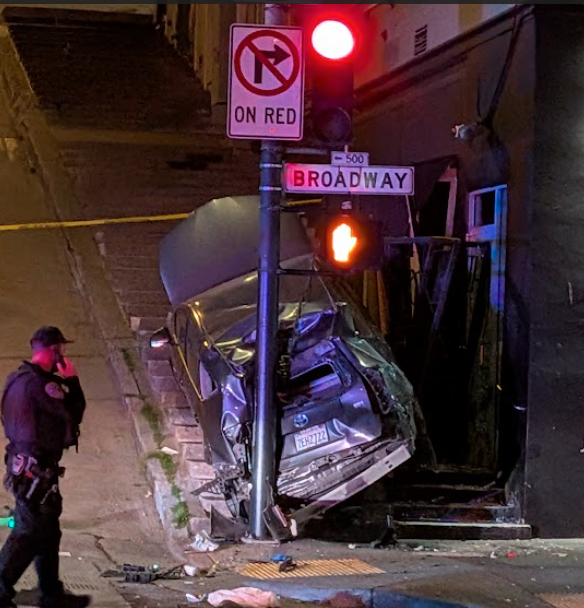
Motorist Careens onto North Beach Sidewalk, Killing Pedestrian
Driver kills pedestrian at another location where a safety project festered
The post Motorist Careens onto North Beach Sidewalk, Killing Pedestrian appeared first on Streetsblog San Francisco.