

Transportation for America
Transportation Agencies Will Finally Measure the Movement of People, Not Just Cars
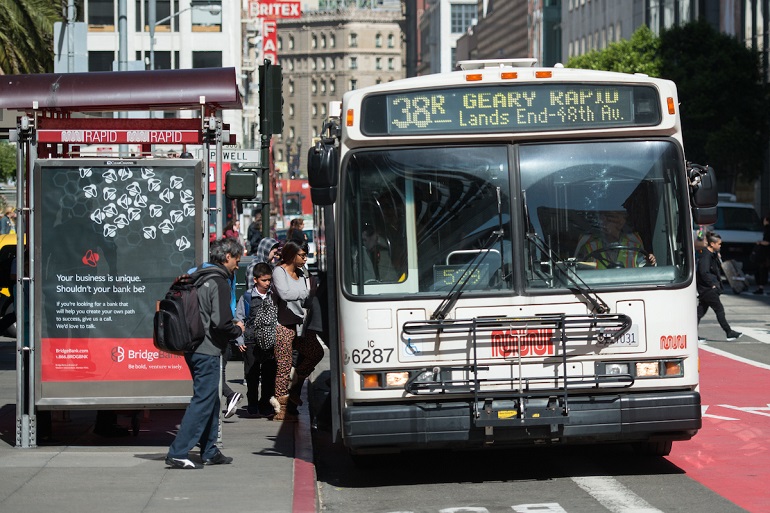
Hundreds of billions of dollars have been spent in the quest for free-flowing vehicular traffic. The result is wider highways, more sprawl, and more people stuck in congestion. But this week U.S. DOT took an important step to change course, releasing new standards to guide how transportation agencies measure their performance. Advocates for transit and walkability say the policy is a significant improvement.

January 12, 2017
5 Things States Can Do to Bring Transportation Policy Out of the Stone Age
On its page commemorating the 50th anniversary of President Eisenhower signing the Federal Aid Highway Act, the Federal Highway Administration offers a "Then and Now" chart showing how much America has changed since 1956. It's a little corny, but in 1956 Chuck Berry was a chart-topper, hula hoops were the new craze, and Cold War tensions were very high. The point is the country has changed a lot since then.
January 22, 2016
5 Techniques That Guide the Best Regional Planning Agencies
"Metropolitan Planning Organization" is the wonky name for an obscure but oh-so-important breed of public agency -- the regional planning bodies charged with distributing federal transportation funds. MPOs can be powerful, transformative agencies that enhance economic growth, save people time, and improve public health. Or they can do the bare minimum required by law and continue to collect federal money year after year, merely serving as one more level of bureaucracy. Even worse, they can distribute funds in a way that hastens sprawl and urban decline.
December 10, 2014
Bi-partisan Senate Bill Would Give Locals More Say Over Transpo Spending
When it comes to transportation funding, cities and towns occupy the bottom of the totem pole. The vast majority of federal transportation money goes to states, to the exclusion of local governments. That means state DOTs get tens of billions to spend on highways each year, while mayors and local agencies have to scrounge for money to improve transit, build sidewalks, or add bike lanes.
September 22, 2014
Transformation for America: T4 Reemerges With Focus on Local Control
Transportation for America has been in hiding. Perhaps you’ve noticed.

November 20, 2013
T4A Calls for Action Against Dreadful House Transpo Budget
Transportation for America is gearing up for a fight over transit, rail, and TIGER funding, and they're asking supporters of smart transportation investments to make their voices heard.
July 19, 2013
T4A: One in Nine American Bridges Structurally Deficient
There's a new report out on the state of America's bridges, and with it a new raft of disturbing statistics. Nearly one in nine, or 11 percent, are structurally deficient -- meaning a bridge inspector has rated a major component of the structure to be in poor condition. The average age of a bridge in the United States is 43 years; the average design life, 50 years.
June 19, 2013
Seven Jiu-Jitsu Moves for Advocates to Use MAP-21 to Their Own Advantage
OK, truth: Raise your hand if you find federal transportation legislation intimidating and incomprehensible.
December 11, 2012
Everything You Wanted to Know About Transit Funds (But Were Afraid to Ask)
Transit agencies can have a hard time finding the money to expand rail lines and busways. While federal grants for road projects require a 20 percent local match, transit projects need to get 50 percent or more from local funding sources. The byzantine federal funding bureaucracy creates high hurdles, especially for smaller agencies without on-staff expertise in applying for and managing these grants. Loans and private sources of funds are also difficult, since they need to be paid back, and transit tends not to make back its capital outlays from the farebox.
August 16, 2012
GOP’s “Bridge Repair, Not Bike Lanes” Mantra Was Just a Lot of Hot Air
Last fall, Sen. Rand Paul (R-KY) proposed diverting all transportation enhancements funding, which goes primarily to bike and pedestrian projects, to bridge repair. "With nearly 25 percent of our nation's bridges deemed either structurally deficient or functionally obsolete, we need to make their reconstruction a priority over errant beautification projects," Sen. Paul said.
July 6, 2012