Spooky Stuff: On Halloween, Some States Will Have Deadlier Roads Than Others
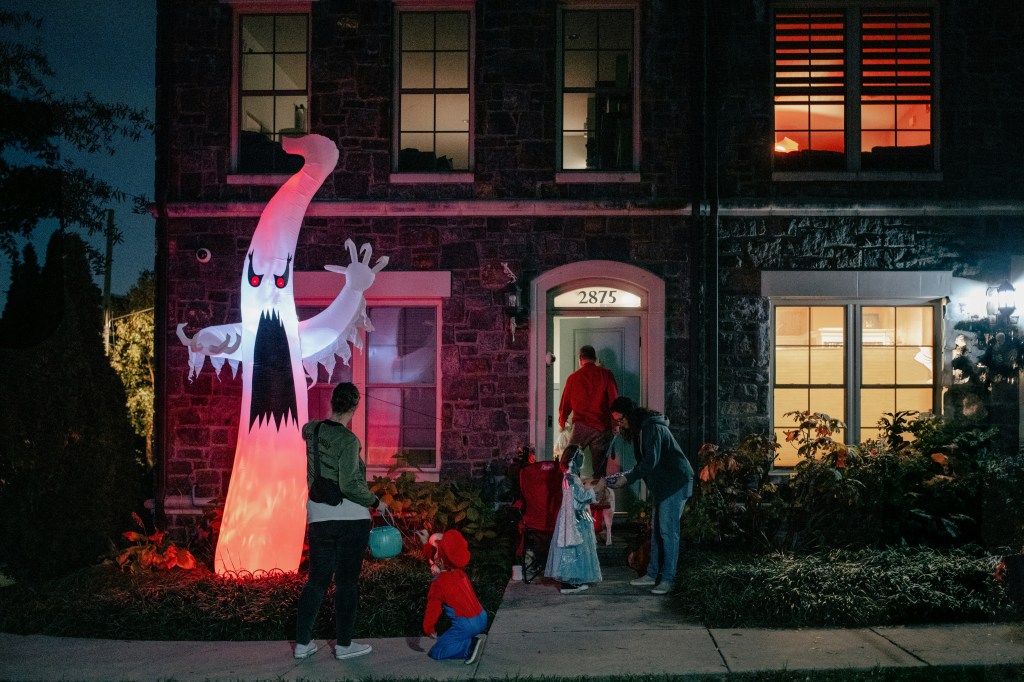
Halloween is a scary time on roads across America — but some states are far more frightful than others, a new study finds.
According to a recent analysis of National Highway Traffic Administration data, Kentucky has the highest rate of fatal crashes per capita on Oct. 31, with 9.1 per million residents — roughly 134.57 percent higher than the national average in the last four years on record.
Vermont, meanwhile, has the least, recording no crashes on All Hallow’s Eve during that period.

While the study didn’t specify how many of those crashes involved trick-or-treaters, other analyses show that Halloween is the deadliest day of the year for child pedestrians — in part because there are so many more of them out there, and mostly at night, than on any other day of the year.
On the average non-spooky school day, only about 11 percent of U.S. kids walk or bike to their classrooms; the National Retail Foundation, though, estimated that 28 percent of U.S. families planned to walk their kids around to shake down the neighbors for candy.

A whopping 93 percent of all Americans, meanwhile, plan to celebrate Halloween in some fashion — and a lot of those parties involve alcohol, drugs, and late nights dancing to the “Monster Mash.” NHTSA estimates that from 2019 to 2023, a staggering 198 people were killed in crashes on Halloween night that involved a driver with some level of alcohol in their system.
A separate analysis by Cambridge Mobile Telematics, meanwhile, recently found that distracted driving spikes 8.1 percent during peak trick-or-treating hours.
Regardless of why people are getting hurt, though, safety advocates say that systemic approaches are essential to make roads less deadly on Halloween — and that drivers and policymakers must take more responsibility for ending the horrors of the holiday.
“To improve safety, drivers should adopt responsible habits such as reducing speed, staying alert, and avoiding distractions, particularly in residential areas with trick-or-treaters,” said Andrew Pickett, a Florida-based attorney who compiled the crash data from NHTSA. “Local authorities can support these efforts by enhancing street lighting, installing speed bumps, and increasing police patrols to deter reckless driving. … By taking proactive steps, we can significantly reduce the risk of accidents [sic] and make Halloween a safe and pleasant experience for everyone.”
Pickett’s study didn’t explore which of those approaches, exactly, might work best to curb traffic violence in the deadliest states in America — or why they were so deadly in the first place. But a quick glance suggests a few possible theories.
Earlier this year, the five worst-ranked states all earned warnings from the National Advocates for Highway and Auto Safety, which grades states on their adoption of key roadway safety laws; many were Sunbelt states that rank low for pedestrian safety year-round, and interestingly, all are predominantly governed by Republicans.
The best-ranked states, meanwhile, included a mix of communities with small populations, like Vermont and Delaware, and those with unusually high concentrations of car-optional neighborhoods relative to the rest of the U.S., like New York, New Jersey, and Massachusetts.
All road deaths are preventable — on Halloween and any other night of the year. And it starts with designing roads, vehicles, and laws that treat traffic violence as a serious and unacceptable threat, rather than tricking ourselves into believing it’s inevitable.

Read More:
Streetsblog has migrated to a new comment system. New commenters can register directly in the comments section of any article. Returning commenters: your previous comments and display name have been preserved, but you'll need to reclaim your account by clicking "Forgot your password?" on the sign-in form, entering your email, and following the verification link to set a new password — this is required because passwords could not be carried over during the migration. For questions, contact tips@streetsblog.org.
More from Streetsblog USA
Motorist Careens onto North Beach Sidewalk, Killing Pedestrian
Driver kills pedestrian at another location where a safety project festered
The post Motorist Careens onto North Beach Sidewalk, Killing Pedestrian appeared first on Streetsblog San Francisco.