Crunching Numbers to Curb Crashes: Using Federal Data to Make Our Roads Safer

Editor’s note: This article was originally published in Transportation Alternatives’ Vision Zero Cities Journal. Transportation Alternatives is dedicated to fighting for better walking, biking, and public transit in New York City.
Federal datasets have helped advance road safety for decades. When robustly maintained, these datasets help researchers and policymakers understand road safety trends to intervene with informed policies.
When incomplete or biased, however, these datasets leave decision-makers uninformed and directionless, or worse yet, lead them to make incorrect choices. The need for data-driven solutions is especially critical at this time as America’s roads continue to become busier, with more people and goods on the move. Upholding federal data transparency is key to understanding and reversing the alarming level of crashes, fatalities, and strained infrastructure.
The Bad News
America’s roads are moving an ever-increasing number of people and goods. This growth comes with a significant human toll, infrastructure threat, and price tag. On average, 112 people were killed every day on roads in the U.S., totaling nearly 41,000 fatalities in 2023. This amounts to a staggering 24% upsurge in deaths in just a decade. An additional 2.44 million people were injured. Early projections for 2024 traffic fatalities remain at a similar level; over 39,000 people are estimated to have been killed last year.
Our roads are deteriorating, too. According to the American Society of Civil Engineers’ 2025 Report Card, U.S. roads received a grade of “D+,” with 39% of major roads in poor or mediocre condition. Bridges received a “C,” with about a third of the nation’s bridge inventory (221,791 spans) in need of repair or replacement. In addition, approximately 45% of bridges have exceeded their planned design lives of 50 years.

These trends generate a massive financial toll. Driving on deteriorated and congested roads costs the average driver over $1,400 per year in vehicle operating costs and lost time, while the annual economic cost of crashes is approximately $340 billion in 2019 dollars. This figure equates to every person living in the U.S. essentially paying an annual “crash tax” of over $1,000.
Moreover, the total value of societal harm from motor vehicle crashes in 2019, which includes loss of life, pain, and decreased quality of life, was nearly $1.4 trillion. Research from the Network of Employers for Traffic Safety finds motor vehicle crashes cost employers $72.2 billion in direct crash-related expenses in 2019.
The Good News
We understand the above trends primarily because of the data published by the National Highway Traffic Safety Administration (NHTSA) within the U.S. Department of Transportation (US DOT). As much as data bear out the bleak trends, there is hope in using this same data to intervene.
Advocates for Highway and Auto Safety releases a Roadmap to Safety report annually, which provides a comprehensive blueprint on actions that can and should be taken by state and federal officials. All these recommendations are rooted in data, research, and analyses, including those from the Insurance Institute for Highway Safety, the National Transportation Safety Board, and the US DOT, among others. These entities publish data on crashes, injuries, fatalities, and other site-specific details from police reports. Sound data is essential to developing effective policies.
For instance, in 2006, NHTSA’s Special Crash Investigations (SCI) program began investigating crashes where a vehicle backed over a person located behind the vehicle, typically a young child. In 2008, Congress enacted with bipartisan support the Cameron Gulbransen Kids Transportation Safety Act, directing the US DOT to improve the rearward visibility in vehicles. In 2014, NHTSA issued a rule to require all new vehicles under 10,000 pounds to be equipped with a rearview camera by 2018.
Throughout the legislative process, safety groups, including Advocates for Highway and Auto Safety, used the SCI reports to demonstrate the urgency of the problem. In addition, the SCI findings were cited by NHTSA during the rulemaking. If SCI did not undertake this work or if it eliminated certain incidents, the demonstrated safety need would have been incorrectly skewed, potentially delaying or derailing a rule that has saved many lives. The Insurance Institute for Highway Safety has found that rearview cameras have reduced backing crash involvement rates by 17%.

Another salient example occurred last year when, compelled by the Infrastructure Investment and Jobs Act, NHTSA issued one of its most significant recent safety advances by requiring light vehicles be equipped with automatic emergency braking systems. The agency concluded that taking this action will save hundreds of lives and prevent thousands of injuries each year. NHTSA’s own public data informed this critical rulemaking, again upon which Advocates for Highway and Auto Safety and others relied during intensive lobbying efforts, demonstrating the indispensable role these databases play in crafting effective safety standards.
The Danger
Unfortunately, NHTSA also recently demonstrated what can happen when data does not provide a complete picture of how certain vehicle technologies perform. In 2021, the agency issued an order requiring manufacturers and operators to report on certain crashes involving automated driving systems or autonomous vehicles.
However, in 2025, NHTSA amended the order to omit crash reporting on certain crashes harming vulnerable road users, tow-away crashes, involving vehicles equipped with advanced driver assistance systems, and some property-damage-only crashes, among other changes. This collective narrowing of the data required threatens to conceal important safety and performance issues, leaving the agency and public in the dark about the real-world impact of these technologies.
Another example of threats to robust data collection occurred in 2015. The Compliance, Safety, Accountability program, administered by the Federal Motor Carrier Safety Administration, is designed to improve safety and prevent commercial motor vehicle crashes, injuries, and fatalities by analyzing important safety data such as roadside inspection and crash reports. Yet, Congress removed the program’s data related to a property carrier’s safety performance from public view. Therefore, the public, including those seeking to contract a carrier’s services, does not have a full understanding of the company’s safety record.
Sadly, despite the National Academy of Sciences, Engineering, and Medicine finding the program was sound, the data have remained hidden from the public for nearly a decade.
Data drives meaningful change when it’s complete, transparent, and free from external influence. The federal safety standards and requirements for back-up cameras and automatic emergency braking systems are proof that data analysis can have positive safety benefits. As we confront emerging roadway challenges, robust safety data must remain the foundation for sound policy that saves lives.

Read More:
Streetsblog has migrated to a new comment system. New commenters can register directly in the comments section of any article. Returning commenters: your previous comments and display name have been preserved, but you'll need to reclaim your account by clicking "Forgot your password?" on the sign-in form, entering your email, and following the verification link to set a new password — this is required because passwords could not be carried over during the migration. For questions, contact tips@streetsblog.org.
More from Streetsblog USA
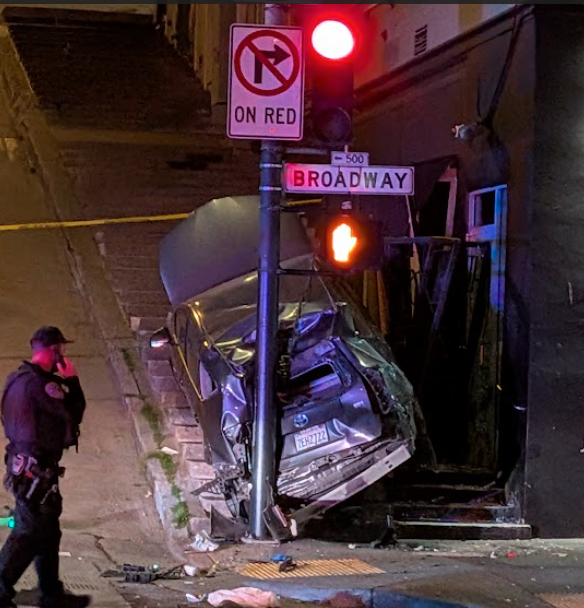
Motorist Careens onto North Beach Sidewalk, Killing Pedestrian
Driver kills pedestrian at another location where a safety project festered
The post Motorist Careens onto North Beach Sidewalk, Killing Pedestrian appeared first on Streetsblog San Francisco.