Why Are Many States Trying to Ban Cities From Slowing Down Drivers?
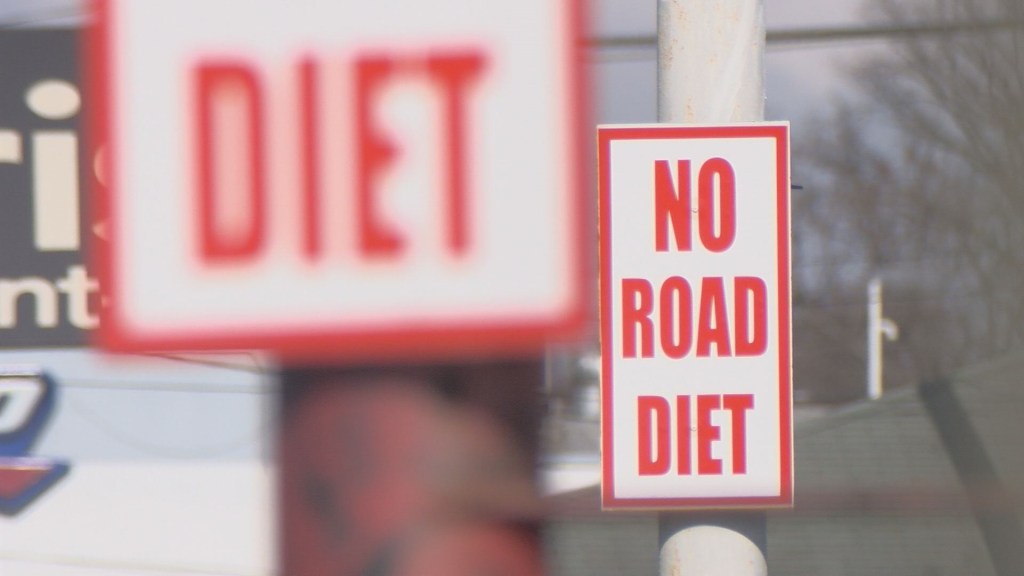
Texas may soon become the latest state to stop its cities from reclaiming space on the street from drivers — and as the White House continues suppressing the benefits of road rebalancing, some advocates fear the Lone Star State won’t be the last.
Lawmakers in the Texas recently introduced a bill that would bar cities “from prohibiting the use of a certain mode of transportation on a roadway that is not otherwise prohibited on that roadway under or as required by state law” — or, to sift through that 10-car pile-up of double negatives, make it functionally illegal for cities to create car-free spaces, like bike lanes or pedestrian plazas.
The same bill would also pre-emptively ban any fines “for the use of a certain mode of transportation on a roadway,” which state Sen. Paul Bettancourt said was inspired by New York City’s recent success with congestion pricing and his desire to prevent a “congestion fee out of the blue type discussion.”
“It might be the most extreme bill I’ve ever seen, and that’s saying a lot, because after all, this is Texas,” said Joe Cutrufo, executive director of BikeHouston. “I can’t imagine local leaders in either party want state legislators to tell them what they can or can’t do.”
Idaho, meanwhile, recently went even further by passing a pair of bills that collectively force highway districts to prioritize drivers, by preventing them from narrowing streets to under 50 feet wide – the width of an NBA basketball court.
In the state’s urban areas like Boise, transportation officials say those laws could jeopardize even basic safety projects like curb extensions to shorten the distance pedestrians need to cross monster roads. The language of one of those bills, meanwhile, repeats the widely debunked theory that adding or maintaining lanes for drivers will improve “vehicle flow and travel times,” which nearly a century of research shows it doesn’t.
“The sad part of this is that the basic safety and freedom of mobility for Americans who cannot drive or choose not to drive have been weaponized due to the current political climate,” said Don Kostelec, an advocate and planner with the Boise-based firm Vitruvian Planning. “And that misinformation is now leading to anti-safety laws like these.”
Of course, Texas and Idaho aren’t the first states that have tried to block their cities’ ability to make streets safer by requiring roadway gluttony — or to spread misinformation about how good pricing and design policies can save lives.
Last year, Florida Gov. Ron DeSantis signed a bill which, he said, would “prevent localities from agenda-motivated lane reductions to force people out of their cars” by increasing public notice and meeting requirements when cities want to repurpose lane space for anything other that drivers — though that bill stopped short of banning road diets outright.
Indiana, meanwhile, tried to pass a 2024 bill specifically banning the construction of designated bus lanes in its capital city for a single year, though that bill was ultimately killed when the transit agency agreed to leave more space for motorists in the BRT project that was the clear target of the legislation.
Now that President Trump is back in office, though, some fear those sorts of state pre-emption bills might face a far easier path to passage — and that misinformation about road diets and road pricing are already proliferating at a breakneck speed.
Shortly after taking office, the Trump administration scrubbed reams of federal resources outlining the benefits of road diets and busting myths that they negatively impact emergency services, economic growth at local businesses, and in some cases, even the travel times of drivers themselves — none of which research shows to be true.
Many of those resources still exist on web archives, but advocates fear that locals will be hard pressed to find them when they argue against anti-road diet bills in their state legislatures. And with the federal government promising to look “unfavorably” on lane-limiting projects that apply for federal money, too, cities may have nowhere to turn for funds or approval to slow drivers down, or even to make them pay their fair share.
“It’s challenging to counter such misinformation from those creating the laws,” added Kostelec. “No level of facts and safety data can overcome whatever they heard from Fox News or Newsmax.”

In an increasingly divided and distorted political climate, advocates’ best hope may be to organize to defeat harmful state preemption bills and vote out the lawmakers who introduce them, rather than trying to beat false accusations that slowing drivers down or charging them a small fee is tantamount to “forcing” people out of cars.
Because in a deeply car-dependent country where those who can’t or don’t drive are often unable to participate in the basic functions of society — or are violently killed on the road — advocates like Kostolec say those arguments don’t deserve an ounce of airtime.
“We are spending too much energy countering misinformation about what is demonized as ‘social engineering’ for simply building a sidewalk or adding a crosswalk or reconfiguring a road where the vehicle capacity it was built for has never materialized,” added Kostelec. “As a result, we can’t channel that energy into workable solutions, especially for small towns in rural areas to improve people’s life, freedom, safety, and mobility.”

Read More:
Streetsblog has migrated to a new comment system. New commenters can register directly in the comments section of any article. Returning commenters: your previous comments and display name have been preserved, but you'll need to reclaim your account by clicking "Forgot your password?" on the sign-in form, entering your email, and following the verification link to set a new password — this is required because passwords could not be carried over during the migration. For questions, contact tips@streetsblog.org.
More from Streetsblog USA
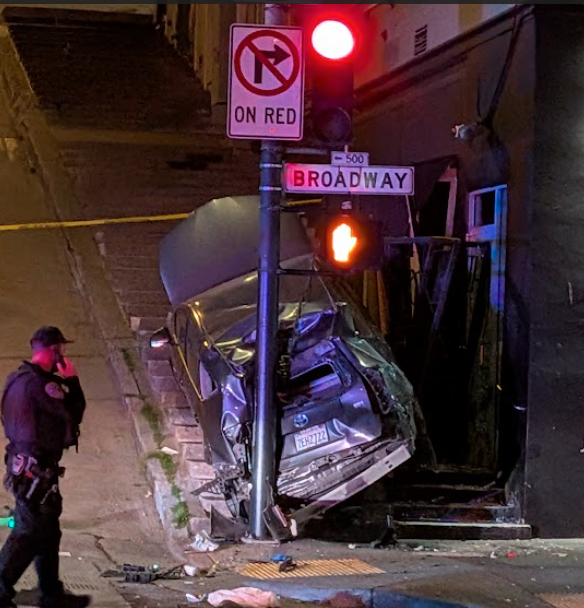
Motorist Careens onto North Beach Sidewalk, Killing Pedestrian
Driver kills pedestrian at another location where a safety project festered
The post Motorist Careens onto North Beach Sidewalk, Killing Pedestrian appeared first on Streetsblog San Francisco.