Op-Ed: Equitable Transportation Research Makes America Great. So Why Is the Trump Admin Hollowing It Out?

(Official White House Photo by Shealah Craighead). Original public domain image from Flickr Photo via New Civil Engineer, CC
Over the past few weeks, we’ve seen a whirlwind of changes to critical federal programs, including those that affect scientific research. In an unprecedented move, the Transportation Research Board of the National Academies of Sciences, Engineering, and Medicine abruptly canceled at least nine transportation research projects focused on building inclusive, equitable mobility systems. The terminations were announced in late January.
These contracts represented $3.8 million in research funding. Many projects were near completion, with their final reports ready to publish. Others were just getting off the ground or in progress.
This is likely just the tip of the iceberg—researchers funded by other scientific agencies have been notified that their scope needs to change or that their funding could be in jeopardy.
| NCHRP | 08-152 | Strategies for Improving Diversity, Equity, and Inclusion in the Transportation Planning Profession, AASHTO | $349,892 |
| NCHRP | 08-150 | Tools to Integrate Equity into Active Transportation and Safety Investments | $650,000 |
| NCHRP | 20-123(19) | A Research Roadmap for Institutionalizing Transportation Equity | $250,000 |
| NCHRP | 08-177 | Digitizing Bicycle and Pedestrian Treatments for Promoting Active Transportation Equity and Safety | $500,000 |
| NCHRP | 08-159 | How to Assess and Address Equity of Access to Goods and Services | $500,000 |
| NCHRP | 19-22 | Equity Impacts of Transportation Revenue Mechanisms and Changing Trends | $450,000 |
| BTSCRP | BTS-21 | Assessing and Mitigating Racial Disparities in the Enforcement of Pedestrian, Bicycle, and Micromobility Traffic-Related Laws | $500,000 |
| TCRP | H-59 | Racial Equity, Black America, and Public Transportation | $249,883 |
| TCRP | H-60 | Lessons Learned from Covid-19: Strategies to Enhance Racial and Social Equity Through Public Transportation As a Community Lifeline | $350,000 |
Why should we care about these nine projects?
As transportation planning and engineering researchers, we strive to understand how to create systems that support the economy and enhance wellbeing by getting people where they need to go more easily and safely. These efforts are urgently needed. In 2022 alone, more than 7,500 pedestrians were killed on U.S. streets, with Black pedestrians facing a much higher risk of death than others. One in four Americans experiences transportation insecurity, a situation in which a lack of transportation hinders their economic participation, health, or well-being.
To carry out research that addresses these challenges, we seek resources from federally funded entities including the National Science Foundation, the National Institutes of Health, and the National Academies of Sciences, Engineering, and Medicine. These organizations select projects through a rigorous peer-review process—our colleagues verify the intellectual merit of the work before we can undertake it. They critically review the need for the project and our research plan, offering feedback before approval. This process is highly competitive; typically only 20 percent of proposals receive funding.
In canceling these projects, the Academies cited their need to comply with two new executive orders: “Ending Radical and Wasteful Government DEI Programs and Preferencing” and “Ending Illegal Discrimination and Restoring Merit-Based Opportunity.” Together, these orders paint a cartoonish, reductive picture in which DEI initiatives hold back hard-working everyday Americans by elevating unqualified candidates and lowering overall standards. The executive orders also require agencies to “terminate .., ‘equity-related’ grants or contracts.” It is each agency’s prerogative to comply in advance with these orders.
The canceled projects shed light on how transportation systems can better serve everyday Americans who can’t reliably get to work, school, doctor’s appointments, or other critical destinations because they face transportation challenges. Ironically, the administration highlights this very objective among its top priorities.
A recent U.S. Department of Transportation memo entitled “Ensuring Reliance Upon Sound Economic Analysis in Department of Transportation Policies, Programs, and Activities”, prioritizes “…benefits for families and communities [including] economic opportunities, such as increased access to jobs, healthcare facilities, recreational activities, commercial activity, or any actions… that will help alleviate poverty, enhance safety, and primarily benefit families and communities by improving the quality of their lives, raising their standard of living, or enabling them to participate more fully in our economy.”
It seems the administration’s issue with the canceled projects may come down to who is included in “families and communities.” Each of the canceled projects identified a particular type of location — think rural, working-class communities — or group of people — people with disabilities or youth — that face specific barriers when trying to reach important destinations. The projects collectively acknowledge that there is no “one-size-fits-all” approach to transportation solutions.
In the administration’s understanding, any focus on specific people or places — particularly minority and Tribal communities — is discriminatory. But it’s important to recall the original intent of civil rights laws and related guidance: to end the discrimination faced by Black people in the United States by providing a level playing field.
Creating this level playing field requires identifying and removing the barriers that prevent some groups from enjoying true freedom of movement. Despite the loudest protestations by the administration and their supporters, we have not yet met this long-sought goal of equality.
The politicization of the scientific process is a red flag not just for researchers working on equity and inclusion, but for the broader research community and for society at large. Substantial investments in research have had immense returns for Americans’ quality of life by advancing healthcare and technology, building a highly skilled workforce and a thriving economy, and informing a vast array of public infrastructure, programs, and policies that make the whole system work.
In short, America’s investments in scientific research are widely understood to have made America great. Allowing political considerations to hollow out and cancel ongoing research is not only harmful to whatever domain the administration deems a threat, but it sets an alarming precedent for research at large, setting us on a path leading backward rather than forward.
The chaos unleashed by the dizzying array of executive actions and court decisions can be truly overwhelming. But doing this work has never been more important. We all have opportunities to respond in small and large ways. For our part, we’ll continue to conduct work focused on lifting up those who are being left behind, and we’ll continue to highlight and disassemble structural barriers to equality. That is how we can make America great again.





Read More:
Streetsblog has migrated to a new comment system. New commenters can register directly in the comments section of any article. Returning commenters: your previous comments and display name have been preserved, but you'll need to reclaim your account by clicking "Forgot your password?" on the sign-in form, entering your email, and following the verification link to set a new password — this is required because passwords could not be carried over during the migration. For questions, contact tips@streetsblog.org.
More from Streetsblog USA
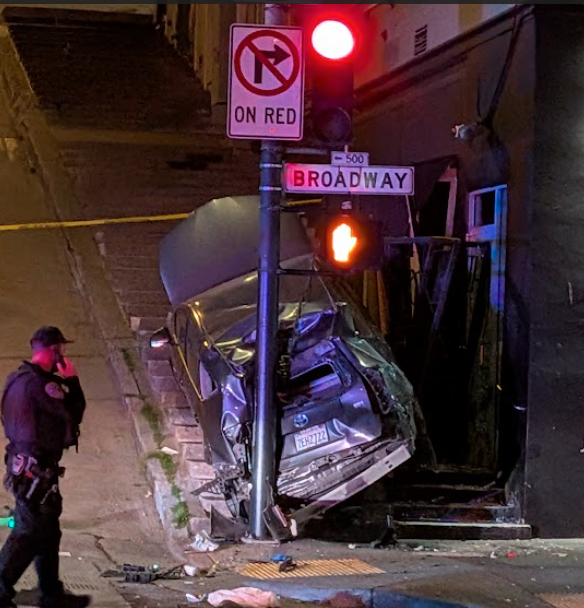
Motorist Careens onto North Beach Sidewalk, Killing Pedestrian
Driver kills pedestrian at another location where a safety project festered
The post Motorist Careens onto North Beach Sidewalk, Killing Pedestrian appeared first on Streetsblog San Francisco.