New from NACTO: Here’s How Your City Can Embrace Biking
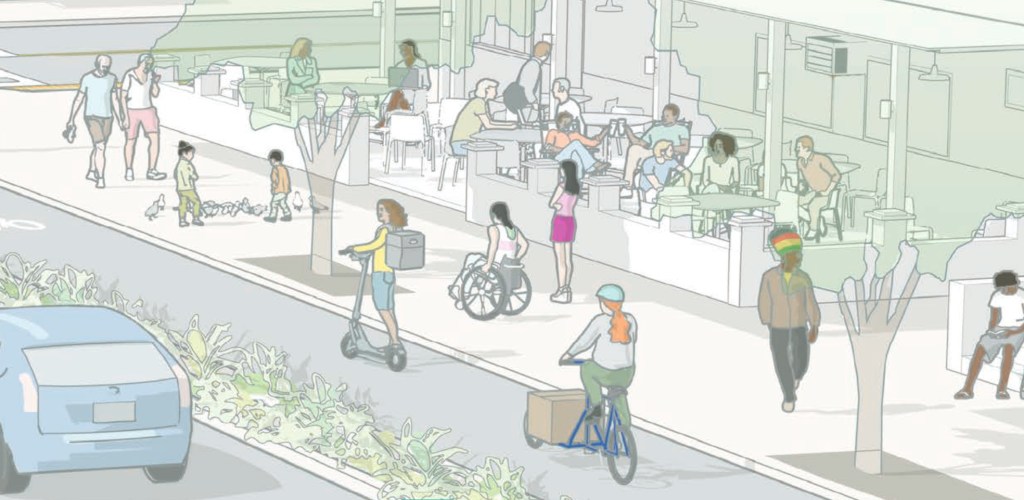
Biking is the fastest-growing mode of transportation in North America, and a newly updated guide shows how your city can make cycling safe and accessible to all.
The long-awaited third edition of “Urban Bikeway Design Guide” by the National Association of City Transportation Officials lays out a detailed blueprint for planners and politicians to implement sustainable transportation infrastructure that works.
“The story of urban design over the last decade is the story of how innovative and easy-to-implement cycling infrastructure transformed thousands of city streets into safe, bikeable places,” said Janette Sadik-Khan, the chair of the NACTO Board, a principal at Bloomberg Associates and, of course, the former commissioner of the New York City Department of Transportation.
She called the new design guide “the source code” for expanding cycling by giving cash-strapped cities the designs and technical insights they need.
The revised version, the first since 2012, lays out strategies for local planners and officials to see through a connected network that works for all abilities and is ready for newer modes of transportation, like e-bikes and other micro-mobility.
The guide is set to be published on Jan. 14, but Streetsblog got a sneak peak, so here are five takeaways from this must-read manual.
High-quality bikeways
Cities should build bike infrastructure large enough to accommodate future demand for this growing mode of transportation, whether it be bike boulevards, protected bike lanes, or low-traffic streets. You build the city you want, not the city you have now.
Officials must go beyond the minimum size requirements and build bikeways for comfort and access, not for speed, so that more people choose to ride bikes, no matter their age or ability.

That means cyclists should have space to ride safely side-by-side, while people on faster vehicles like e-bikes need to be able to safely overtake.
Build a network
Bike riders benefit most from a comprehensive network of safe cycling infrastructure that connects between and within neighborhoods, rather than one-off projects and bike lanes that suddenly end.
So-called principal routes connect between multiple neighborhoods and major destinations, like transit stations and job centers, while neighborhood routes can connect between those arteries within an area.
The paths can also narrow the remaining roadway, calming traffic, providing safety benefits for all road users. A good network design also accommodates pedestrians and crosses safely through intersections.

A meaningful bike network takes some time to implement, but should not take more than a decade, and planners need to work across agencies and develop support.
Maintenance for the future
Bike paths are transportation infrastructure and need to be treated as such.
Officials must maintain access to them during construction projects, retain a smooth surface, keep markings visible, and clear snow.

The city needs to monitor bike infrastructure proactively, rather than rely on crowdsourced information, like social media and 311 reports.
Put equity at the center
A good bike plan addresses historical inequities caused by the transportation system, includes partnerships with historically marginalized groups of residents, and seeks input from affected communities throughout the process.
This is key for undoing the harms wrought by car culture over the past century, which destroyed working class communities through highway construction and redlining across urban areas in the United States. Those same areas are also often where people face the most risk from traffic violence.
To undo some of the ills, a 2019 bike plan for the city of Oakland included a framework that asked who the most vulnerable groups were and how officials could make biking a realistic mode of transportation for all.
It takes a leader
Someone in charge at the local government level needs to champion a clear plan for a more bikeable city, even when they run up against resistance.
A leader needs to communicate their broad vision for better transportation in their city, where streets are safe for people to bike and walk, regardless of age, ability, and background.
There also has to be well-organized and resourced structures at city agencies to deliver high-quality bike projects within a reasonable timeframe.

Read More:
Streetsblog has migrated to a new comment system. New commenters can register directly in the comments section of any article. Returning commenters: your previous comments and display name have been preserved, but you'll need to reclaim your account by clicking "Forgot your password?" on the sign-in form, entering your email, and following the verification link to set a new password — this is required because passwords could not be carried over during the migration. For questions, contact tips@streetsblog.org.
More from Streetsblog USA
Motorist Careens onto North Beach Sidewalk, Killing Pedestrian
Driver kills pedestrian at another location where a safety project festered
The post Motorist Careens onto North Beach Sidewalk, Killing Pedestrian appeared first on Streetsblog San Francisco.