‘Stars On Cars’ Rating System Will Finally Grade How Safe Vehicles Are For People Their Drivers Hit
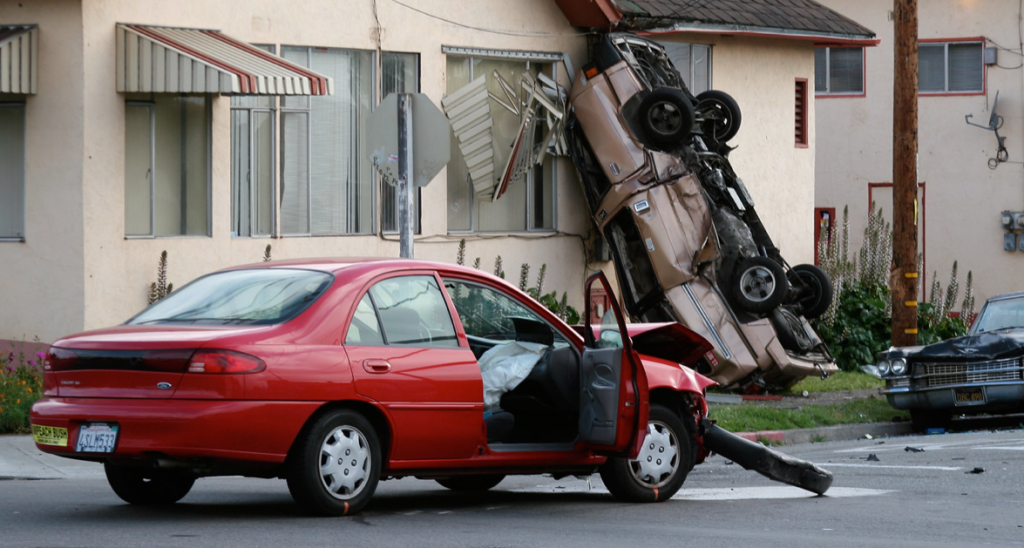
How about a tip of the hat for the new NCAP?
Activists are lauding the National Highway Traffic Safety Administration for finally moving forward on congressionally-mandated changes to the nation’s new car rating system so that the crucial safety grade reflects dangers to people outside the cars — not just their occupants.
Going forward, the New Car Assessment Program (NCAP) will offer higher scores to cars equipped with blind spot warning, blind spot intervention, lane keeping assist, and pedestrian automatic emergency braking. Cars without those technologies can still be produced and sold, but might not qualify for a coveted five-star safety rating.
Additionally, the finalized NCAP will:
- strengthen existing testing procedures and performance criteria for driver assistance technologies that are already included in NCAP, such as automatic emergency braking, which differs from its pedestrian version.
- add a “roadmap” to accommodate future updates amid ongoing research and technological advancements in vehicle safety, including crash avoidance and crashworthiness improvements “to protect bicyclists and motorcyclists and an updated rating system.”
- add a “crashworthiness pedestrian protection program” to “evaluate whether a vehicle’s front end will mitigate injuries and fatalities in vehicle-to-pedestrian impacts.”
That last one has been a longstanding demand of advocates as sedans and SUVs have gotten bulkier and boxier. Such a design tends to throw victims under the vehicle, where their injuries are often compounded, rather than pushing them up and over the hood of the car.
“The adopted pedestrian protection testing will evaluate the potential risk of head, upper leg, lower leg, and knee injuries to pedestrians hit by the front of vehicles,” NHTSA said in the announced rule change. “The agency expects that vehicles that score well in these tests will do so by using designs that absorb energy, reduce hard points of contact, and include a front-end profile that will cause less injury to a pedestrian in a crash.”
Advocates hailed the improvement, which was announced late on Monday, because it will finally provide car buyers with information about whether the vehicle is safe for its possible victims.
“This action by NHTSA is long overdue and will save lives,” said Amy Cohen, who co-founded the national group Families for Safe Streets after her 12-year-old son, Sammy, was killed by a driver in New York City in 2014. “Consumers deserve access to a complete picture of the safety risks involved with different vehicle types.”
The change in the NCAP comes after years of advocacy. Three years ago, a Families for Safe Streets petition — headlined, “dangerous cars are killing our children” — generated more than 45,000 signatures. The petition was created by Jessica Riester Hart, whose 5-year-old daughter, Allison, was killed by the driver of a large vehicle in a crosswalk in 2021.
“It is outrageous that our vehicle safety rating system only applies to the safety of those inside the vehicle, and does not take into account those outside,” Hart said at the time, citing statistics that vehicles are on average 24 percent bigger than they were in 2000. “It is no surprise that they are also disproportionately deadly for pedestrians, cyclists, and those driving smaller vehicles.”
The move comes also as pedestrian deaths have risen more than 50 percent over the last decade, to roughly 7,300 per year, partly due to the increasingly blocky front ends of today’s cars, as Streetsblog has repeatedly reported. The average U.S. vehicle has gotten eight inches taller over the past three decades, which experts say has helped accelerate a pedestrian death crisis that claimed 7,400 lives on U.S. roads in 2021 alone, and another 777 people in off-road spaces that same year.
Transportation Secretary Pete Buttigieg celebrated his agency’s work as getting closer to the “long-term goal of zero road fatalities.”
“Like our move earlier this year to make automatic emergency braking standard on new passenger cars and light trucks, these changes to the 5-Star Safety Ratings will speed up adoption of technologies that reduce the frequency and severity of crashes while helping consumers make informed decisions about buying a new car,” Buttigieg added.
The changes announced this week take effect with the 2026 model year.

Read More:
Streetsblog has migrated to a new comment system. New commenters can register directly in the comments section of any article. Returning commenters: your previous comments and display name have been preserved, but you'll need to reclaim your account by clicking "Forgot your password?" on the sign-in form, entering your email, and following the verification link to set a new password — this is required because passwords could not be carried over during the migration. For questions, contact tips@streetsblog.org.
More from Streetsblog USA
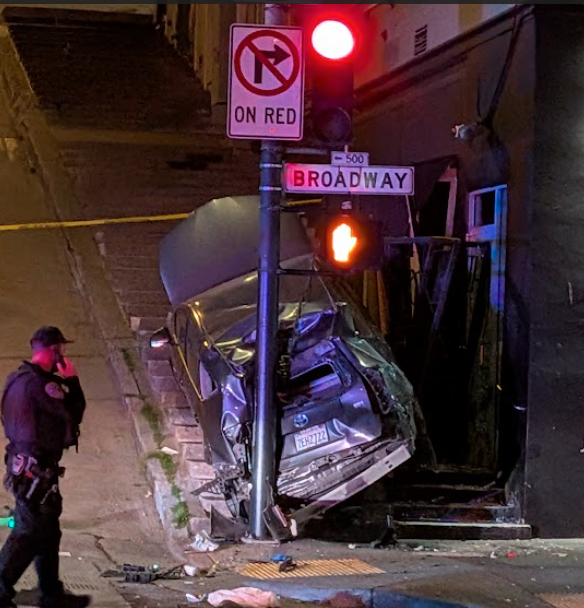
Motorist Careens onto North Beach Sidewalk, Killing Pedestrian
Driver kills pedestrian at another location where a safety project festered
The post Motorist Careens onto North Beach Sidewalk, Killing Pedestrian appeared first on Streetsblog San Francisco.