How Atlanta Passed Its Right-On-Red Ban
Editor’s note: this article is an excerpt from the Vision Zero Cities Journal and is republished with permission. For more information on the Vision Zero Cities 2024 conference, click here.
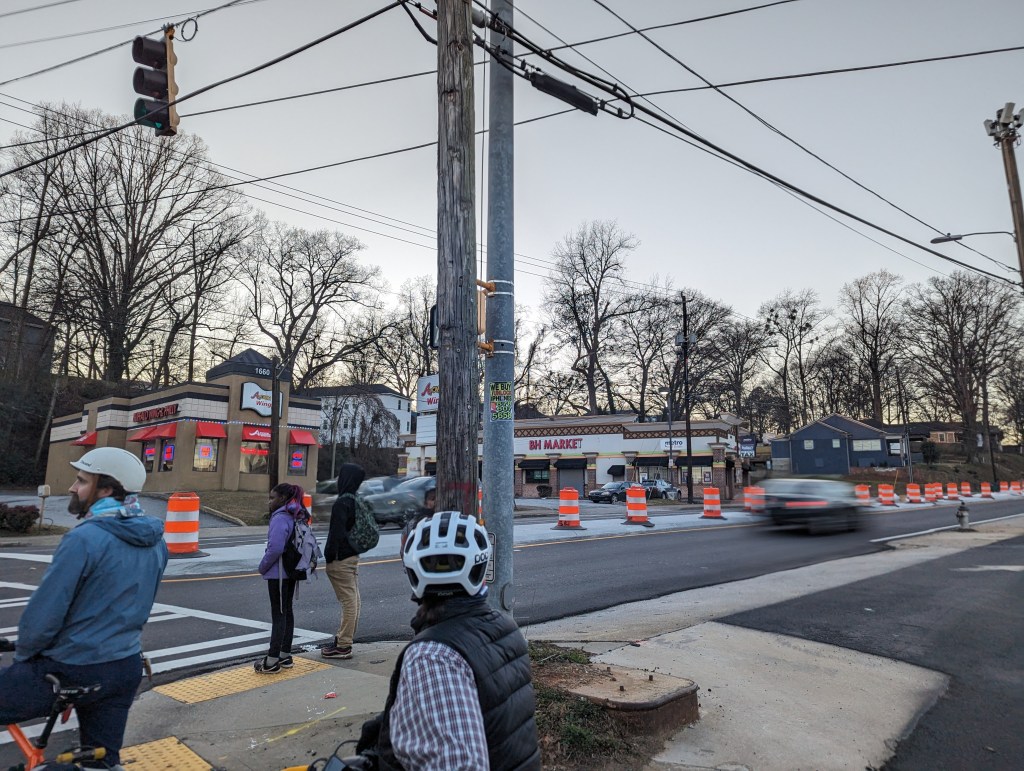
On February 14, 2024, the Atlanta City Council approved legislation prohibiting drivers from turning right on red in three central neighborhoods, a true win for Atlantans. Research shows that turning right on red poses significant risks to people who are most vulnerable in crashes: people getting around by foot, wheelchair, and bicycle. As drivers make right turns on red lights, their attention is focused on oncoming traffic from their left — not on people walking across the street or waiting in the bike lane on their right. With their attention elsewhere, drivers are more likely to turn into people outside of cars who have the pedestrian signal to cross. Recently, the Atlanta Department of Transportation found 65 fatalities and serious injuries over nine years involving right turns at signalized intersections. More than 40% of these crashes were found to be the result of car drivers turning right at red lights.
This legislation, which requires implementation before 2026, represents a major step in making our streets safer for everyone using our city’s roads and sidewalks to get around. But it wasn’t a given that we would get here.

The effort to ban right turns on reds was inspired by Councilmember Dozier’s personal experience walking around Downtown with his family over the holidays. Even though they had the right-of-way at the signalized intersections, oversized SUVs kept encroaching into the crosswalks, drivers’ heads turned in the opposite direction, completely oblivious to the family’s presence.
The Councilmember started researching and learned about the national push to protect pedestrians in crosswalks by prohibiting turns at red lights, including a partial ban in Raleigh, NC, and citywide bans in New York City and Washington, D.C. If both peer cities and the cities Atlanta aspires to compete with saw promise in this sort of policy, it was something to consider for Atlanta.
The biggest initial challenge in getting support from legislators was that data was scarce. Several of the legislation’s detractors cited the lack of comprehensive national studies, specifically the fact that there had been no new research since 1994. The strongest study, from the early 1980s, showed pedestrian fatalities doubled in the immediate aftermath of the nationwide rule allowing right turns on red, which was initially passed with the hope of reducing gas use. Meanwhile, local crash data provided by the Georgia Department of Transportation did not include details about whether the light was red during turns. However, several localized studies showed significant improvement in pedestrian safety in cities like San Francisco and Washington, DC after right-on-red bans. Powerfully, the Federal Highway Administration recommends banning right turns on red to increase pedestrian safety and decrease crashes at intersections, especially in combination with leading pedestrian intervals.

In the end, these data were enough to successfully convince Atlanta City Councilmembers to support the no-right-on-red bill. Some supported it because, as pedestrians working Downtown near City Hall, many had experienced their own close calls. In an unexpected turn, we also found allies in councilmembers who drove some of the largest vehicles, who supported the effort due to near-misses they’d experienced with pedestrians. Finally, the narrow tailoring of this legislation to a handful of communities — focusing on the three neighborhoods of Downtown, Midtown, and Castleberry Hill, where pedestrian activity is the highest — helped us garner broader support, especially from colleagues who have little appetite for citywide initiatives.
The legislation was made additionally critical by the growing pedestrian safety crisis in Atlanta, which more than doubled between 2020 and 2022 and increased by 52% between 2020 and 2023 to the highest number of pedestrian deaths in over 40 years. Propel ATL’s research found clear racial disparities in pedestrian fatalities: Black Atlantans are more likely to be struck by car drivers and killed while walking. Over two-thirds of pedestrian fatalities in 2022 occurred in predominantly Black neighborhoods — which have fewer safety features like sidewalks, crosswalks, and bike lanes due to practices like redlining and highway placement in Black communities. Atlanta’s no-right-on-red policy was championed as just one part of a larger legislative effort aimed at addressing this crisis, along with adopting the City’s first Vision Zero Action Plan and zoning changes to encourage more pedestrian-friendly land use.Some council members raised concerns about the potential for this ban to increase police interactions with Black and brown Atlantans, or to overburden low-income families. Designing safer streets can encourage safer behavior, rather than requiring additional enforcement. To address these important concerns, the City created an unarmed traffic enforcement unit and advocates are exploring income-based traffic fines.


No-turn-on-red signs are similar to stop signs: they rely primarily on people complying with the sign for their effectiveness. Other cities have found high rates of compliance. What’s more, it only takes one driver stopping to prevent everyone behind them from turning right on red.
Atlanta’s new no-right-on-red policy is a step towards real, measurable change in pedestrian safety. It’s also a chance to live out our declared values as a city that is both pedestrian-friendly and supportive of sustainable and safe ways of getting around. This policy and others like it will reshape our city’s future toward one that is more inclusive for everyone on our streets.


Streetsblog has migrated to a new comment system. New commenters can register directly in the comments section of any article. Returning commenters: your previous comments and display name have been preserved, but you'll need to reclaim your account by clicking "Forgot your password?" on the sign-in form, entering your email, and following the verification link to set a new password — this is required because passwords could not be carried over during the migration. For questions, contact tips@streetsblog.org.
More from Streetsblog USA
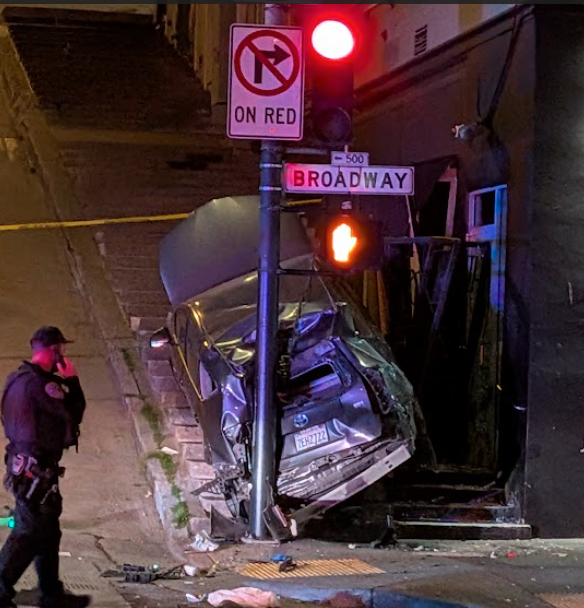
Motorist Careens onto North Beach Sidewalk, Killing Pedestrian
Driver kills pedestrian at another location where a safety project festered
The post Motorist Careens onto North Beach Sidewalk, Killing Pedestrian appeared first on Streetsblog San Francisco.