Mixed Reviews for ‘Reconnecting Communities’ Grants
The latest round of federal “access and equity”-focused infrastructure grants contains a puzzling mix of projects that will heal neighborhoods torn apart by highways, and a few that will simply put a Band-Aid on wounds that the Department of Transportation is actively inflicting, advocates say.
On Wednesday, the Biden administration released a list of 133 projects that will receive a total of $3.3 billion in funding under the Reconnecting Communities and Neighborhood Access and Equity programs, which are intended to remediate the damage caused to racially and economically marginalized communities as a result of past transportation investments.
Several grants, though, will help cap highways that states are in the process of widening, while few will reduce capacity for driving.
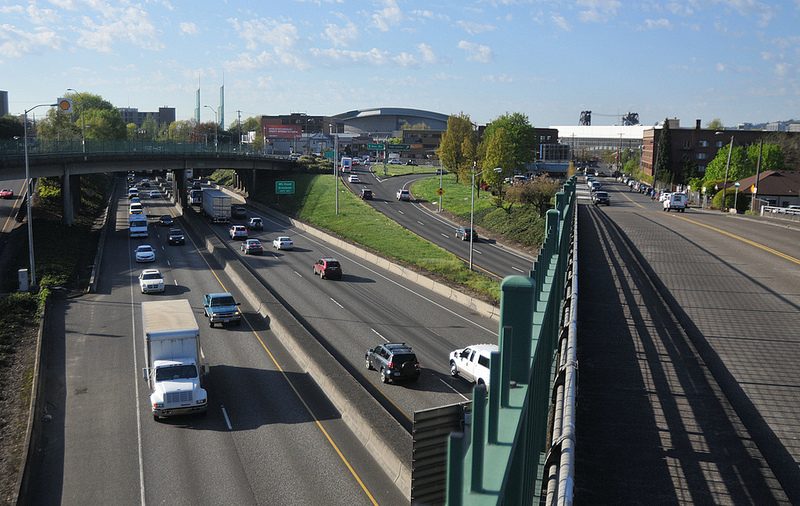
The single largest grant is a staggering $450 million for Portland’s still-imperiled Rose Quarter Improvement Project, which is problematic because the proposed two-and-a-half block highway cap “will add more freeway miles than it covers,” America Walks’ Ben Crowther pointed out. (Another project Crowther singled out, the Claiborne Expressway in New Orleans, also received a $2 million planning grant to study “overpass improvements” that would potentially remove on- and off-ramps to the freeway, but not the freeway itself.)
The second-largest grant went to Boston’s Allston “Multimodal” Project, the specifics of which have drawn scrutiny from advocates who fear that it would construct a series of new streets “two to three times wider than any of the streets in the adjacent neighborhoods,” StreetsblogMASS wrote.
Austin’s controversial I-35 project also received a $105-million capital grant to install caps and stitches along eight segments of a highway that Texas DOT is actively widening, which Kevin DeGood of the Center for American Progress recently called “a clearly destructive megaproject.”
On the bright side, Syracuse, N.Y. scored $180 million to convert a notorious urban highway into a boulevard lined with parks and other amenities. And St. Louis won $9.9 million to complete a significant section of the Brickline Greenway, which will eventually connect 14 historically Black neighborhoods.
Advocates for active transportation celebrated the sheer volume of trail-focused projects.
“Even in an early glance, is that it seems, again, that the demand for — and investment in — connected active transportation infrastructure is significant, reinforcing the role of trails and other walking and biking infrastructure in addressing key issues [communities] face, like bike/ped safety, environmental and transportation justice, and climate,” said Brandi Horton of the Rails to Trails Conservancy. “This grant round represents major funding, and it’s unlikely we’ll see this volume of investment repeated — even more reason that it’s critical for Congress to fully fund [the Active Transportation and Infrastructure Investment Program] so that the pace of developing this infrastructure can be sustained.”
Other significant projects include:
- $159 million for Philadelphia’s “Chinatown Stitch”
- $157 million for Atlanta to start building a four-acre park over interstates 75 and 85
- $147 million for Jacksonville’s “Emerald Trail” project
- $139 million for Los Angeles to build 14 miles of bus lanes, 60 bike share stations, and other improvements
- $117 million for New York City’s Queensway project, which will repurpose an abandoned railway into a linear park
- $111 million for Chicago to complete track improvements along the Blue Line.

Read More:
Streetsblog has migrated to a new comment system. New commenters can register directly in the comments section of any article. Returning commenters: your previous comments and display name have been preserved, but you'll need to reclaim your account by clicking "Forgot your password?" on the sign-in form, entering your email, and following the verification link to set a new password — this is required because passwords could not be carried over during the migration. For questions, contact tips@streetsblog.org.
More from Streetsblog USA
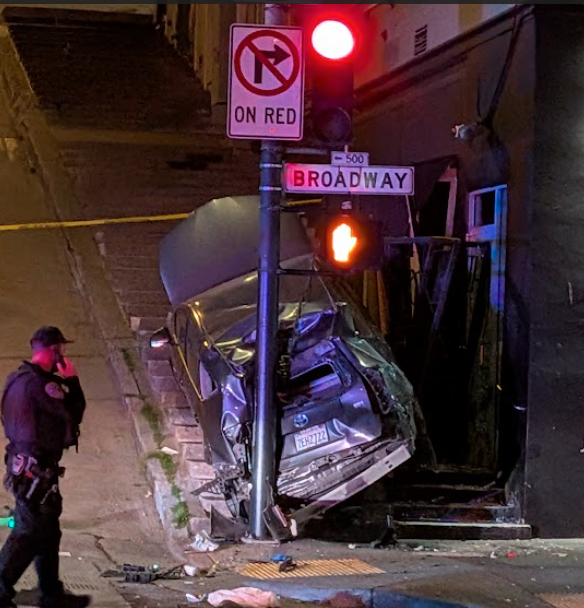
Motorist Careens onto North Beach Sidewalk, Killing Pedestrian
Driver kills pedestrian at another location where a safety project festered
The post Motorist Careens onto North Beach Sidewalk, Killing Pedestrian appeared first on Streetsblog San Francisco.