Study: Drivers Responsible For Way More Ammonia Pollution Than Previously Thought
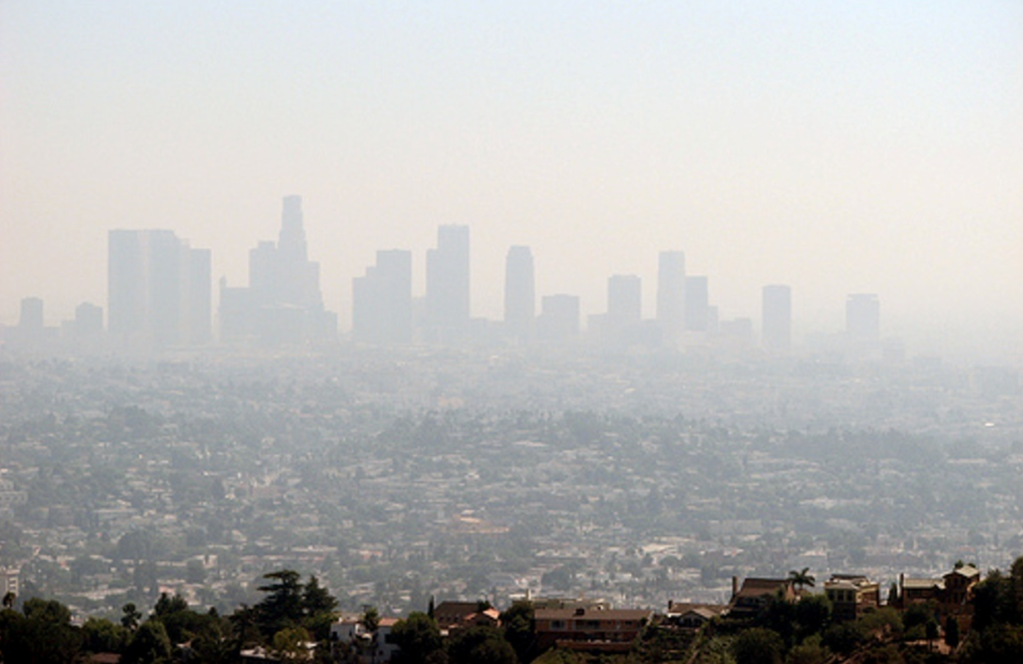
Federal and state agencies may be underestimating the amount of dangerous ammonia emissions that cars pump into the atmosphere by as much as a factor of five, a new study finds — and urban areas are getting hit the worst.
Compared to the greenhouse gases that Americans have become familiar with since the dawn of the climate crisis, ammonia gas (aka NH3) is a relatively understudied vehicle emission — in part because scientists have struggled to isolate exactly how much NH3 in the air is attributable to transportation versus other sectors.
Whatever its source, airborne ammonia is often deadly, because it combines with nitrogen oxides in the air to form fine particulate matter that has a major impact on human health, in addition to lasting damages to the environment. Because of increased rates of heart and lung disease and habitat destruction in fragile ecosystems, ammonia pollution from vehicles alone has been linked to 15,000 premature deaths across the United States every year, in addition to the impacts of NH3 emissions from more recognizable (and easy-to-smell) sources, like runoff from agricultural feedlots.
During the pandemic, when vehicle travel nosedived, researchers at the University of Colorado Boulder had a rare opportunity to study the decrease in NH3 levels — which allowed them to estimate how much ammonia pollution was attributable to driving in a single urban area, rather than in larger regions that include rural areas replete with farms.
Using advanced satellite imagery to study concentrations of the chemical in the air above Los Angeles County in the weeks before and after the quarantine orders, researchers estimated that during normal times, drivers are likely probably responsible for between 60 and 95 percent of NH3 pollution. That’s more than double the roughly 25 percent share that most state and national environmental agencies currently attribute to vehicle pollution in the area — and the researchers say that could mean ammonia-related deaths are being undercounted, too.
“Vehicles can be the dominant sources of ammonia emissions over urban areas,” said Hansen Cao, lead author of the study, in a university release. “If we’re underestimating those emissions, then previous estimates of premature deaths owing to ammonia emissions might also be underestimated.”
Of course, ammonia emissions in car-dominated Los Angeles aren’t necessarily representative of the rest of the United States. But other studies indicate that the CU Boulder findings might not be exceptional A late 2020 University of York study found that ammonia emissions from transportation in the United Kingdom were likely being undercounted by a factor of at least 2.6 times, and that in highly urbanized areas, passenger car NH3 emissions were being under-counted by a stunning factor of 17. (The CU Boulder team hope to conduct further studies of ammonia emissions in other U.S. cities, too.)
Electric car adoption and stronger emissions regulations on gas-powered vehicles could help bring those devastating numbers — though experts say it will take decades to replace the dirty cars that dominate U.S. fleets now. And in the meantime, tactical urbanist interventions that proliferated across the country overnight during the pandemic lockdowns proved once and for all that cities are capable of far quicker interventions that can cut down on all vehicle emissions, like pop-up bike lanes and sidewalks, car-free Open Streets events, and rapid-build bus rapid transit lanes.
The only questions is whether U.S. leaders will learn from the COVID-19 era and seize the opportunity slash pollution in all its forms — or whether they’ll continue to let pollutants like ammonia poison their people.

Read More:
Streetsblog has migrated to a new comment system. New commenters can register directly in the comments section of any article. Returning commenters: your previous comments and display name have been preserved, but you'll need to reclaim your account by clicking "Forgot your password?" on the sign-in form, entering your email, and following the verification link to set a new password — this is required because passwords could not be carried over during the migration. For questions, contact tips@streetsblog.org.
More from Streetsblog USA
Motorist Careens onto North Beach Sidewalk, Killing Pedestrian
Driver kills pedestrian at another location where a safety project festered
The post Motorist Careens onto North Beach Sidewalk, Killing Pedestrian appeared first on Streetsblog San Francisco.