How To Make a COVID-Era Pop-Up Park Permanent
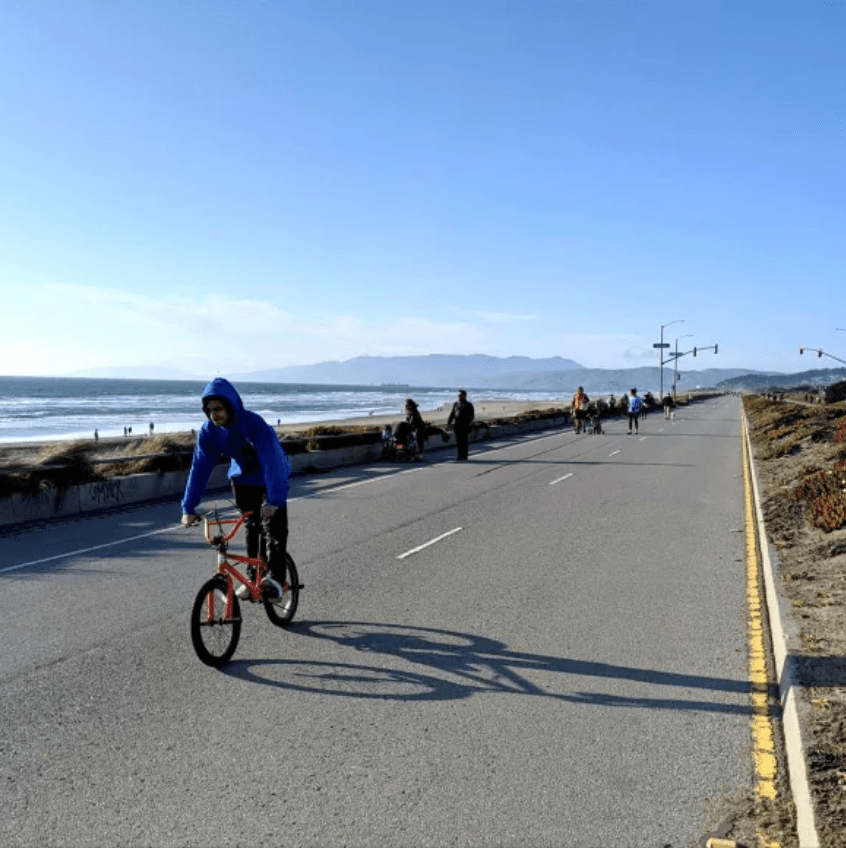
San Francisco activists are fighting the city’s decision to allow high-speed vehicle traffic back onto a road that was transformed into a beloved public park during the pandemic, using a legal mechanism that could become a blueprint for preserving other COVID-era street improvements.
In a Tuesday open letter to the San Francisco Board of Supervisors, more than 300 advocates decried Mayor London Breed’s decision to heed Supervisor Gordon Mar’s calls to re-open a roughly two-mile stretch of the Upper Great Highway to weekday motor-vehicle traffic. Breed’s decision, which is to take effect on August 16, would effectively end the city’s most popular “Open Streets” initiative (except on weekends and select holidays).
Now known as the “Great Walkway,” the four-lane, oceanside boulevard has attracted an average 3,200 daily visitors since it was first shuttered to drivers in April 2020, quickly becoming the second-most-popular park in the city. (Golden Gate, whose users are facing their own battle to keep a major road through the park car-free as the pandemic subsides, is still number one.) That’s in part becuase the Walkway is particularly well-suited to an Open Streets treatment: even before the pandemic, it often closed for sand clearance, and the land flanking it is largely undeveloped.
“[The Upper Great Highway] is unusual among SF streets, because there are no houses or businesses on it, and there’s no parking allowed on it — basically, if you’re driving on it in a car, it’s pretty much illegal to stop,” said Brian Coyne, a lecturer in political science at Stanford University and co-author of the letter. “So it’s not clear to a lot of San Franciscans that the best use of this prime oceanfront land land is as a bypass road that makes it one, two, three minutes quicker to drive between the Sunset and Richmond districts.”
Coyne and his collaborators argue that such small inconveniences hardly justify an emergency exemption from the California Environmental Quality Act, which requires government agencies to study and inform the public about the environmental effects of projects such as the closing of the Great Walkway.
If the tactic succeeds, experts say it would be a rare victory for the controversial law. Pro-driving interests long have abused CEQA and many similar environmental laws to stall sustainable transportation initiatives in S.F., including delaying the implementation of the city’s bike plan by more than four years. Several of the city’s most popular COVID-era “slow streets” were delayed before an emergency CEQA exemption allowed residents the space for social distance during the early COVID-19 lockdowns.
Coyne acknowledges that the appeal is a bit of a Hail Mary — but the city is the one forcing the sustainable-transportation community’s hand. Breed announced the closure just 11 days before it would go into effect, in a chilly press release release that claimed reopening the road would be necessary to accommodate congestion after schools reopen next week.
Advocates question the idea that Bay area kids would be better served by slightly shorter school driving commutes than a safe oceanfront park that many love — especially considering that tens of thousands of them take transit to the classroom. San Francisco teenagers and parent groups such as Kid Safe SF have long been among the most outspoken advocates for keeping the road a walkway.
“The children of San Francisco need public spaces they can enjoy without being concerned that motor vehicles will harm them,” said Cliff Bargar, a volunteer lead with Streets for People SF. “I have sympathy for people who are worried about traffic violence and think of getting drivers back onto the Great Walkway as a way to make their own [adjacent] streets safer, but I don’t think giving up one of of our greatest and safest public spaces will actually help in the ways they think it will.”
Efforts from advocates like Bargar — including a big rally planned for Sunday — may prove necessary for saving the park, especially if the CEQA appeal fails. In a Kafkaesque twist, the Clerk of the Board of Supervisors is so far refusing to hear the advocates’ case on the grounds that Breed hasn’t issue a formal order to close the park — because she’s only issued a press release signaling her intention to issue an order.
Advocates say that bureaucratic end-run around environmental law is an outrage — especially in an era of accelerating climate change.
“I mean, look at the color of the sky this week — it’s been orange for days because rural California is burning up in climate change-fueled wildfires as we speak,” adds Coyne. “Supervisor Mar wrote an op-ed in Richmond Review the other day saying [‘The vision of a waterfront promenade and a managed retreat from the coastline is the future, but we live in the present.’] … Well, how do you think we get to that future, if not through the actions of local decision makers like Mar?”
The future isn’t the only justification for keeping open the Great Walkway; San Francisco’s own history has proved the benefits of returning streets to people. The infamous Embarcadero Freeway also was closed to vehicle traffic under an emergency order following a 1989 earthquake; today, it’s been torn down and replaced with a people-centered boulevard that the National Trust for Historic Preservation called “a remarkable urban waterfront renaissance.”
If the city follows that precedent on the Great Walkway, advocates hope it could inspire cities across the nation to preserve their pandemic-prompted street-safety improvements.
“We’ll just keep at it,” added Bargar. “The more we can demonstrate that it’s not the end of the world to remove more highways — and that it’s a beautiful thing to return these spaces to the people — the easier it will be for advocates to do it everywhere.”

Read More:
Streetsblog has migrated to a new comment system. New commenters can register directly in the comments section of any article. Returning commenters: your previous comments and display name have been preserved, but you'll need to reclaim your account by clicking "Forgot your password?" on the sign-in form, entering your email, and following the verification link to set a new password — this is required because passwords could not be carried over during the migration. For questions, contact tips@streetsblog.org.
More from Streetsblog USA
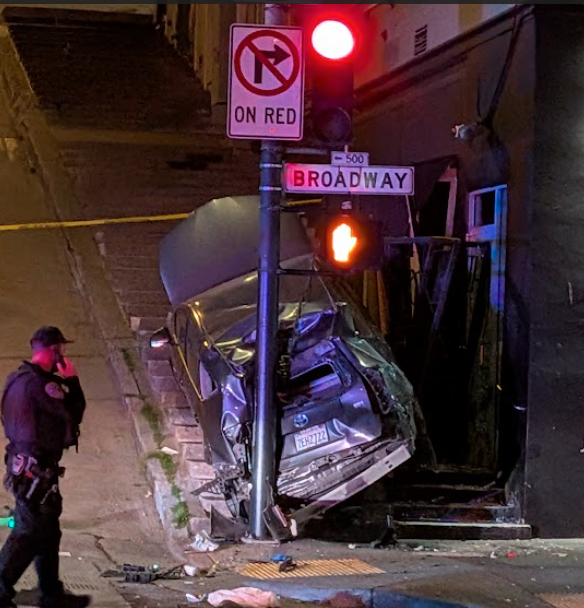
Motorist Careens onto North Beach Sidewalk, Killing Pedestrian
Driver kills pedestrian at another location where a safety project festered
The post Motorist Careens onto North Beach Sidewalk, Killing Pedestrian appeared first on Streetsblog San Francisco.