Meet 2020’s Worst Highway Boondoggles: The Cincinnati Eastern Bypass

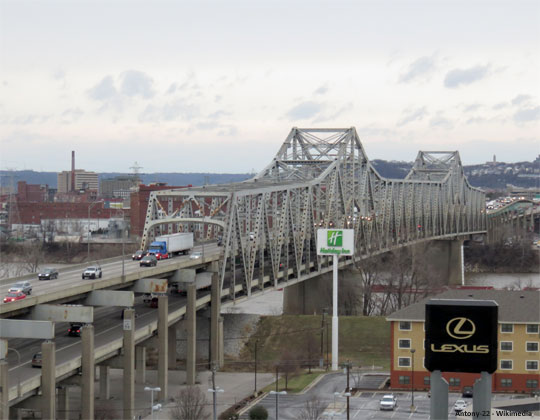
In this year’s installment of its annual Highway Boondoggles report, U.S. PIRG Education Fund and Frontier Group warn of billions of dollars in proposed spending on unnecessary highway projects that would divide our communities, deprive transit of scarce funds, and pollute our air and water. Below is the first of seven installments detailing these harmful projects.
Ohio and Kentucky transportation officials are considering a new four-lane bypass around the eastern side of Cincinnati that would cause sprawling development and damaging community impacts, while overwhelming Ohio’s state transportation budget. The proposed Cincinnati Eastern Bypass (CEB) would entail approximately 75 miles of new freeway.
The Ohio Department of Transportation (ODOT) estimates the project will cost as much as $7.3 billion, including the costs of mitigating environmental and community impacts. This is more than three times the department’s annual construction program budget, which averages $2 billion, and according to ODOT, the project would hinder ODOT’s “ability to fund the rest of our program” even if built more cheaply. In large part because of these cost impacts, ODOT has concluded that “no further expenditures of funding and staff time be put toward the CEB.” Yet some state politicians are still working to move the project forward.
If built, the highway is likely to increase pollution and sprawl, and to draw economic activity away from downtown Cincinnati. A 2000 study of similar highway bypass projects found that all such surveyed projects led to “increases in sprawled, low density commercial and residential development entailing high environmental and infrastructure costs.” In the case of a bypass around Richmond, Virginia, the study concluded that “relocations of retailing, local industries, offices, and residents facilitated by the outer belt have weakened the city’s downtown business district. … Without the bypass, local planners agree there would have likely been more redevelopment at high densities in the downtown area.”
The project would also lead to more driving and more pollution. The Kentucky Transportation Cabinet found that the project is likely to increase the number of vehicles traveling in the area by thousands of trips per day.
These impacts would be at odds with goals set by the city of Cincinnati. Cincinnati’s Green City Plan aims to improve “sustainability, equity, and resilience” and includes the goal of “population density and transit-oriented development.” The plan also includes goals to “decrease the consumption of fossil fuels, including gas, diesel, and natural gas, by 20%.”
Finally, the project would damage the environment and the communities along its proposed route. ODOT has concluded that the new highway will have “significant impacts to property and environmental resources.” The project would affect three churches, 4,195 acres of farmland, 712 homes, and three cemeteries, which a map analysis reveals would likely include Plainview Cemetery in Goshen and Greenmound Cemetery in New Richmond. Building the highway would also require four new river crossings over the Licking River, the Ohio River, the East Fork Little Miami River, and the Little Miami River. These new crossings could also put those rivers at risk of runoff pollution and construction damage.

Streetsblog has migrated to a new comment system. New commenters can register directly in the comments section of any article. Returning commenters: your previous comments and display name have been preserved, but you'll need to reclaim your account by clicking "Forgot your password?" on the sign-in form, entering your email, and following the verification link to set a new password — this is required because passwords could not be carried over during the migration. For questions, contact tips@streetsblog.org.
More from Streetsblog USA
Motorist Careens onto North Beach Sidewalk, Killing Pedestrian
Driver kills pedestrian at another location where a safety project festered
The post Motorist Careens onto North Beach Sidewalk, Killing Pedestrian appeared first on Streetsblog San Francisco.