VIDEO: How Car Dominance Makes Non-White Neighborhoods Hotter

As summer heat rages across America, some neighborhoods are substantially hotter than others — thanks to the legacies of racist transportation policies that still affect our cities.
In a new video, Grist explores how decades of racist (and fully legal) policies, such as discriminatory mortgage lending, resulted in rampant disinvestment in non-white communities — which especially hurt mostly Black, downtown neighborhoods, which became prime targets for clearance so that planners could build the federal highway system.
But the government didn’t just destroy non-white neighborhoods to clear the way for cars — they also failed to provide good public investments that residents wanted, such as pedestrian-friendly street trees and parks, to help offset the heat absorbed by all the new asphalt.
So Black neighborhoods across America consistently became some of the worst “urban heat islands” in their respective cities — disparities that contribute to devastating resident health outcomes, and that have persisted to this day, long after racist practices, such as redlining, were formally made illegal. (Although, it must be noted, systemic housing discrimination that resembles redlining still exists.)
“When we studied 108 cities across the country, we found a systematic pattern that the redlined communities were, today, on average about seven degrees hotter than their non-redlined counterparts,” said Dr. Vivek Shandas, the author of a 2020 study on the historical roots of disparities in urban-heat-island effects.
To learn more about how car infrastructure is creating intolerable heat in vulnerable communities, watch the video below.

Read More:
Streetsblog has migrated to a new comment system. New commenters can register directly in the comments section of any article. Returning commenters: your previous comments and display name have been preserved, but you'll need to reclaim your account by clicking "Forgot your password?" on the sign-in form, entering your email, and following the verification link to set a new password — this is required because passwords could not be carried over during the migration. For questions, contact tips@streetsblog.org.
More from Streetsblog USA
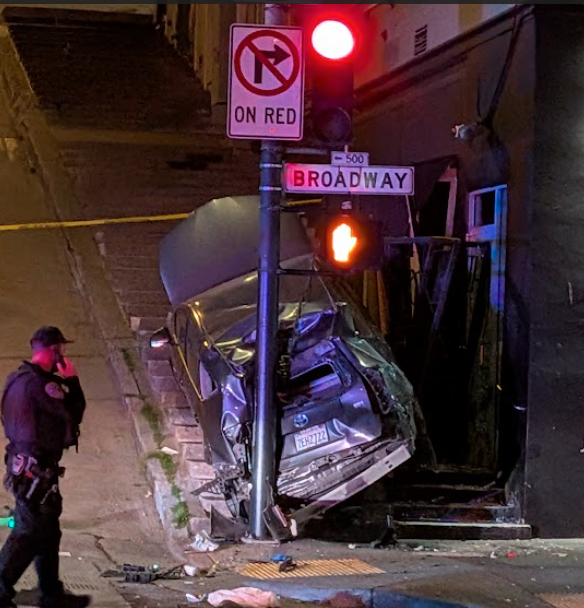
Motorist Careens onto North Beach Sidewalk, Killing Pedestrian
Driver kills pedestrian at another location where a safety project festered
The post Motorist Careens onto North Beach Sidewalk, Killing Pedestrian appeared first on Streetsblog San Francisco.