Talking Headways Podcast: Congestion Pricing in the United States
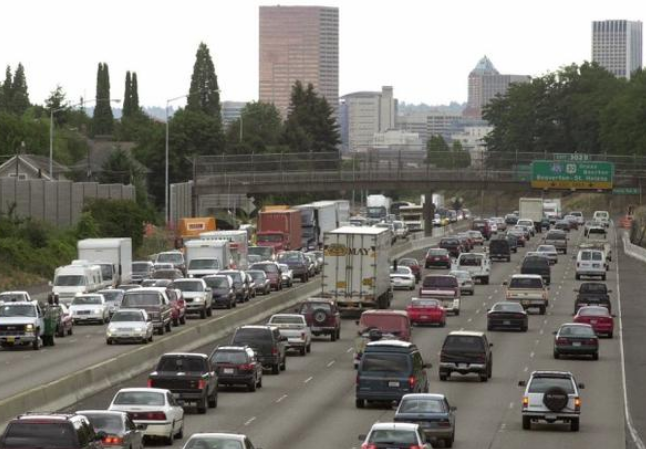
This week on the podcast, Brianne Eby of the Eno Center for Transportation talks about the group’s new report on congestion pricing — its purposes and goals, the right frame to talk about reducing congestion, how congestion pricing is part of a larger toolbox, equity implications, and the U.S. cities might be the first to adopt pricing as a policy.
If you prefer to get your news through your eyes, rather than your ears, we have provided an edited transcript below the audio player. If you’re interested in a full transcript, and don’t mind a few typos from our automated system, click here.
Jeff Wood: The report talks about London’s reason for pricing being economic competitiveness. They felt like the country and the city were not being competitive because of the congestion in the center. What’s the most common reason that cities often consider pricing?
Brianne Eby: Yeah, that’s an interesting question because I think it’s probably somewhat different here in the U.S. right now. I think in many ways, the impetus here is to explore this as a climate policy or maybe to achieve a more equitable transportation system. And those are both incredibly important goals to achieve out of this. And I mean it’s part of the title of the report: congestion pricing to achieve sustainability and equity goals. And so I think that those are really great reasons for exploring it. But one of the things that we lay out in this report, it’s actually principle number one, is on situating the policy within a clear vision and purpose.
And so, you know, we felt that it’s important for congestion pricing to be rooted in a clear vision before it’s considered as apotential policy anywhere and places that have a clear vision or purpose for pursuing the policy and the goals that they wantto achieve are more likely to obtain a broad base of support for the policy. So the main outcome should be to mitigate congestion that’s part and parcel with exploring this policy, but it can achieve a variety of downstream policy goals, like improving air quality, helping to achieve climate goals and promoting social equality.
These goals might ultimately be part of the city’s broader vision for pursuing the charge. And so, you know, I think it’s a little misguided to approach the policy as the one thing that needs to happen to achieve a city’s climate goals or to achieve equity. I think it is a tool that can be used for all of these things, but it’s not the only thing. In terms of economic competitiveness and why that was pursued in London, so there’s a real downside to having congestion in cities, as you know, I’m sure your listeners and readers know if cars are stalled and sitting in traffic, then that’s not only unproductive for the people that are sitting in those cars, but it’s not productive for businesses or any entity that’s based in the downtown area.
You want people to be coming and going in order to have a healthy and thriving city. And so the idea of this policy is to keep vehicles moving and keep people coming in and out of the city. And so I think London recognized that this is a way to help make that happen and to ultimately make the city more competitive both within the country and globally, too.

Read More:
Streetsblog has migrated to a new comment system. New commenters can register directly in the comments section of any article. Returning commenters: your previous comments and display name have been preserved, but you'll need to reclaim your account by clicking "Forgot your password?" on the sign-in form, entering your email, and following the verification link to set a new password — this is required because passwords could not be carried over during the migration. For questions, contact tips@streetsblog.org.
More from Streetsblog USA
Motorist Careens onto North Beach Sidewalk, Killing Pedestrian
Driver kills pedestrian at another location where a safety project festered
The post Motorist Careens onto North Beach Sidewalk, Killing Pedestrian appeared first on Streetsblog San Francisco.