Advocates Question AOC and Levin’s ‘EV Freedom Bill’
Coord invites cities and other curb managers to apply for its Digital Curb Challenge to undertake a free curb management pilot program in 2020. Applications close on Feb. 14. Click here for information.
Sustainability advocates were unimpressed by a new proposal by two House Democrats that would a mandate a comprehensive network of electric vehicle charging stations — saying that the so called “EV Freedom Act” would not significantly reduce greenhouse gases and would maintain a car-based transportation system that is killing tens of thousands of Americans annually.
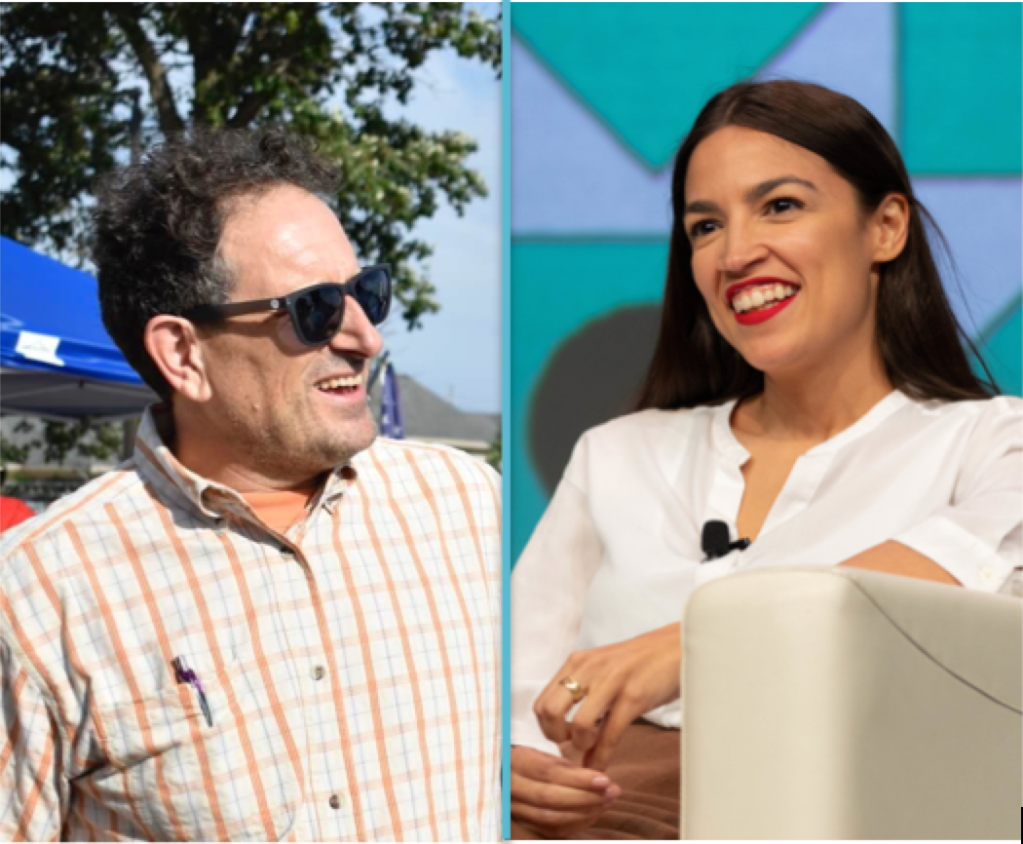
Reps. Alexandria Ocasio-Cortez of New York and Andy Levin of Michigan unveiled the rough outline of their bill on Friday, saying it would lead to the installation of electric car chargers along the “national highway system” within five years using a technology that would “fully power up EVs in the time it takes to fill up gas and diesel tanks.” (Such technology is close to existing in chargers, but not in car batteries, which can’t currently handle such high-speed charging.)
The bill would also “secure the automotive and infrastructure jobs of the future and create thousands of good-paying jobs with robust ‘Buy America’ and prevailing wage requirements to protect the hardworking Americans who will build an EV future,” the legislators said in a statement.
No pricetag was released and few details were given. “It’ll cost a lot of money to put all these chargers in place,” Levin told The Hill, adding, “We’ll see” when asked how much will be paid for by taxpayers.
Still, the bill may prove tenable, even in divided Washington: Republicans have opposed most Democratic initiatives to curb climate change, but initiatives to increase spending for auto-centric infrastructure have, historically, been an area of rare partisan consensus.
And therein lies the problem, advocates say. A recent analysis by Andrew Small in City Lab pointed out that mass electrification of the American auto fleet is not enough because Americans drive too much and our electrical grid is often powered by coal and other fossil fuels.
“If Americans drive their electric cars anywhere near as much as they do with their current gas-guzzlers, it would cancel out the carbon reduction brought on by electrification,” Small wrote. California, for example, has set a goal of reducing transportation-related carbon emissions 20 percent by 2035 — but in order to achieve that, the Golden State would need to not only electrify its entire five-million-vehicle fleet and cut 20 percent of the fossil fuels currently consumed by power plants to make electricity, but also reduce vehicle miles driven by 20 percent.
Activists also jumped on Levin’s suggestion that lawmakers “need to be able to ensure that EV drivers can drive all across this country and never worry about being able to recharge their vehicles.”
Really? As Daniel O’Brian tweeted, “We should develop a nationwide network of high-speed RAIL and stop our need for everyone having a car.”
In a statement, Levin likened his bill to Eisenhower’s construction of the interstate highway system — but he did so at his own peril. Advocates quickly reminded the freshman Democrat that the benefits of the Federal Highway Act of 1956 indisputably skewed away from people of color and the poor. The infrastructure mission was widely used to justify the destruction of poor and non-white neighborhoods for highways, a move that cost residents of those neighborhoods incalculable levels of intergenerational wealth and sent urban roadway fatality rates skyrocketing.
Some advocates fear the EV Freedom Act would have a comparable effect — helping to save lives in the long term by slowing climate change, but in the short term, strengthening one of the deadliest forces in American history: our national auto-dependency. More Americans have died in car crashes in U.S. history than in all our wars combined.
Still, some advocates are taking a middle path. Doug Gordon, host of “The War On Cars” podcast, expressed cautious optimism that the bill would at least make transportation a little more sustainable in places where cars truly aren’t optional today — but stressed that every city should work to become car-optional tomorrow:
Levin is a green-energy entrepreneur, worker retraining advocate and a key player in Michigan’s effort to finance green-energy conversions as part of the Lean & Green Michigan initiative that he created while running his own company, Levin Energy Partners.
Levin is also the nephew of former Michigan Sen. Carl Levin, who was such a strong supporter of the auto industry that he was sometimes called “the Senator from General Motors.”

Read More:
Streetsblog has migrated to a new comment system. New commenters can register directly in the comments section of any article. Returning commenters: your previous comments and display name have been preserved, but you'll need to reclaim your account by clicking "Forgot your password?" on the sign-in form, entering your email, and following the verification link to set a new password — this is required because passwords could not be carried over during the migration. For questions, contact tips@streetsblog.org.
More from Streetsblog USA
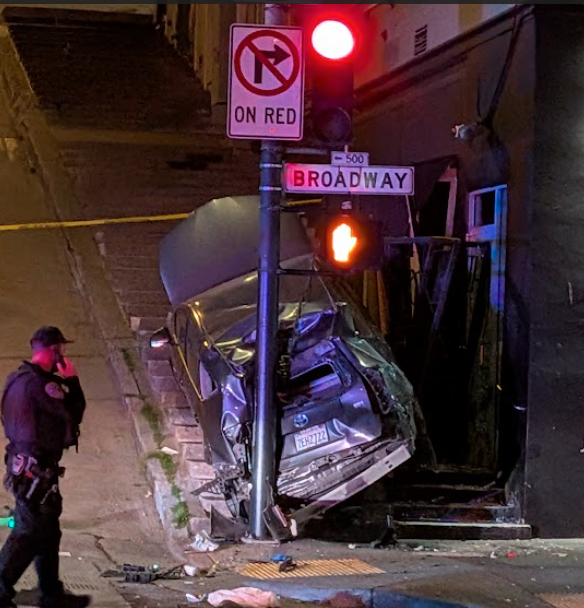
Motorist Careens onto North Beach Sidewalk, Killing Pedestrian
Driver kills pedestrian at another location where a safety project festered
The post Motorist Careens onto North Beach Sidewalk, Killing Pedestrian appeared first on Streetsblog San Francisco.