There is Structural Racism in Transport: Report
Sponsored post: The Transportation Research Board’s 99th Annual Meeting will be held in Washington, D.C. from Jan. 12-16, 2020. Click here for more information.
Cities must include community members in planning, hire more diverse staff, and stop displacing residents to combat generations of structural racism in our car-dependent society that has long favored suburban commuters in single-family homes over poorer communities riven by highways and pollution, a new report argues.
Smart Growth America’s report, “The State of Transportation and Health Equity,” identifies six systemic challenges and 40 strategies for ensuring safe and free mobility for communities regardless of color or income.
“Transportation is one symptom of structural racism and this report focuses on strategies to address acute issues of transportation and breaking down long-standing inequities,” said Smart Growth America program manager Mae Hanzlik, the study’s author. “It is a deciding issue in whether people can get to essential goods and services. We need to connect transportation solutions to values that the public and decision-makers care about.”
Advocates and planners can address the six key challenges to transportation equity — poor communication, lack of funding, low-quality of leadership, lagging local participation, siloing of experts, and displacement of residents — by “putting people first” in the conversation. The report recommends framing solutions around issues such as freedom and fairness and demonstrating the benefits of street safety with small, sometimes temporary, projects, what some call “tactical urbanism.”
“Advocates use jargon and rely on data instead of telling compelling stories,” Hanzlik said. “We need to connect our message to the public’s everyday lived frustrations and show how transportation can improve the everyday lives of individuals and drive economic growth.”
Making temporary improvement to roadways, like a traffic-calming circle or a painted pedestrian plaza barred to cars, can convert elected officials and the public to new ideas better than a grand scheme that may be hard to visualize.
“The fact we can make short-term change now, and measure it, and improve things, keeps officials engaged and shows that transportation can be changed,” Hanzlik said. “Demonstration projects are an effective engagement to show communities the flexibility of the built environment and they can be applied in communities of all sizes and geographic regions.”
Convincing officials to allocate more federal funding for transit, cycling, and pedestrian projects instead of highways and interchanges is harder.
Poor decision-making and weak leadership has created the environment we have today and it’s not easy or affordable to fix, Hanzlik writes. But providing training for transportation professionals, strengthening the connection between transportation and public health, and hiring more diverse experts and civic leaders can create change over the long-term.
“Part of the solution is we need decision-makers to better represent the communities they serve. Leadership should be advancing a transportation system that focuses on people rather than moving cars at high speed over getting people where they need to go,” she said. “It’s not just on one person or stakeholder to make sure those decision-makers are doing a better job.”
In order to do that, experts and decision-makers must make space for historically disenfranchised communities when planning new infrastructure. That involves engaging the community from the beginning of any project and hiring nonprofit groups and community advocates when you need consultants.
“Hiring staff reflective of the community and paying community consultants for their expertise is important,” Hanzlik added. “Often they’re asked for advice and thoughts without compensation but they often know a lot about transportation in their community and they should be compensated.”
Perhaps most important, government leaders should never displace people in the name of “progress.” Even when projects like a new rail line and more pedestrian crossings make a neighborhood more attractive — which can raise property values — transportation agencies must consider anti-displacement policies that keep longtime residents in their communities.
By letting residents participate in the decision-making about their own mobility, growth and renewal, transportation can shape how communities prosper and keep people healthy no matter their circumstance.

Read More:
Streetsblog has migrated to a new comment system. New commenters can register directly in the comments section of any article. Returning commenters: your previous comments and display name have been preserved, but you'll need to reclaim your account by clicking "Forgot your password?" on the sign-in form, entering your email, and following the verification link to set a new password — this is required because passwords could not be carried over during the migration. For questions, contact tips@streetsblog.org.
More from Streetsblog USA
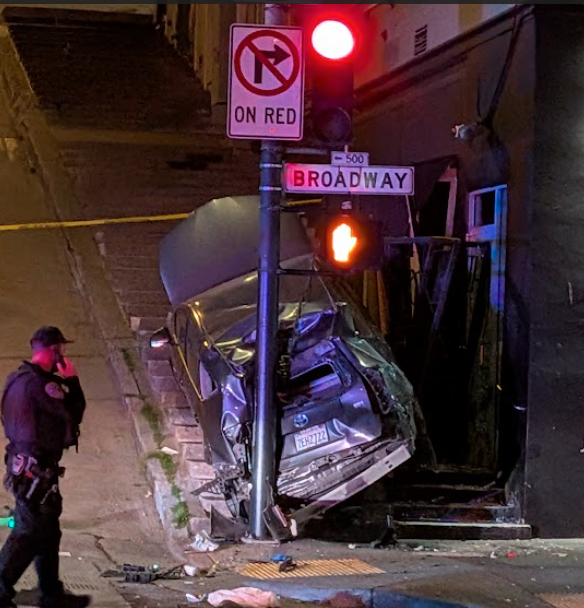
Motorist Careens onto North Beach Sidewalk, Killing Pedestrian
Driver kills pedestrian at another location where a safety project festered
The post Motorist Careens onto North Beach Sidewalk, Killing Pedestrian appeared first on Streetsblog San Francisco.