Red States Help U.S. Miss Climate Targets
These United States are certainly not united on one thing: a coalition of 26 mostly blue states is on pace to dramatically reduce carbon emissions while the remaining, mostly red, states are producing fossil fuels and burning it in cars and trucks like there’s no tomorrow.
Twenty-four left-leaning states — including California, New York, Connecticut, Wisconsin and Oregon — that formed the U.S. Climate Alliance are collectively on track to snuff emissions by 20 to 27 percent, which is close to the 26 to 28 percent goal of the Paris climate accord, according to the group’s annual report.
But the 26 states that are not in the alliance, concentrated in the Deep South, Appalachia, and Great Plains, will cut carbon by just 3 to 11 percent in the next six years — inaction will keep the country on pace to lower its emissions output by only 10 to 17 percent by 2025, effectively canceling out the work of blue states.
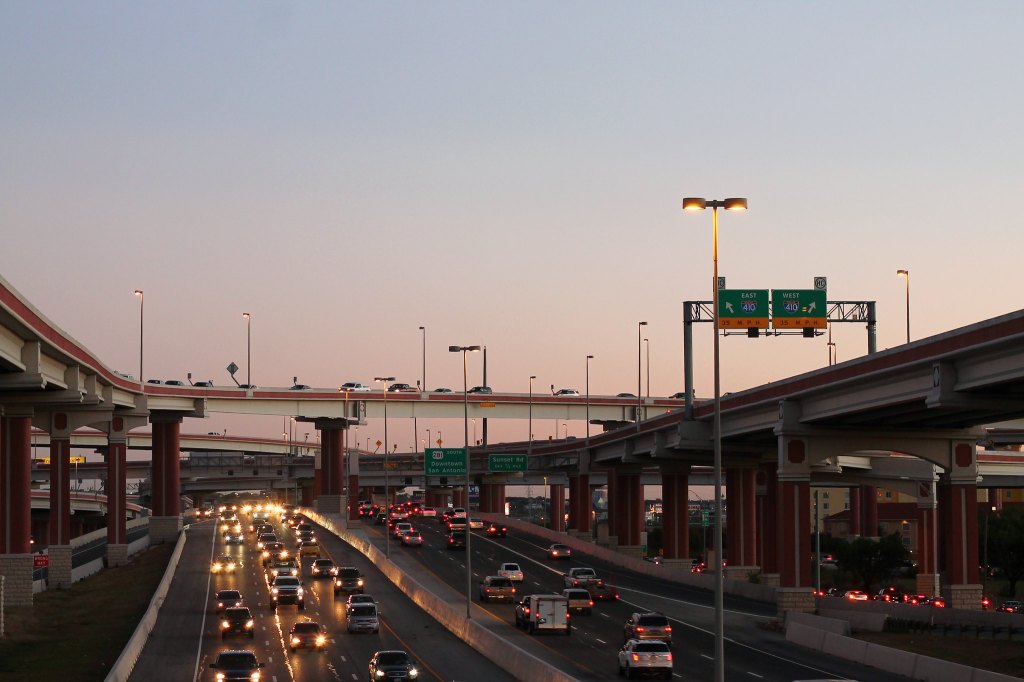
Those states are actively defying global climate agreements by building unnecessary superhighways or propping up 1950s economies through oil and natural gas extraction and refining.
Texas, the state that is the largest domestic producer of oil unsurprisingly had the highest greenhouse gas emissions in the nation, accounting for 711 million metric tons of carbon dioxide in 2017, U.S. Energy Information Administration figures show. That was nearly twice as much as the second-highest emitter, California, which had 361 million metric tons, despite a population half again as large.
Florida and Louisiana tied with the third-highest greenhouse gas emissions with 228 million metric tons each but their pollution came from different sources. Roughly 60 percent of Louisiana’s emissions originated from its oil and gas industry and 23 percent came from transportation, while 46 percent of Florida’s pollution came from vehicles and freight and another 45 percent came from electric power.
Those states are in lockstep with President Trump, who has committed to abandon the Paris climate accord by the end of next year.
States in the U.S. Climate Alliance have been focusing on reducing emissions from the transportation sector, which accounts for 29 percent of the country’s greenhouse gases. California signed a deal with four automakers to reach a fuel economy standard of 50 miles per gallon by 2026, well above the Trump administration’s standard. And a group of Northeast and Mid-Atlantic states will propose a cap and invest program this month on transportation fuel suppliers by putting a price on carbon emissions and potentially limiting the amount emitted between 29 and 40 percent by 2030.
Meanwhile, Trump has fired back by revoking California’s ability to set higher fuel standards for vehicles and his administration has shunned multilateral climate talks, infuriating environmental advocates.
“The challenge has been that for each step that [states] take forward, the administration continues to unwind our national climate framework,” U.S. Climate Alliance executive director Julie Cerqueira told Pew’s Stateline.

Read More:
Streetsblog has migrated to a new comment system. New commenters can register directly in the comments section of any article. Returning commenters: your previous comments and display name have been preserved, but you'll need to reclaim your account by clicking "Forgot your password?" on the sign-in form, entering your email, and following the verification link to set a new password — this is required because passwords could not be carried over during the migration. For questions, contact tips@streetsblog.org.
More from Streetsblog USA
Motorist Careens onto North Beach Sidewalk, Killing Pedestrian
Driver kills pedestrian at another location where a safety project festered
The post Motorist Careens onto North Beach Sidewalk, Killing Pedestrian appeared first on Streetsblog San Francisco.