‘Pedestrian-Friendly’ Portland Crosses Out Crosswalks
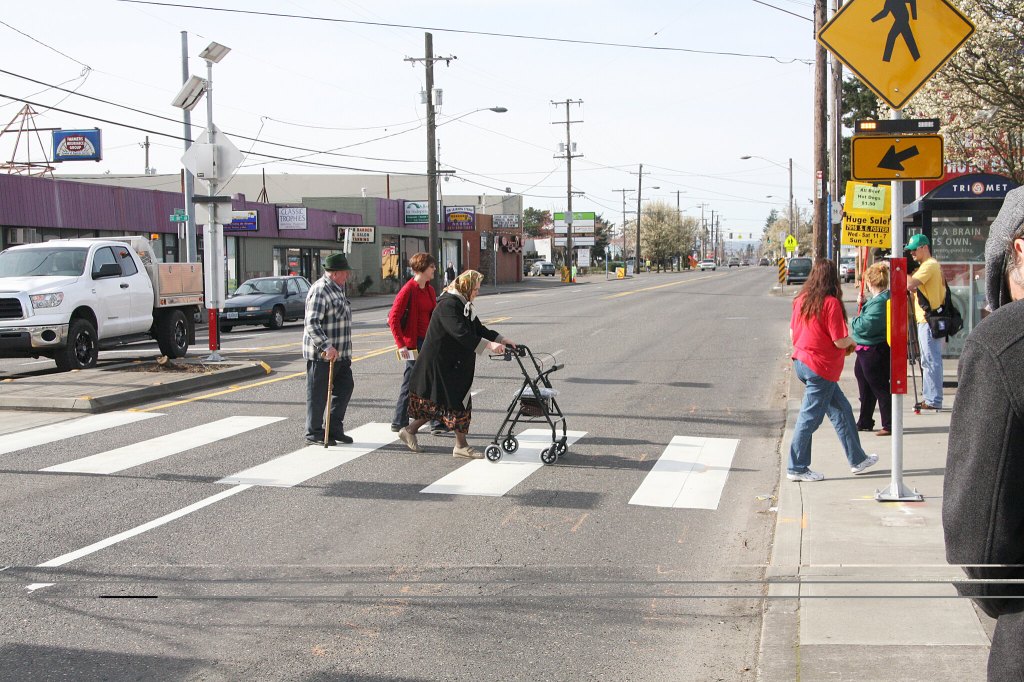
Safe-streets activists in Portland are furious that the supposedly pedestrian-friendly city has installed some 150 “No Crossing” signs and metal barriers at intersections around the city, which have been increasingly prevalent.
“It’s almost like they’re making us trespassers on our own crosswalk,” Portland attorney Ray Thomas told Bike Portland, adding that traffic officials are “infringing upon our right to roam, to be in the public way.”
https://twitter.com/Tonyatwork/status/1050071119045124096?ref_src=twsrc%5Etfw%7Ctwcamp%5Etweetembed%7Ctwterm%5E1050071119045124096&ref_url=https%3A%2F%2Fbikeportland.org%2F2019%2F07%2F09%2Fask-bikeportland-why-is-pbot-closing-so-many-crosswalks-302222
The anti-crossing signs have proliferated in recent weeks as Portland grapples with an alarming spike of traffic fatalities this year. There have been 36 traffic fatalities in Portland through the end of August, which is already more than the total number of traffic deaths last year, according to Portland’s Bureau of Transportation, which acknowledged that the figure is “very high.”
State transportation officials, who have installed barriers on state-owned streets, consider the structures to be a useful tool to limit crashes between vehicles and pedestrians. Structures are bring installed to shift pedestrians “onto nearby and more appropriate crossings” and away from areas in the middle of a road where their “vision may be bad, line of sight may be difficult, and there may be a better crosswalk nearby, State DOT spokesman Don Hamilton told Streetsblog.
“We’re looking at individual circumstances at individual location,” Hamilton said. “We’re tying to look at whether this is the best option in each case. We’re using our good judgment about what’s appropriate there.”
But national pedestrian safety advocates say the barriers are misguided and do not represent best practices. Transportation agencies must prioritize pedestrians when designing streets — including lowering speed limits, adding traffic signals, installing speed cameras and stop signs, and marking pavement with wider crossing lines to give visual cues to motorists and cyclists that pedestrians use roads, too.
“It’s got to be a multifaceted approach and they must evaluate speed limits on these road ways,” National Safety Council government relations senior director Jane Terry told Streetsblog. “Lower speeds in an area where you have a lot of vulnerable users really mean the difference between life and death.”
The signs and barriers have alarmed transit advocates and personal-injury attorneys, who say that the transit agencies are favoring vehicular traffic over pedestrians and restricting pedestrian movement unnecessarily. The presence of the anti-crossing sign also eliminates a pedestrian’s right-of-way at the crossing — likely insulating the city from legal responsibility if a car injured or killed someone at the site, attorneys said.
It also may also be cheaper for the city to close an intersection instead of installing curb cuts to make streets more compliant for people with disabilities, especially after the city agreed to a $113 million settlement last September to fix or install 18,000 curb ramps during the next 12 years.
Traffic collisions have not let up. On June 13, a car struck and killed 82-year-old Louanna Battams in an unmarked crosswalk, the same day the city had celebrated safety improvements on the road she was crossing. The city barred the intersection to pedestrians several weeks later, although city officials said the installation had been in the works before the fatality. But pedestrians can walk around the barrier and cross anyway.
The blocking of crossings is continuing apace. State Traffic Roadway Engineer Mike Kimlinger, one of two state officials who can unilaterally close a crosswalk, said he’s been closing about two a month.

Read More:
Streetsblog has migrated to a new comment system. New commenters can register directly in the comments section of any article. Returning commenters: your previous comments and display name have been preserved, but you'll need to reclaim your account by clicking "Forgot your password?" on the sign-in form, entering your email, and following the verification link to set a new password — this is required because passwords could not be carried over during the migration. For questions, contact tips@streetsblog.org.
More from Streetsblog USA
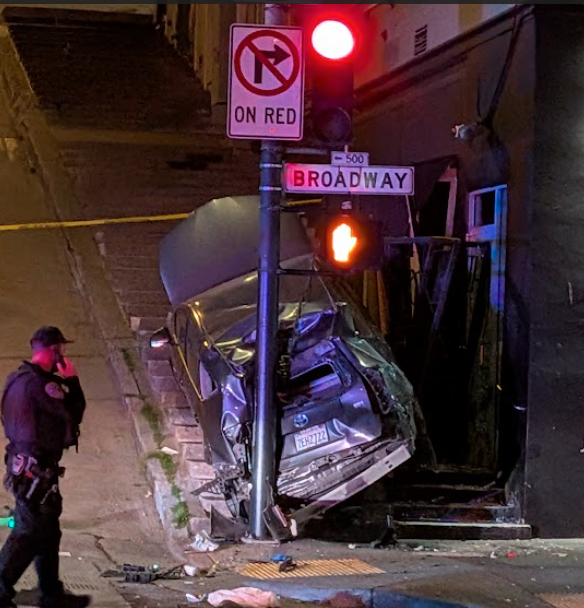
Motorist Careens onto North Beach Sidewalk, Killing Pedestrian
Driver kills pedestrian at another location where a safety project festered
The post Motorist Careens onto North Beach Sidewalk, Killing Pedestrian appeared first on Streetsblog San Francisco.