Do Millennials Love Sprawl Now? Eh, Not Exactly
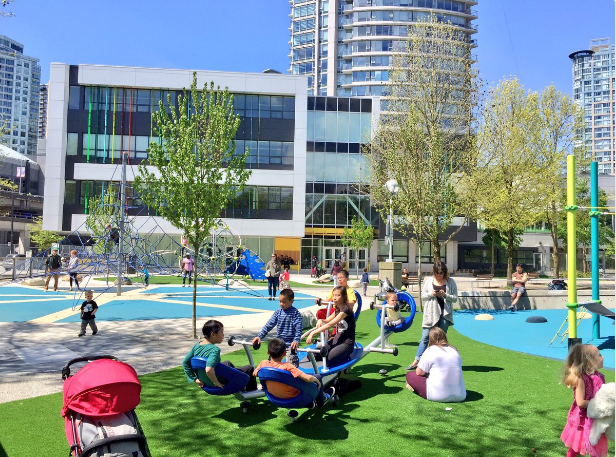
The “return to the city” movement is dead — or so say some news outlets after data from Brookings showed population growth in the suburbs outpacing that of cities, especially among millennials.
“American suburbs swell as a new generation escapes the city,” wrote the Wall Street Journal. Mother Jones piled on with “Millennials love the burbs.”
The exurbs grew at about four times the rate of urban core cities in 2016 and 2017, Brookings reports — a change from the previous several years, when core cities dominated.
The trend, however, is neither surprising, nor does it represent a decline in cities’ allure, as Mother Jones’ Kevin Drum contends. Drum goes so far to say that “there never really was much of a back-to-the-city trend in the first place” and calls the notion that millennials are flocking to cities a “myth.”
For starters, the “trend” is partly a function of mathematics. Exurbs can grow faster than cities, percentage-wise, because they start from a much smaller population base.
More importantly, though, we can’t really tell too much about what millennials prefer just by looking at population growth. Millennials, like people of all ages, simply respond to market incentives.
And cities are struggling to meet the demand for affordable housing, and convenient transportation, and largely falling short. (Take, for example, the famous struggles of New York’s subways and Washington’s Metro.)
American development system is still wired to produce mostly sprawl — so millennials are choosing, naturally enough, to move where they can afford housing, and commute with ease to their jobs
Reams have been written about the difficulty of adding housing units in cities such as San Francisco. Meanwhile, the sprawling Houston metro area — one of the nation’s fastest growing — routinely adds more new housing a year than the whole state of California. Huge political battles are being waged now in the Golden State over the right to liberalize zoning and allow more housing construction.
Cities have not been able to produce new housing at nearly the scale of suburban areas in the sun belt, where the constraints on construction are practically non-existent.
America really only has a few cities that offer an alternative to sprawl, where someone can live without a car and have a high quality of life. And those cities — New York, Seattle, Boston — are having a major affordability crisis right now.
So instead of seeing big growth in cities as the demand for urban living rises, we’re seeing prices soar. The average price of a one-bedroom in San Francisco now tops $3,500. Even the Wall Street Journal (whose editorial bent is decidedly anti-urban) mentions the urban affordability crisis as a reason for recent suburban growth among millennials.
Short of demographic growth, however, there is still a lot of evidence that Americans would rather live in cities. Pete Saunders analyzed demographic change across the U.S. in an article for Forbes this year. He found that suburban areas were, indeed, growing faster, but that growth masked some important underlying shifts.
Cities — including Chicago, Providence, and Salt Lake City — have grown wealthier compared to their suburbs.
Per-capita income rose in cities from $25,170 in 2010 to $29,490 in 2015, a gain of 17.2 percent, and from $28,919 to $32,715 in the suburbs over the same period, a gain of 13.1 percent.
In other words, the people with the most wherewithal and choice in the matter are choosing to live in cities over suburbs. Millennials — a diverse population of 83 million — are among them, as bustling millennial enclaves in cities such as New York, Atlanta, Austin, Portland, and San Francisco show.
What’s clear is that these wealthier people are, in some cases, displacing poorer people. Which is all the more reason cities must double down on building affordable housing so that people aren’t priced out.

Read More:
Streetsblog has migrated to a new comment system. New commenters can register directly in the comments section of any article. Returning commenters: your previous comments and display name have been preserved, but you'll need to reclaim your account by clicking "Forgot your password?" on the sign-in form, entering your email, and following the verification link to set a new password — this is required because passwords could not be carried over during the migration. For questions, contact tips@streetsblog.org.
More from Streetsblog USA
Motorist Careens onto North Beach Sidewalk, Killing Pedestrian
Driver kills pedestrian at another location where a safety project festered
The post Motorist Careens onto North Beach Sidewalk, Killing Pedestrian appeared first on Streetsblog San Francisco.