Vancouver Builds a Better Bike Lane
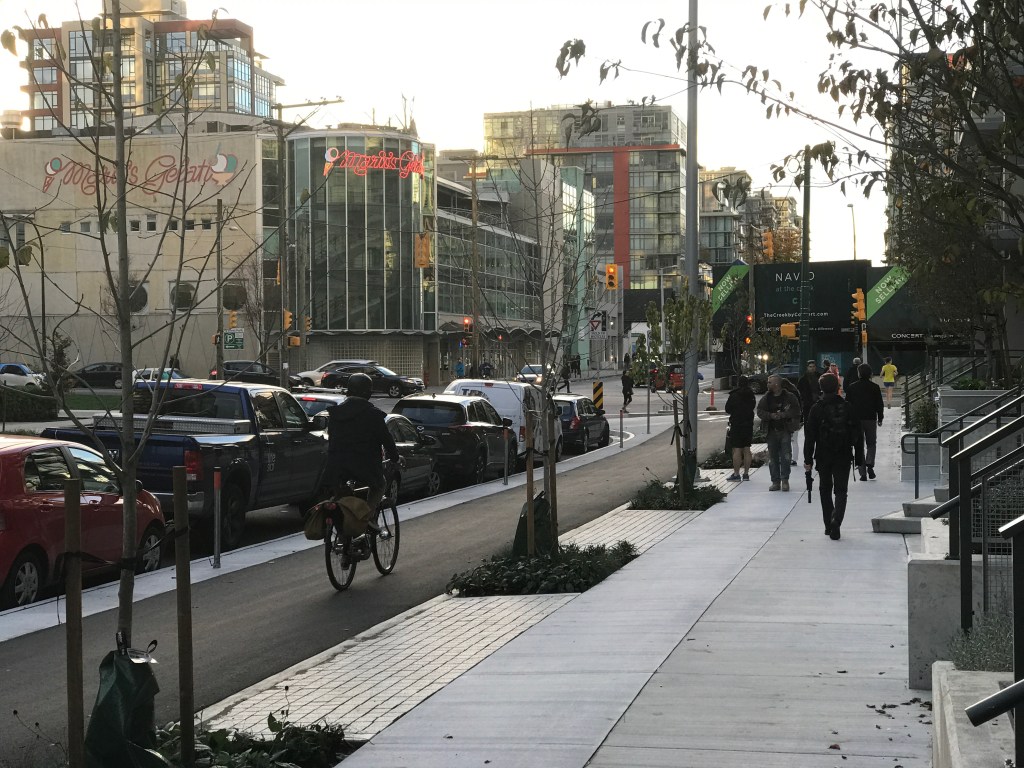
Vancouver is on its way to becoming one of the best biking cities in North America because it considers the cycling needs of both children and seniors.
The Canadian seaport city aims on making its bike lanes “AAA-rated” — or safe and comfortable for riders of “all ages and abilities,” so they work whether the cyclist is 8 or 80.
That mantra, which Vancouver uses internally to guide its future transportation planning, has led to a 279-mile bike system in which cycle commuting doubled from 6.6 percent to 11.9 percent in five years and a comprehensive transit network where 50 percent of all trips are by bike, rail, bus, or foot.
Yet British Columbia officials realize there’s more to do to make their city truly an Amsterdam on the Pacific.
Vancouver placed 37th out of the world’s top 90 cities in Coya’s 2019 Global Bicycle Cities Index, ahead of San Francisco (39), Portland (41), and Seattle (50), but well behind Montreal (16). The eastern Canadian city fared better than it western rival because it had 32 percent fewer crashes (986 per 100,000) than Vancouver (1,456 per 100,000).
The city concurrently has an ambitious climate change goal of having Canucks make two-thirds of their trips by public transit, bike, or foot, ensure that 90 percent of residents live within walking or cycling distance of their daily needs, and by making half of all cars on the road be low emissions vehicles by 2030.
But having more cyclists on the road isn’t enough to make streets safe. Transportation planners need to install protected bike lanes and extend bike infrastructure through intersections to slow down speedy motorists, according to a May 2019 study.
In order to both reduce crashes and increase ridership, Vancouver’s planners acknowledge they need to make bike lanes wide enough for cyclists lugging their kids and groceries in cargo bikes and safe enough for children and the elderly to consider riding in a path with barriers separating them from zooming drivers.
The challenge for Vancouver is to adapt different lane designs for making cycling comfortable in different roadways. That could mean a shared pathway or “sharrow” or a painted lane on a low-speed, minimally trafficked road — say 500 per cars a day with a speed limit under 20 miles per hour — but a fully protected lane on busier streets, according to former Vancouver city planner Brent Toderian.
European cities like Utrecht, Munster, Antwerp, Copenhagen, and Amsterdam — the global top five — have a head start over Vancouver in making their bike infrastructure safe. Only 25 percent of Vancouver’s existing bike lanes meet its planners’ AAA guidelines for safety and accessibility in 2017, up from 15 percent seven years ago.
Engineers expect 30 percent of its lanes will meet their standards by 2022 but cycling advocates say Vancouver must concentrate on filling the gaps between bike routes to make riding safer and more seamless.
“There are segments of the network that just don’t exist so people get dropped into situations that don’t feel safe,” HUB Cycling Executive Director Erin O’Mellin told News 1130. “It’s not just how many of kilometers of bike lane we have but are they connected in a meaningful way to get people from point A to point B?”

Read More:
Streetsblog has migrated to a new comment system. New commenters can register directly in the comments section of any article. Returning commenters: your previous comments and display name have been preserved, but you'll need to reclaim your account by clicking "Forgot your password?" on the sign-in form, entering your email, and following the verification link to set a new password — this is required because passwords could not be carried over during the migration. For questions, contact tips@streetsblog.org.
More from Streetsblog USA
Motorist Careens onto North Beach Sidewalk, Killing Pedestrian
Driver kills pedestrian at another location where a safety project festered
The post Motorist Careens onto North Beach Sidewalk, Killing Pedestrian appeared first on Streetsblog San Francisco.