The Real Reason Roads Are In Bad Shape
It’s not your imagination — roads are getting worse in America. But a new report argues that the culprit isn’t lack of money, but that states are frittering away billions on shiny new projects — ribbon cuttings! — rather doing the humble dirty work of maintenance.
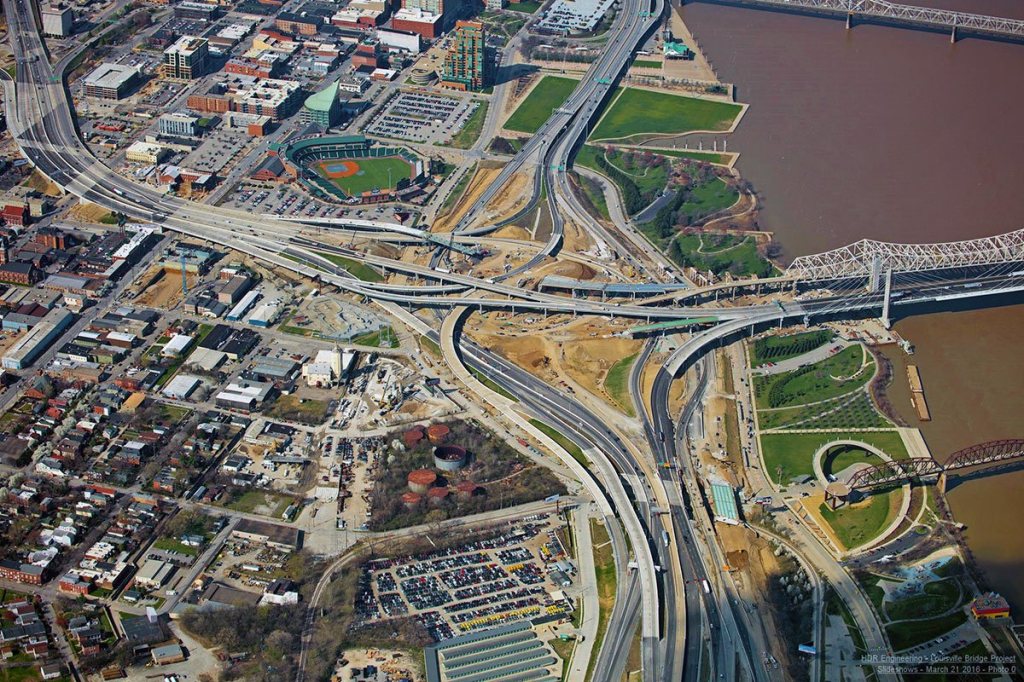
As Congress gears up for $2-trillion in infrastructure spending, the Transportation for America report reads as a warning. Past cash infusions haven’t done much to address deteriorating conditions because they ended up being channeled instead into expensive highway expansion projects, such as Atlanta’s $1.1-billion I-285/Georgia 400 interchange, or Louisville’s $2.3-billion “Ohio River Bridges” project.
Here’s what the group had to say:
Roads are getting worse
Between 2009 and 2017, overall road conditions declined. The percentage of roads categorized as in “poor condition” increased from 14 to 20 percent, T4A reports. The number of roads in good condition barely budged, increasing from 36 to 38 percent.
That’s frustrating because during this time states received almost $30 billion in highway money as the result of the 2009 “stimulus bill” from President Obama. But as you can see, it barely had an impact on road conditions.
States underfund maintenance
So what happened to all the money? Many states blew it on expensive new projects.
Between 2009 and 2014 (the latest date data is available) states spent about the same amount of money building new highway lanes as they did repairing the ones they already have. During that time, states spent a combined average of $21.4 billion on repair, and $21.3 billion on road expansion. In the years after the Obama stimulus there was a slight shift in favor of road repair, but not nearly enough to solve a decades-old maintenance problem — one that gets worse as more new roads are built.
Texas, Utah, North Carolina, Nevada, Mississippi, Indiana and Arizona were among the worst offenders. Mississippi, for example, spends 77 percent of its budget on new construction, Transportation for America reports.
Vicious cycle
Between 2009 and 2017, states added 223,494 highway lane miles — enough to to crisscross the United States 83 times, T4A says. Those new highways add to the already crushing maintenance burden. They alone cost about $5 billion a year to maintain — that’s more than Tennessee, Mississippi, Alabama, Georgia, Louisiana, and Arkansas received combined annually from the federal government for all highway expenditures.
Now the bill is getting bigger. Transportation for America now estimates we’d have to more than double state, federal and local spending — $260 billion annually — to bring roads into a state of good repair.
Spending in the wrong places
States continue to prioritize spending on rural roads, despite their overall better condition. In 2017, according to the Federal Highway Administration, 47 percent of rural roads were in good condition compared to just 28 percent of urban roads. Despite that, states were splitting spending about evenly between rural and urban roads.
The fix
Right now states are getting basically blank checks from the feds for highways. But if Congress really wants to improve infrastructure, it should attach some strings to any funding to prioritize maintenance over new construction, the report argues. The federal government could require states, for example, to reach a state of good repair with their existing highway systems before allowing any new construction, for example.

Read More:
Streetsblog has migrated to a new comment system. New commenters can register directly in the comments section of any article. Returning commenters: your previous comments and display name have been preserved, but you'll need to reclaim your account by clicking "Forgot your password?" on the sign-in form, entering your email, and following the verification link to set a new password — this is required because passwords could not be carried over during the migration. For questions, contact tips@streetsblog.org.
More from Streetsblog USA
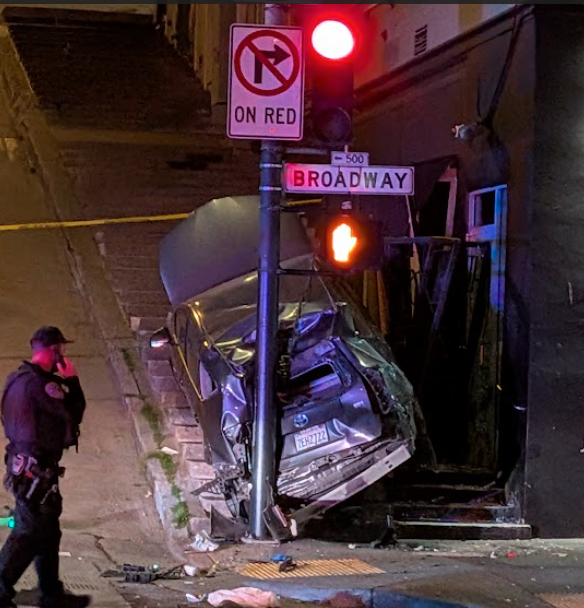
Motorist Careens onto North Beach Sidewalk, Killing Pedestrian
Driver kills pedestrian at another location where a safety project festered
The post Motorist Careens onto North Beach Sidewalk, Killing Pedestrian appeared first on Streetsblog San Francisco.