The Economic Value of Actually Following Through on a Bike Plan
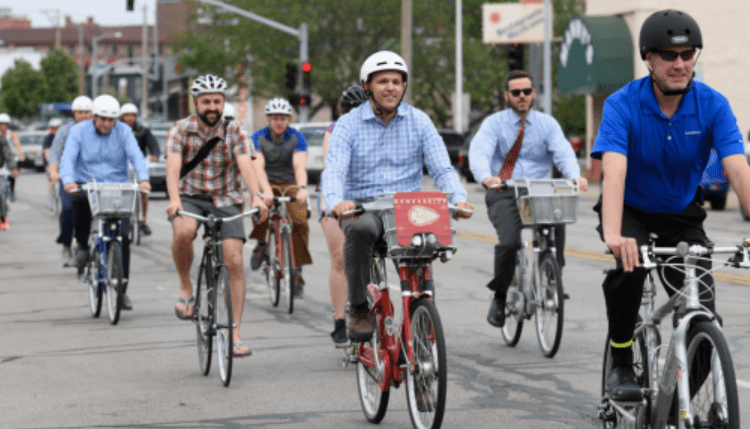
If Kansas City fully implemented its bike plan, local businesses would benefit from $500 million in increased spending and more than 700 lives would be saved over the next 20 years, according to a new study, which bolsters the case that urban areas should fully invest in better cycling infrastructure.
The researchers from the University of Missouri Kansas City analyzed a range of benefits that would result from the city’s plan to increase biking to 1.5 percent of total trips in the city by bike by 2024 and 5.5 percent by 2035 by adding 350 miles of protected bike lanes, shared use paths, recreational trails.
“This research confirms how essential a quality bike network is to so many city goals: safety, health, economic opportunity, and fiscal sustainability,” Thomas Morefield, BikeWalkKC’s director of community planning, said in a statement. “These are benefits for the entire community, not just those who bike. We can only realize these benefits if we implement the plan, so the hard work is just beginning.”
The study assumes bike infrastructure will result in safety improvements on some of the Show Me State’s most dangerous city streets. Those are expected to reduce injuries and fatalities 17 to 47 percent, in line with results from other road diet projects around the country. That would result, they say, in 15 fewer crash deaths annually. In addition, researchers estimate there would be 15 fewer deaths from inactivity and six fewer from air pollution.
Researchers Michael Frisch and Joshua Boehm say bicycling can also offer substantial benefits to the local economy. People who bike frequently tend to own fewer cars — 0.7 fewer per household on average, according to the National Household Travel Survey. That adds up to pretty substantial savings. According to government data, households with two cars spend 19 percent of their budget on transportation compared with 12 percent for one-car households. Some of that savings, the study assumes, would be reinvested in the local economy, instead of in cars and gasoline, which is mainly imported.
Overall they estimate the effects would lead to about 12,600 jobs (job years) and $500 million in additional investment by 2050. The transportation savings, improved environment, reduce traffic injuries and increased local spending would generate about $400 in benefits per household.
Bike Walk Kansas City, which commissioned the study, hopes it will build support for the city’s bike plan, which is undergoing hearings before City Council.

Read More:
Streetsblog has migrated to a new comment system. New commenters can register directly in the comments section of any article. Returning commenters: your previous comments and display name have been preserved, but you'll need to reclaim your account by clicking "Forgot your password?" on the sign-in form, entering your email, and following the verification link to set a new password — this is required because passwords could not be carried over during the migration. For questions, contact tips@streetsblog.org.
More from Streetsblog USA
Motorist Careens onto North Beach Sidewalk, Killing Pedestrian
Driver kills pedestrian at another location where a safety project festered
The post Motorist Careens onto North Beach Sidewalk, Killing Pedestrian appeared first on Streetsblog San Francisco.