Portland Will Grow — But Without Adding Cars
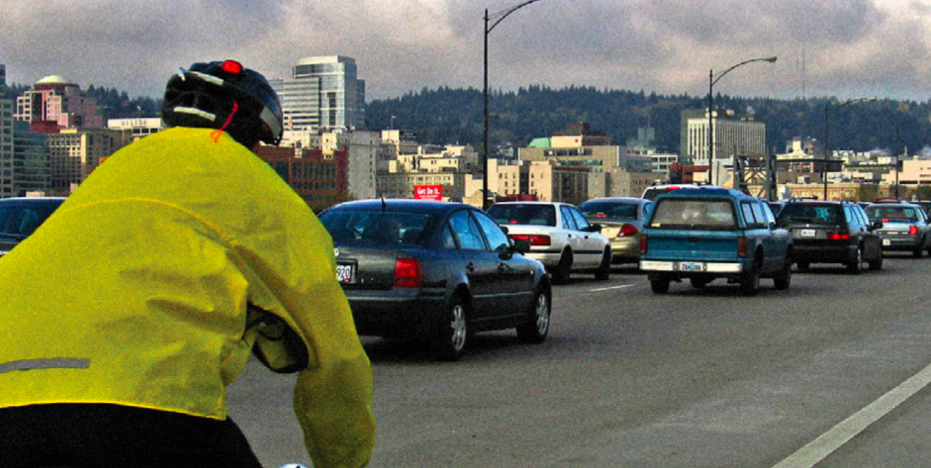
Nine miles of new bus and streetcar lanes. Thirty miles of new and upgraded low-stress bikeways. One thousand fewer parking spaces. That’s what’s on tap for central Portland after a 3-0 City Council vote yesterday.
The congestion battle plan, called “Central City in Motion” [PDF], would maintain the current amount of space for car traffic — roughly 39 percent of the city’s overall land — but remove parking spaces so that 6 percent of the land area would be set aside for bus and bike lanes, up from the current 4 percent. It is aimed at managing congested in the rapidly growing central city area, which encompasses about five square miles.
The $72-million plan includes 18 major projects, each of which adds either bike or bus lanes or both. These projects, city staff says, will increase the total people-carrying capacity of the streets by an average of 60 percent.
Sustainable transportation advocates in Portland are calling it a huge win.
Portland officials say the plan is needed because they anticipate big growth in the central city in the next two decades. Over the 5-square mile area, the city projects a 130-percent increase in residents and a 40-percent increase in jobs over the next 20 years. Without growth in the number of people using bikes and buses, that would lead to a 47-percent increase in traffic.
“We can’t add new streets, but we can use the streets we have more productively,” the city wrote in its plan.
Portland takes inspiration from the plan from Seattle, which has added 60,000 jobs in its downtown area this decade without increasing the number of cars on the road, thanks largely to strong transit investments.
Bus and bike lanes increase the potential carrying capacity of Portland’s streets, but only time will tell if the new street treatments are enough to motivate people to take full advantage, Sightline Institute’s Michael Andersen pointed out.
The plan promises to “create or improve more than 30 miles of low-stress bikeways,” and make safety improvements at 100 intersections. Since nearly half of the traffic crashes that result in fatalities or injuries take place in central Portland, the plan promises to greatly improve safety as well.
The plan was the result two years of public engagement from city planners.

Read More:
Streetsblog has migrated to a new comment system. New commenters can register directly in the comments section of any article. Returning commenters: your previous comments and display name have been preserved, but you'll need to reclaim your account by clicking "Forgot your password?" on the sign-in form, entering your email, and following the verification link to set a new password — this is required because passwords could not be carried over during the migration. For questions, contact tips@streetsblog.org.
More from Streetsblog USA
Motorist Careens onto North Beach Sidewalk, Killing Pedestrian
Driver kills pedestrian at another location where a safety project festered
The post Motorist Careens onto North Beach Sidewalk, Killing Pedestrian appeared first on Streetsblog San Francisco.