Ohio Group Offers $olutions for Transit
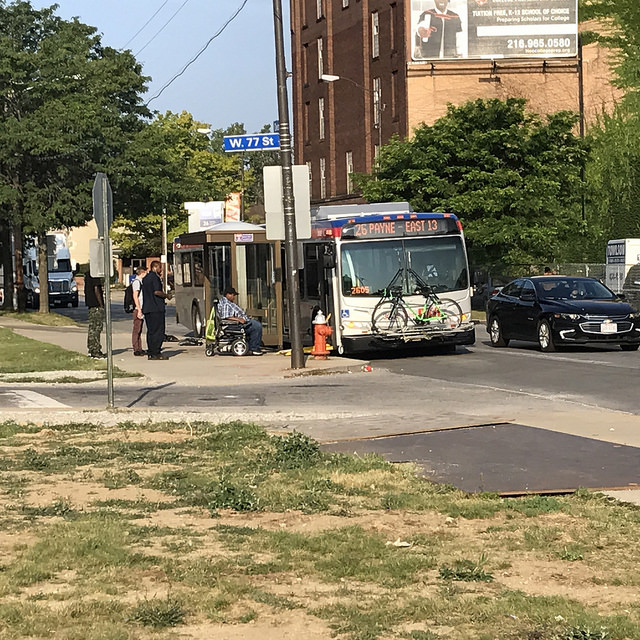
Ohio is one of the worst states at supporting transit — but it’s not for lack of money.
The latest budget provides just $6.5 million a year towards supporting urban transit across the state. That’s about 63 cents per capita — the eighth lowest of any state in the nation.
There are 27 urban transit systems operating in Ohio, but the state chips in just 2 percent of the cost. Both Cincinnati and Cleveland’s transit system are facing service cuts and fare hikes thanks to changes in state support for transit in the past few years. But Ohio could find the money to support transit, it just lacks the will.
That’s according to new report from the smart growth think tank Greater Ohio shows how easy it would be to assemble a respectable state support for transit. Using three relatively painless strategies, Greater Ohio shows how to increase funding by 18 times, to $123 million.
Here’s what the group recommends — the best from a comprehensive review of 20 potential funding sources:
#1. “Flex” More Federal Money from Highways to Transit
While the state only provides $6.5 million for transit from the general fund, it does help urban transit agencies a little bit by “flexing” federal funds, and making $33 million available a year through a competitive grant program. Greater Ohio says the state should double that amount.
After all, doing so would barely make a dent in the state’s highway budget. Greater Ohio reports $33 million is only enough to nine miles of highway, or conduct 27 miles of repair. Ohio, which has some of the slowest population growth in America, doesn’t really have much of a need for highway expansion. It would have a negligible impact on highway conditions anyway, The Ohio Department of Transportation paved more than 7,000 lane miles last year.
#2. Close the Parking Tax Exemption
Ohio law exempts parking from sales tax. Applying the state sales tax of 5.75 percent to parking would raise an additional $33 million a year that could boost transit funding. That does not include parking meters.
#3. Tax Cars Bought by Out-of-State Residents
There’s a weird loop in Ohio sales tax law that says if you buy a car here, but immediately drive it and register it in another state, you don’t have tp pay sales tax. That means the state loses $57 million in annual revenues that could be applied to transit.

Streetsblog has migrated to a new comment system. New commenters can register directly in the comments section of any article. Returning commenters: your previous comments and display name have been preserved, but you'll need to reclaim your account by clicking "Forgot your password?" on the sign-in form, entering your email, and following the verification link to set a new password — this is required because passwords could not be carried over during the migration. For questions, contact tips@streetsblog.org.
More from Streetsblog USA
Motorist Careens onto North Beach Sidewalk, Killing Pedestrian
Driver kills pedestrian at another location where a safety project festered
The post Motorist Careens onto North Beach Sidewalk, Killing Pedestrian appeared first on Streetsblog San Francisco.