Washington State DOT Chief: Fixing Congestion With Highways “Fiscally Impossible”

State DOTs are fooling themselves if they think building more highways will cure congestion.
That was the message from none other than Roger Millar, the head of the Washington Department of Transportation, at an annual gathering of the American Association of State Highway and Transportation Officials in Spokane last week.
Millar, a 40-year industry veteran, noted that Washington has one of the highest state gas taxes in the country: 49.4 cents per gallon. And yet, his agency still can’t afford highway widenings. About 71 percent of the state’s gas tax revenue is consumed by interest payments to pay off previously completed projects, he told AASHTO’s Joint Policy Committee.
The underlying cause of traffic congestion in the state of Washington is not insufficient road infrastructure, Millar said, but the dearth of “affordable housing and transportation solutions.” While people who can afford to live in city centers may have good transit options, housing in those areas is so scarce that lower-income residents are forced into long car commutes, he said in comments recorded by the AASHTO Journal. About 50 cars break down every day on Interstate 5 outside Seattle, Millar noted.
“Executive housing and Walmart jobs is not a housing solution — that only puts more people on the road,” he said.
To make Washington’s highway traffic flow freely at 60 mph would require $115 billion, Millar estimated, the equivalent of a $2.20-$2.50 per gallon state gas tax. But even then, these free flowing highways would just dump uncontrollable amounts of traffic on local streets.
The state DOT needs to rethink its role. “Congestion is not a failure on the state DOT’s part — it is a problem we simply cannot solve,” he said. Instead, his staff should be “stewards of the system and not just the builder of projects.”
Washington DOT can reduce congestion by making it easier for people to get around without a car and by encouraging off-peak commuting and telecommuting, Millar said. He did not rule out road expansion, but said the agency should consider it “only where it makes sense.”
In the meantime, he said, there should be a greater focus on safety. Traffic crashes cost the state about $8 billion annually — much more than the $2-$5 billion cost of congestion. Despite that, safety is the “smallest program” at Washington DOT, he said.

Read More:
Streetsblog has migrated to a new comment system. New commenters can register directly in the comments section of any article. Returning commenters: your previous comments and display name have been preserved, but you'll need to reclaim your account by clicking "Forgot your password?" on the sign-in form, entering your email, and following the verification link to set a new password — this is required because passwords could not be carried over during the migration. For questions, contact tips@streetsblog.org.
More from Streetsblog USA
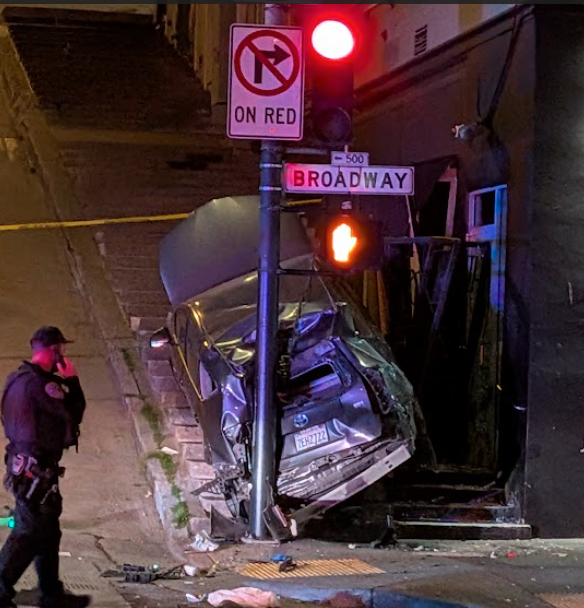
Motorist Careens onto North Beach Sidewalk, Killing Pedestrian
Driver kills pedestrian at another location where a safety project festered
The post Motorist Careens onto North Beach Sidewalk, Killing Pedestrian appeared first on Streetsblog San Francisco.