Phoenix Dithers on Traffic Safety While People Die
Traffic collisions claim a shocking number of lives in Phoenix.
Earlier this spring, 10 pedestrians were killed across metro Phoenix in a single week.
Phoenix had the third-highest per-capita pedestrian fatality rate of any major U.S. city in 2016, according to the National Highway Traffic Safety Administration. But that hasn’t prompted city leaders to take action.
Phoenix approved a complete streets policy in 2014 that has proven toothless. Under Mayor Greg Stanton, who announced this week he’s leaving the position to run for Congress, city officials have sat on their hands without translating statements about designing streets for pedestrians, cyclists, and transit riders into tangible changes. Since the policy was enacted, drivers have killed 300 pedestrians across the metro region.
Frustrated by the lack of progress, local advocates mounted a campaign to put more weight behind the city’s complete streets policies. Volunteers on the city’s Complete Streets Advisory Board have drafted more detailed guidance, with specifications drawn from the National Association of City Transportation Officials’ Urban Street Design Guide.
The new guidelines state, for instance, that all streets not in residential or industrial areas should have bike lanes by default, and that street corners should be designed with tight curves to slow turning motorists. By getting the City Council’s official endorsement of these guidelines, advocates hope to increase pressure on Phoenix’s recalcitrant Streets Transportation Department to change its ways.
But the City Council, which had previously promised to take up the issue, recently took the measure off its agenda, with the Transportation and Infrastructure Subcommittee declining to take up the new design standards until at least August.
“It’s extremely disappointing,” said Conor Descheemaker, a local resident who helped create the guide.
Emiko Atherton, director of the National Complete Streets Coalition, said the city’s reluctance to change its street design practices will cost people their lives. “We know how to solve this. We know how to make roads safer. For every day that they choose to delay were putting people’s lives at risk,” she said. “The Phoenix City Council is choosing to ignore this blatantly.”
The City Council is facing pressure from the Streets Transportation Department, which has proposed 10 changes to the document that Descheemaker describes as “antithetical to the purpose of complete streets.”
The agency objects, for example, to a passage that directs them to implement street designs that align with the posted the speed limit.
Those changes eviscerate the “entire intent” of the complete streets policy, said Descheemaker.
Descheemaker and other members of the advisory board say the guidelines have also been getting pushback from influential local developers who build sprawling subdivisions. While developers participated in the 18-month process of developing the guidelines, some objected to requirements that streets be laid out in a walkable grid, instead of the disconnected style of suburban cul-de-sacs.
Advocates like advisory board member Sean Sweat also see a pattern of discrimination against low-income residents. Because streets are so dreadful for pedestrians in Phoenix, the victims of dangerous walking conditions are mostly poor people. City officials aren’t responsive to the risks they face.
“So many just drive everywhere,” Sweat said. “When someone dies walking, I don’t think they empathize as much with them.”

Read More:
Streetsblog has migrated to a new comment system. New commenters can register directly in the comments section of any article. Returning commenters: your previous comments and display name have been preserved, but you'll need to reclaim your account by clicking "Forgot your password?" on the sign-in form, entering your email, and following the verification link to set a new password — this is required because passwords could not be carried over during the migration. For questions, contact tips@streetsblog.org.
More from Streetsblog USA
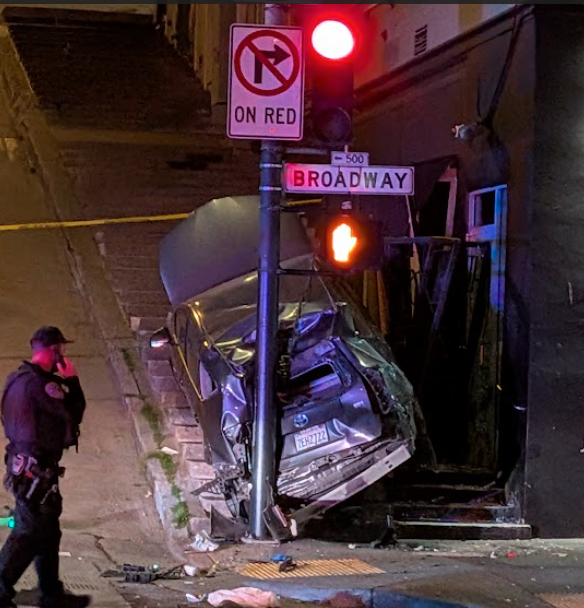
Motorist Careens onto North Beach Sidewalk, Killing Pedestrian
Driver kills pedestrian at another location where a safety project festered
The post Motorist Careens onto North Beach Sidewalk, Killing Pedestrian appeared first on Streetsblog San Francisco.