House Bill Would Require Agencies to Address Sexual Harassment on Buses and Trains
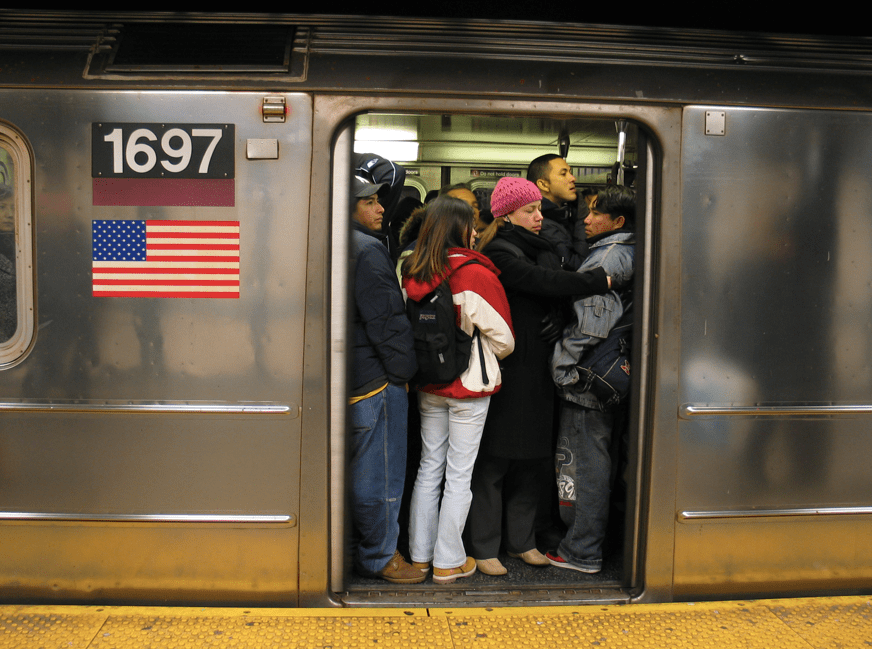
Sexual harassment and assault is a pervasive problem for women who ride trains and buses, but most transit agencies don’t have well-defined policies in place to prevent this widespread abuse.
A new bill sponsored by Oregon Democrat Peter DeFazio in the House of Representatives seeks to change that. The “Stop Sexual Assault and Harassment in Transportation Act” would require transit agencies to take measures to protect riders and employees.
The legislation would apply to all local transit agencies receiving federal funds, as well as Amtrak, all airlines, and intercity bus companies. They would have to develop clear, well-publicized protocols enabling passengers and employees to report cases of sexual harassment and assault, and to train staff how to respond to such complaints. In addition, U.S. DOT would collect data and publish reports on the extent of the problem.
Without a trusted channel of communication that victims can turn to, sexual harassment on buses and trains goes underreported. According to a 2007 survey of transit riders by the Manhattan Borough President, for instance, 63 percent of women had been sexually harassed on the subway, and 10 percent had been sexually assaulted, but only a small fraction of these offenses show up in official crime statistics.
The fact that NYPD recently recorded a sharp increase in sex crimes on the subway was taken mainly as a positive sign that police have improved methods for reporting harassment and assault. Until recently, there was little effort to take women seriously when they reported misconduct. But in 2014, New York’s MTA created a portal on its website to let riders upload photos of harassers, and transit police have been working with anti-harassment advocates to train officers how to respond to incidents of abuse.
Apathy is still the norm in most places, but other agencies are starting to make a more concerted effort to prevent harassment on transit. In the Seattle region, King County Metro is trying to de-stigmatize the act of reporting harassment and encourage victims to come forward.
Transit agencies abroad have taken measures to prevent sexual harassment and violence. In Toronto, Paris, and some cities in Sweden offer on-demand “night stops” for bus passengers, so women can exit in locations they feel are safer than the official stops on a route. Some cities in China, like Guangzhou, have experimented with women-only train cars, albeit with mixed success.
DeFazio’s bill was introduced yesterday in the House Committee on Transportation and Infrastructure. All Democrats on the committee have signed on as co-sponsors, but no Republicans have joined them so far.
Regardless of whether the bill passes, it should still serve as a reminder for transit agencies in the #MeToo era that they need to do more to protect riders from sexual harassment and assault.

Streetsblog has migrated to a new comment system. New commenters can register directly in the comments section of any article. Returning commenters: your previous comments and display name have been preserved, but you'll need to reclaim your account by clicking "Forgot your password?" on the sign-in form, entering your email, and following the verification link to set a new password — this is required because passwords could not be carried over during the migration. For questions, contact tips@streetsblog.org.
More from Streetsblog USA
Motorist Careens onto North Beach Sidewalk, Killing Pedestrian
Driver kills pedestrian at another location where a safety project festered
The post Motorist Careens onto North Beach Sidewalk, Killing Pedestrian appeared first on Streetsblog San Francisco.