Evidence From Boston That Uber Is Making Traffic Worse
Ride-hailing services like Uber and Lyft are exacerbating rush-hour traffic jams in Boston, according to new research by the Metropolitan Area Planning Council. The results should be a wake-up call about the need to improve bus and train service and prevent further shifts to car travel.
MAPC surveyed 944 ride-hailing passengers in greater Boston about their travel habits, using questionnaires administered via tablets during ride-hailing trips. More than two out of every five — 42 percent — said they would have taken transit if the ride-hailing service were not available. Another 12 percent said they would have walked or biked.
Combining those results with time-of-day data, MAPC estimates that 15 percent of ride-hailing trips are substituting for more spatially efficient modes of travel during the morning or evening peak (defined as 6-10 a.m. and 3-7 p.m.).
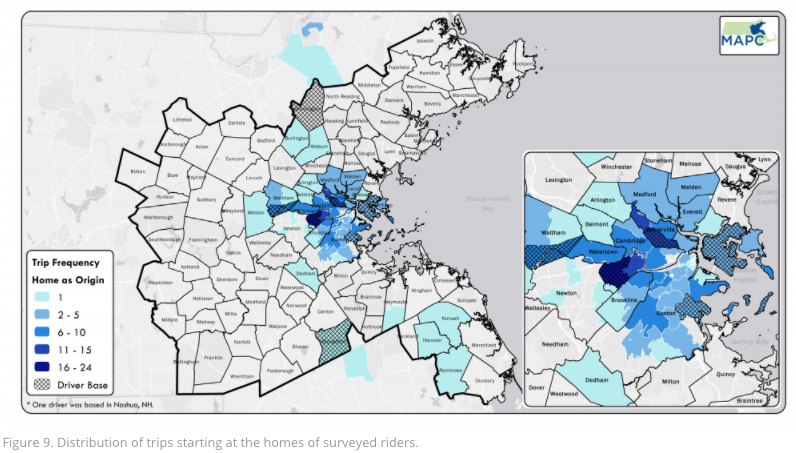
In addition, most of the trips either began or terminated in the center of the region — the area with the worst traffic congestion and the best transit access.
The findings underscore the premium regular transit riders are willing to pay for ride-hailing trips, MAPC notes. A large share of people who substituted ride-hailing for transit — 51 percent — had unlimited fare passes, and that figure didn’t change much even for ride-hail trips that cost more than $10 or $20. On average, these passengers also tended to be poorer than the ride-hailing population overall.
These trip substitution patterns are an indication of how badly MBTA needs to improve bus and train service, MAPC says. Residents should be able to rely on the transit system instead of feeling compelled to shell out for ride-hailing fares, especially for trips to the center city. And not only are streets getting more congested as riders opt out of transit, but the agency is losing fare revenue.
MAPC also recommends increasing and restructuring Massachusetts’ flat 20-cent fee on each ride-hailing trip. The current fee is so low it barely registers in the price of a trip, and doesn’t vary in accordance with congestion levels.

Streetsblog has migrated to a new comment system. New commenters can register directly in the comments section of any article. Returning commenters: your previous comments and display name have been preserved, but you'll need to reclaim your account by clicking "Forgot your password?" on the sign-in form, entering your email, and following the verification link to set a new password — this is required because passwords could not be carried over during the migration. For questions, contact tips@streetsblog.org.
More from Streetsblog USA
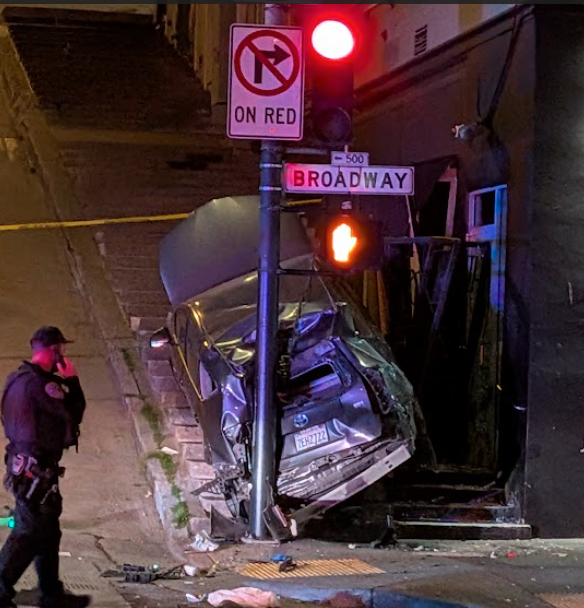
Motorist Careens onto North Beach Sidewalk, Killing Pedestrian
Driver kills pedestrian at another location where a safety project festered
The post Motorist Careens onto North Beach Sidewalk, Killing Pedestrian appeared first on Streetsblog San Francisco.