Asheville Won’t Let North Carolina DOT Jam a Road Widening Through City Neighborhoods
North Carolina DOT was doing what the agency has always done when it came into Asheville and started making plans to widen Merrimon Avenue.
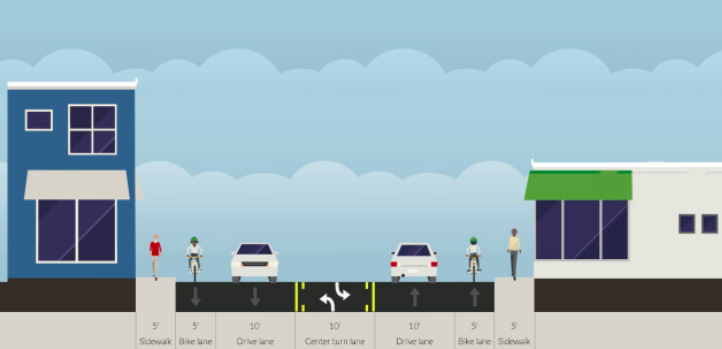
Merrimon is a busy four-lane commercial street, and NCDOT wants to add a center turn lane to keep cars and trucks moving. It’s bad news for people who’ll have to brave longer crossing distances and faster traffic on foot or a bicycle.
But the people who live nearby say the old way of thinking about streets like Merrimon isn’t good enough. They don’t want to cram through more motor vehicles at the expense of people who walk and bike.
There’s not much public support for widening Merrimon, according to the Citizen Times. NCDOT’s plan doesn’t comply with the city’s bike plan or the state’s Vision Zero goals. Asheville on Bikes, the local bike advocacy group, has been leading a campaign against it.
And the city of Asheville agrees.
Asheville officials are countering the NCDOT plan with a design to improve walking and biking. The city “is not in support of the project as proposed” and wants “alternative design concepts that integrate safety, mobility, and improved urban design,” Asheville Director of Transportation Ken Putnam wrote in his official comments to the state [PDF].
In the city government’s comments to NCDOT [PDF], Asheville officials propose shaving down the number of motor vehicle lanes from four to three, including a center turn lane:
This project can balance the automotive needs and also improve safety, enhance the pedestrian experience, provide a safe alternative for bicyclists, and support the existing urban land uses with streetscape improvements, potentially adding benches and pedestrian-scale lighting along wider sidewalks that include street trees. Improving the environment to make it more attractive for business should be a key element of the design.
The city notes that similar “road diets” have been implemented in Charlotte, San Diego, and Santa Monica, California, on roads with a comparable motor vehicle traffic. Those projects resulted in major safety improvements, with crash rates falling between 20 and 90 percent.

Read More:
Streetsblog has migrated to a new comment system. New commenters can register directly in the comments section of any article. Returning commenters: your previous comments and display name have been preserved, but you'll need to reclaim your account by clicking "Forgot your password?" on the sign-in form, entering your email, and following the verification link to set a new password — this is required because passwords could not be carried over during the migration. For questions, contact tips@streetsblog.org.
More from Streetsblog USA
Motorist Careens onto North Beach Sidewalk, Killing Pedestrian
Driver kills pedestrian at another location where a safety project festered
The post Motorist Careens onto North Beach Sidewalk, Killing Pedestrian appeared first on Streetsblog San Francisco.