Seattle Adds People Without Adding Traffic
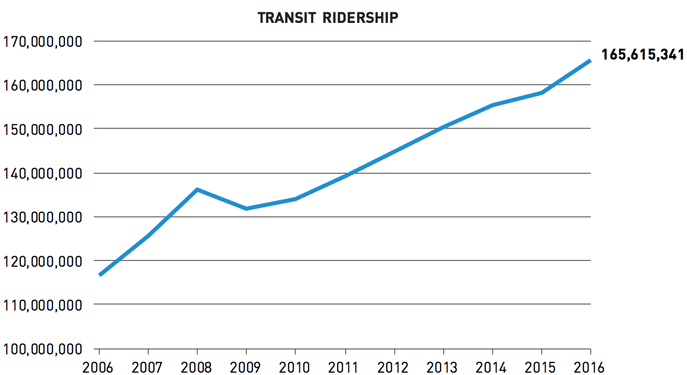
Seattle is showing other American cities how transit can help a growing population get around without an increase in car traffic.
The city is growing at a fast pace: Seattle added about 20,000 new residents in 2016, a population increase of about 3 percent. But traffic volumes didn’t increase at all. Driving mileage stayed flat in 2016, Seattle City Traffic Engineer Dongho Chang reports on Twitter.
In doing so, Seattle bucked national and statewide trends. Last year, driving mileage increased 2.9 percent in Washington state and 2.2 percent nationally, according to the Seattle DOT traffic report Chang cited.
The longer-term story is, if anything, even more compelling. Seattle’s population has grown 21 percent since 2006, and vehicle mileage has fallen 3.3 percent over the same period, Chang reports. Meanwhile, transit ridership grew 41.8 percent.
Using transit to absorb the growth of residents and jobs is a feat few peer cities have been able to achieve in the U.S. While transit ridership keeps growing in Seattle, it is stagnating in other cities that spent big on rail transit, like Los Angeles and Denver.
Importantly, Seattle has invested in bus service at the same time as the city pursues rail expansions. King County Metro was facing potential bus cuts due to a budget shortfall in 2014. Rather than accept worse service, Seattle voters added a $60 vehicle registration fee and increased the sales tax by 0.1 percent. The money was used to improve service and increase frequency across the system, especially on the most-used routes.
The pattern of shifting travel habits among downtown workers is very clear. Transit commuting is on the rise while car commuting is not.
The share of downtown Seattle workers commuting by car dropped from 35 percent to 30 percent since 2010. Seattle’s downtown added 45,000 workers over that period, with 95 percent of the new trips were absorbed by transit, walking, biking or carpooling, according to the local non-profit Commute Seattle.
Earlier this year, Streetfilms and TransitCenter looked at how Seattle’s investments in bus and rail service set the stage for this transition:
More major improvements to Seattle transit are coming. In 2016, the region passed a $54 billion tax package to expand light rail, add bus rapid transit routes, and plan for transit-oriented development.
Seattle’s continuing growth in transit ridership is a credit to the leadership of public officials like Dongho Chang, as well as voters’ willingness to pay for better transit. Other cities should be taking notes.

Streetsblog has migrated to a new comment system. New commenters can register directly in the comments section of any article. Returning commenters: your previous comments and display name have been preserved, but you'll need to reclaim your account by clicking "Forgot your password?" on the sign-in form, entering your email, and following the verification link to set a new password — this is required because passwords could not be carried over during the migration. For questions, contact tips@streetsblog.org.
More from Streetsblog USA
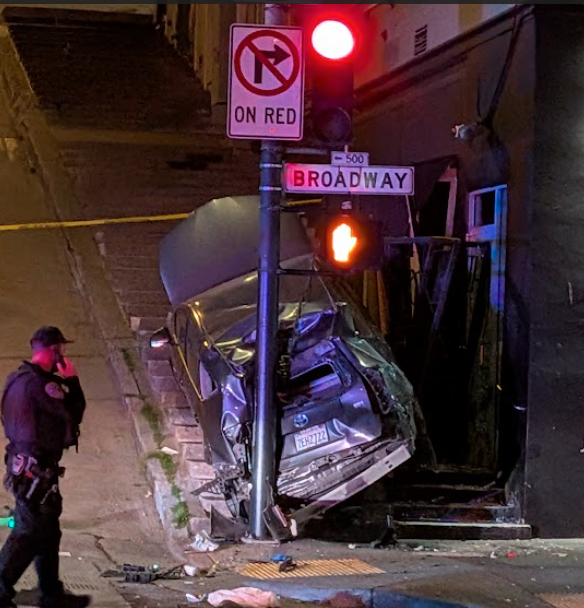
Motorist Careens onto North Beach Sidewalk, Killing Pedestrian
Driver kills pedestrian at another location where a safety project festered
The post Motorist Careens onto North Beach Sidewalk, Killing Pedestrian appeared first on Streetsblog San Francisco.