Toronto Shows How Easy It Is to Speed Up Surface Transit
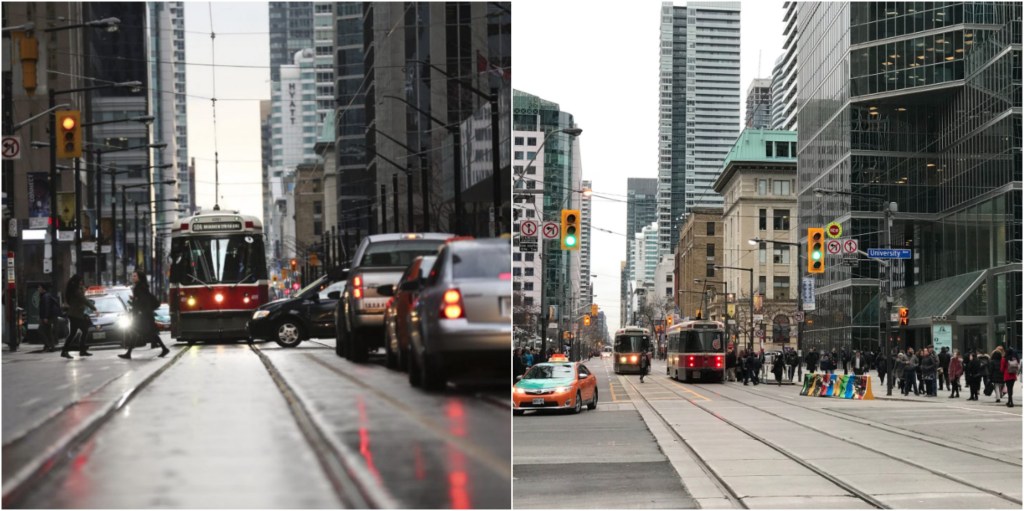
Toronto’s streetcar is a rarity in North America: a legacy system that still functions as a transportation workhorse, moving large numbers of people. The busiest route is on King Street, where people make 65,000 streetcar trips a day.
But like most surface transit, the King Street streetcar operates in mixed traffic, making it frustratingly slow. Those 65,000 passengers get bogged down by the 20,000 motor vehicles that travel on King Street in a typical day.
They used to, at least. Toronto is trying out new rules along 1.6 miles of King Street, with strict limits on motor vehicle access. Now that King Street is no longer a through-route for cars, transit trips are a lot faster, writes Yonah Freemark at the Transport Politic:
This pilot has significantly reduced space for cars along the street, eliminating parking spaces, adding public art, installing planters, creating small new public plazas, and — perhaps most importantly — prevented people from driving on the street for more than one block or taking left turns.
It’s therefore not a full car ban; some vehicles will still travel in the streetcar right-of-way, a less-than-optimal situation. But it is an effort to ensure that drivers are only using the portion of the street they need. As a result, most of the street is reserved for trains, bikers, and pedestrians.
We’ve yet to see the long-term results of the project, but initial public reaction suggests that the changes have significantly sped up what was once a very slow streetcar line. Riders are saving five to 13 minutes per trip, a massive improvement for such a short trip. Streetcars are running more quickly and less likely to get stuck at lights. Cyclists are riding more safely. And traffic doesn’t seem to have been pushed onto surrounding streets.
Freemark points out that this reconfiguration of King Street only cost $1.5 million. It’s an extremely cost-effective strategy that makes sense for other busy street-running transit routes, whether streetcars or buses.
More recommended reading today: Streets.mn considers whether roundabouts are safer for pedestrians. And Price Tags reports that Vancouver is under pressure from older residents to install rest rooms at transit stations.

Read More:
Streetsblog has migrated to a new comment system. New commenters can register directly in the comments section of any article. Returning commenters: your previous comments and display name have been preserved, but you'll need to reclaim your account by clicking "Forgot your password?" on the sign-in form, entering your email, and following the verification link to set a new password — this is required because passwords could not be carried over during the migration. For questions, contact tips@streetsblog.org.
More from Streetsblog USA
Motorist Careens onto North Beach Sidewalk, Killing Pedestrian
Driver kills pedestrian at another location where a safety project festered
The post Motorist Careens onto North Beach Sidewalk, Killing Pedestrian appeared first on Streetsblog San Francisco.