How Shared Parking Can Reduce Housing Costs and Cut Traffic
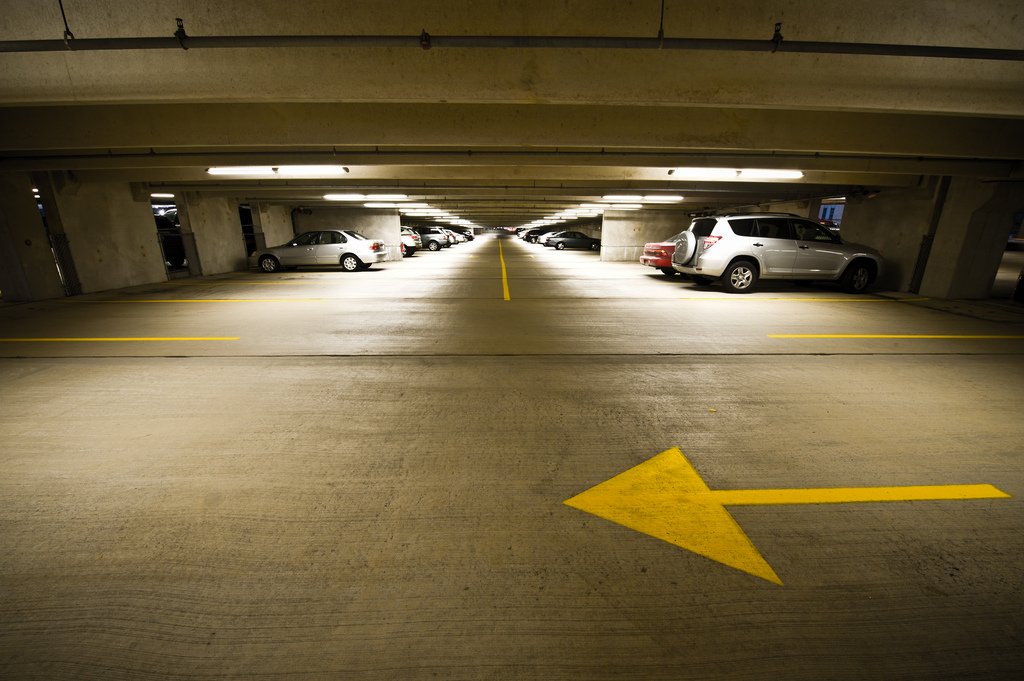
Parking is expensive to build. It’s particularly expensive in cities like Seattle, where space is limited and land costs are high.
Sound Transit will spend $100,000 per parking space, for instance, to build garages around its new suburban light rail stations. Now imagine baking costs like that into the construction of new housing — that’s what mandatory parking minimums do.
The political appetite for eliminating parking requirements is limited, however, so Seattle officials are taking an incremental approach, reports Dan Bertolet at Sightline.
In the Seattle region, King County Metro found that more than a quarter of residential parking spaces are unused, but current rules prevent the agency from using those empty spaces for park-and-ride purposes. Now the city is looking to change those rules to enable “greater sharing of parking in certain zones” [PDF]. The basic idea is to reduce the amount of parking in new construction by making more efficient use of existing parking, and the benefits could be substantial, Bertolet writes:
While Seattle’s current efforts to eliminate barriers to shared parking may have been catalyzed by the King County Metro’s park-and-ride ambitions, the city stands to gain much more. For one, using existing parking more efficiently helps recover the sunk costs of oversupplied parking. For another, underutilized parking can absorb new parking demand, so that future buildings can be constructed with fewer stalls. Developers can build confidently, knowing that tenants can find parking nearby. Municipalities can forgo huge parking structures. To summarize the benefits:
- Cheaper and more abundant housing (parking stalls take up space and cost upwards of $40,000)
- Improved urban livability through better urban design and architecture
- Reduced car use and associated climate pollution
- More walking, biking, and transit use
One concern about allowing shared parking is that it could backfire: developers might build extra parking to sell to people not residing in their building. Seattle’s proposal would address that concern by placing a 145-stall cap on shared parking in any one development. It’s an improbable scenario anyway, because in urban areas parking costs so much to construct that it’s still likely to be a money loser for developers, even counting the extra revenue from sharing.
More recommended reading today: The Natural Resources Defense Council shares a report on how to prevent improvements to transit or walkability from causing residential displacement. And Greater Greater Washington and Seattle Bike Blog are excited about the integration of dockless bike-share data into the Transit App trip planner.

Read More:
Streetsblog has migrated to a new comment system. New commenters can register directly in the comments section of any article. Returning commenters: your previous comments and display name have been preserved, but you'll need to reclaim your account by clicking "Forgot your password?" on the sign-in form, entering your email, and following the verification link to set a new password — this is required because passwords could not be carried over during the migration. For questions, contact tips@streetsblog.org.
More from Streetsblog USA
Motorist Careens onto North Beach Sidewalk, Killing Pedestrian
Driver kills pedestrian at another location where a safety project festered
The post Motorist Careens onto North Beach Sidewalk, Killing Pedestrian appeared first on Streetsblog San Francisco.