Delaware Poised to Legalize Idaho Stop
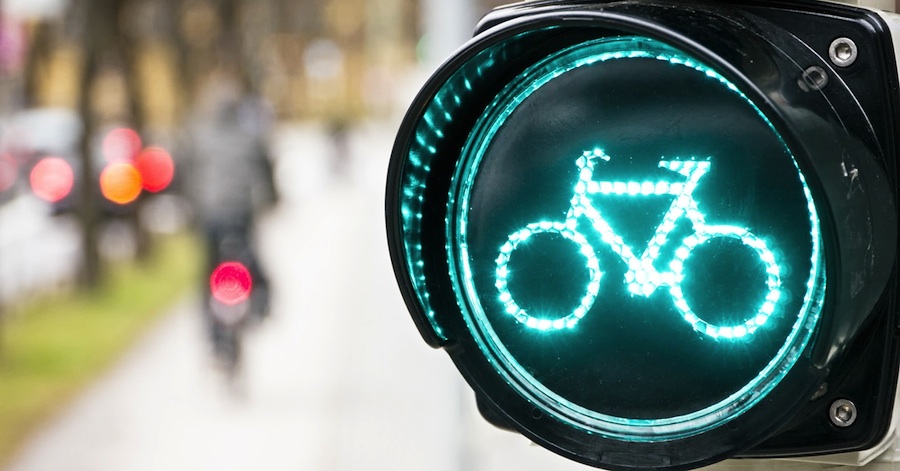
Delaware Governor John Carney is expected to sign a package of bike safety bills in October that will make the First State’s legal protections for cyclists among the best in the nation.
Perhaps the most exciting of the reforms: Bicyclists would be allowed to treat stop signs as yields. That will make Delaware only the second state to legalize the Idaho Stop.
Despite a long history in Idaho, with solid safety outcomes, no other state in the nation allows cyclists to treat stop signs as yields, or red lights as stop signs. Delaware’s legislation will only apply to stop signs, and moreover, only on roads with two lanes or fewer. Bicyclists will still be required to wait at red lights. This short video, by Spencer Boomhower, is probably the best explanation for why the Idaho Stop is practical and beneficial for people on bikes.
The law will offer other benefits. It will require motorists to change lanes when passing cyclists on roads with two lanes in the same direction, or even if there are fewer lanes if there isn’t enough room to give safe distance. Otherwise drivers are required to slow down and pass with no fewer than three feet of clearance.
The law will also clarify where cyclists should ride in the roadway, in an effort to protect them from bogus tickets for not hugging the curb. It would legally prohibit motorists from honking when passing a cyclist. It would also allow Delaware DOT to operate bike-specific traffic signals.
Bike Delaware reports that the law passed with with overwhelming bipartisan support (refreshing!). Carney is expected to sign it October 5.

Read More:
Streetsblog has migrated to a new comment system. New commenters can register directly in the comments section of any article. Returning commenters: your previous comments and display name have been preserved, but you'll need to reclaim your account by clicking "Forgot your password?" on the sign-in form, entering your email, and following the verification link to set a new password — this is required because passwords could not be carried over during the migration. For questions, contact tips@streetsblog.org.
More from Streetsblog USA
Motorist Careens onto North Beach Sidewalk, Killing Pedestrian
Driver kills pedestrian at another location where a safety project festered
The post Motorist Careens onto North Beach Sidewalk, Killing Pedestrian appeared first on Streetsblog San Francisco.