After Near-Death Experiences, Maryland’s Purple Line Light Rail Breaks Ground
The decades-long saga of the Maryland Purple Line reached a happy milestone yesterday.
The 16-mile circumferential light rail line connecting DC’s Maryland suburbs was first envisioned in the 1980s. After years of patient advocacy brought the Purple Line to the verge of construction, it had to withstand a few near-death experiences to get to this point.
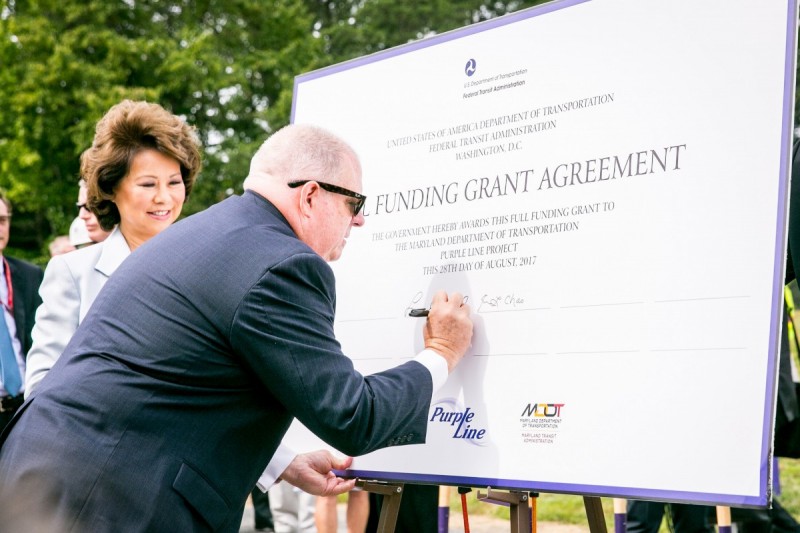
Yesterday was the groundbreaking ceremony for the project, with Maryland Governor Larry Hogan and Transportation Secretary Elaine Chao on hand. Dan Reed of Greater Greater Washington recaps:
The 16-mile long light rail line will run between Bethesda and New Carrollton and have 21 stations, including transfers at four Metro stations. The $2 billion project will include a mix of federal, state, and county funding. There has been no shortage of setbacks for the project since it was first proposed in 1986, but the project was largely a go by 2014, when Governor Hogan took office. Shortly after, he put the project on hold for nearly a year to find cost-cutting measures, and asked Montgomery and Prince George’s counties to pay a higher share of the cost. (At the same time, Hogan cancelled the Baltimore Red Line, which had been up for federal funding as well.)
Another year was lost after a judge voided the project’s approval last summer in a lawsuit from a group of residents in Chevy Chase. The project was close to losing its federal funding when an appeals court restored the approval last month.
It’s also notable as the nation’s largest transit project built through a public-private partnership, or when a private company works with the government. Purple Line Transit Partners, a consortium of private companies, will build and operate the project in exchange for payments from the state for the next 35 years. It’s something the Republican administration wants to encourage, and Secretary Chao said it could be a model for other projects around the nation.
There are a few dark clouds to this silver lining, however. One, as Reed mentioned, is Hogan’s decision to spike the Red Line in Baltimore. The other is the current White House’s hostility toward federal funding for transit expansion. If the Trump administration gets its way, the Purple Line could be one of the last transit projects to get federal support while he’s in office.
More recommended reading today: Systemic Failure reports that Ville Platte, Louisiana, where three black men were charged with misdemeanors after they were hit by a truck driver last week, has a history of criminalizing how people of color get around. And Green Caltrain looks at how Palo Alto reduced solo car commuting among downtown service workers.

Read More:
Streetsblog has migrated to a new comment system. New commenters can register directly in the comments section of any article. Returning commenters: your previous comments and display name have been preserved, but you'll need to reclaim your account by clicking "Forgot your password?" on the sign-in form, entering your email, and following the verification link to set a new password — this is required because passwords could not be carried over during the migration. For questions, contact tips@streetsblog.org.
More from Streetsblog USA
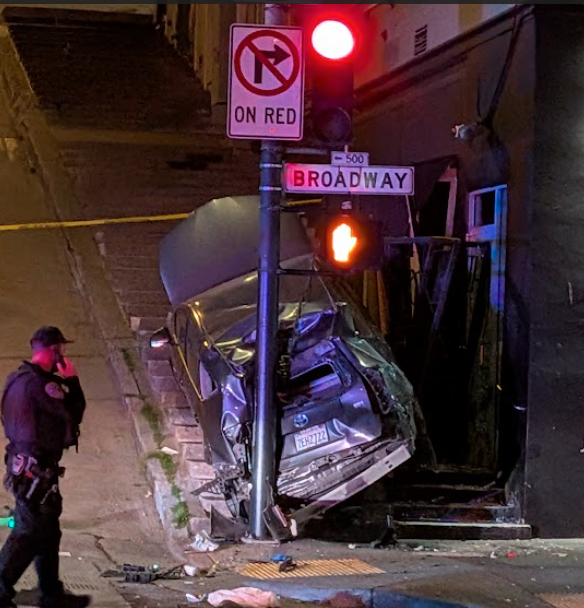
Motorist Careens onto North Beach Sidewalk, Killing Pedestrian
Driver kills pedestrian at another location where a safety project festered
The post Motorist Careens onto North Beach Sidewalk, Killing Pedestrian appeared first on Streetsblog San Francisco.