What Bike Planners Are Missing When They Design Projects in Black and Latino Neighborhoods
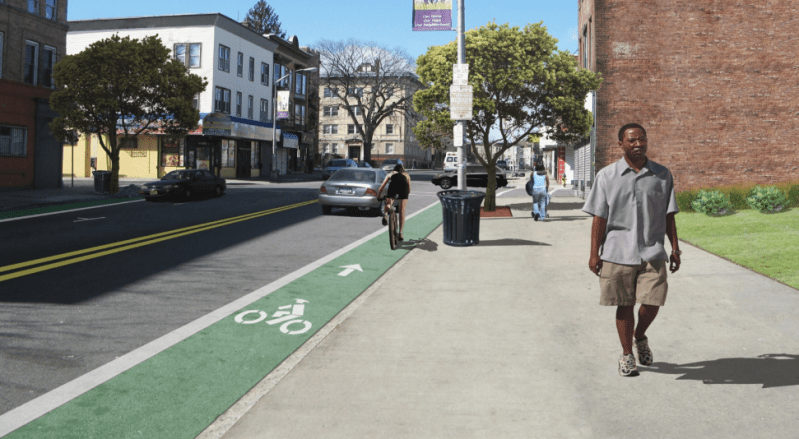
If your local police force has a reputation for harassing people who look like you, and your neighborhood gets a new bike lane, would that infrastructure be enough to make you feel comfortable riding?
It’s a question that gets to the heart of new research from Charles Brown at Rutgers University. In a groundbreaking survey, Brown and James Sinclair asked New Jerseyans about their attitudes toward biking and broke down the responses by race.
Bike infrastructure matters — bike lanes or off-street trails are one of the key features black and Latino respondents said they’d need to start biking or to bike more often. But it’s not enough on its own, says Brown. “The infrastructure piece gets too much attention and the social and cultural pieces are missing,” he told Streetsblog.
In the survey, black and Latino respondents were more likely than white respondents to cite fear of racial profiling or crime as a deterrent to cycling. After traffic crashes, the risk of robbery or assault was the second most common barrier to cycling cited by black and Latino respondents. Racial profiling was third.
“The challenges [for these groups] are more associated with social context than the infrastructure,” Brown told listeners during a NACTO-sponsored webinar yesterday.
Reporting on his findings in the ITE Journal last September, Brown asked readers to consider how a new bikeway, sited only with consideration for traffic-related factors like crash risk, could provoke “an increase in frustration among residents if the design leads them to the very parts of town that they seek to avoid.”
Brown recommends that the public planning process take into account these perspectives from the outset, and that tools used in Vision Zero efforts, like mapping pedestrian and bike deaths, be overlaid with crime maps, so that both types of safety concerns can be addressed in tandem.
Representation also matters. The Rutgers survey found that before-and-after renderings of projects depicting people of color help increase support for bike infrastructure projects.
In general, support for bike lanes and bike-share among black and Latino respondents is high, but confidence that they can secure these improvements from local government is not. In the survey, 53 percent of black respondents said it was unlikely or very unlikely that their city would make investments in cycling.
“We’re not discussing power and access to power and how that impacts who gets infrastructure in their communities,” said Brown. “Those discussions are not happening within the cycling context.”

Streetsblog has migrated to a new comment system. New commenters can register directly in the comments section of any article. Returning commenters: your previous comments and display name have been preserved, but you'll need to reclaim your account by clicking "Forgot your password?" on the sign-in form, entering your email, and following the verification link to set a new password — this is required because passwords could not be carried over during the migration. For questions, contact tips@streetsblog.org.
More from Streetsblog USA
Motorist Careens onto North Beach Sidewalk, Killing Pedestrian
Driver kills pedestrian at another location where a safety project festered
The post Motorist Careens onto North Beach Sidewalk, Killing Pedestrian appeared first on Streetsblog San Francisco.