Atlanta’s I-85 Collapse — Another “Carmaggedon” That Wasn’t
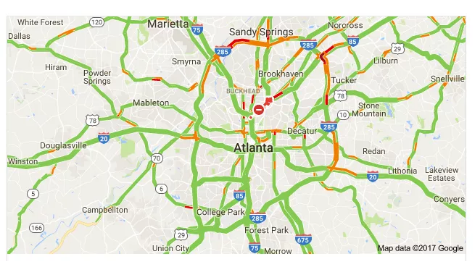
Few cities are built around highways more than Atlanta. So when a heavily-traveled section of I-85 collapsed in a fire last week, the traffic predictions were dire.
A few days into this rearrangement of the local highway system, however, Atlantans are adjusting their travel behavior in ways that keep gridlock at bay. MARTA ridership is up 25 percent, for example.
While it’s still early going, the I-85 collapse appears to be another case of “carmaggedon” that never materialized — and that should inform the way we plan our transportation systems, writes Joe Cortright at City Observatory:
Arguably, our mental model of traffic is just wrong. We tend to think of traffic volumes, and trip-making generally as inexorable forces of nature. The diurnal flow of 250,000 vehicles a day on an urban freeway like I-85 is just as regular and predictable as the tides.What this misses is that there’s a deep behavioral basis to travel. Human beings will shift their behavior in response to changing circumstances. If road capacity is impaired, many people can decide not to travel, change when they travel, change where they travel, or even change their mode of travel. The fact that Carmageddon almost never comes is powerful evidence of induced demand: people travel on roadways because the capacity is available for their trips, when when the capacity goes away, so does much of the trip making.
If Atlanta can survive for a month or two without a major chunk of its freeway, that’s a powerful indication that more modest steps to alter road capacity don’t really mean the end of the world. If we recognize that traffic will tend to adjust to available capacity, we then end up taking a different view of how to balance transportation against other objectives. For example, this ought to be a signal that road diets, which have been shown to greatly improve safety and encourage walking and cycling, don’t have anything approaching the kinds of adverse effects on travel that highway engineers usually predict. So in the next few weeks, keep an eye on Atlanta: If the one of the nation’s most sprawling and traffic ridden cities can survive the loss of a freeway segment that carries a quarter million vehicles a day, its a strong sign that more modest changes to road systems really don’t have much impact on metropolitan prosperity.
More recommended reading today: The State Smart Transportation Initiative reports on how fire codes are interfering with safe street design in Celebration, Florida. And Pedestrian Observations considers the proper ratio of branch lines to trunk lines in a transit network.

Read More:
Streetsblog has migrated to a new comment system. New commenters can register directly in the comments section of any article. Returning commenters: your previous comments and display name have been preserved, but you'll need to reclaim your account by clicking "Forgot your password?" on the sign-in form, entering your email, and following the verification link to set a new password — this is required because passwords could not be carried over during the migration. For questions, contact tips@streetsblog.org.
More from Streetsblog USA
Motorist Careens onto North Beach Sidewalk, Killing Pedestrian
Driver kills pedestrian at another location where a safety project festered
The post Motorist Careens onto North Beach Sidewalk, Killing Pedestrian appeared first on Streetsblog San Francisco.