Why Is Portland’s Transit Chief Advocating for More Highways?
After suffering an embarrassing defeat a year ago, the Oregon highway lobby is rattling the can for more money again. They have a list of highways they want to widen, and they say Portland’s economy depends on it.
In addition to the usual suspects like the Portland Business Alliance, the highway cheerleaders include Neil McFarlane, general manager of TriMet, the regional transit agency. Why would a transit chief support road projects that weaken the transit system? Michael Andersen at Bike Portland has the answer:
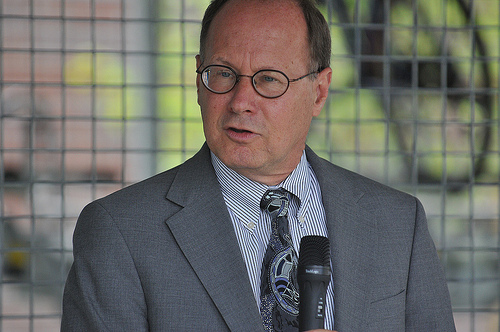
The top executive of Portland’s mass transit agency said this week that the Portland region has four top transportation priorities, and three of them are to expand capacity of urban freeways.
“These are projects we’ve known we need to do for some time,” Neil McFarlane told the Washington County Public Affairs Forum on Monday, according to the Portland Tribune. “They are necessary to keep our region moving and our arterials flowing.”Why is the head of a transit agency actively promoting freeway expansion projects?
The fourth project, McFarlane said, is a proposed light-rail line through Southwest Portland into Tigard and Tualatin, along either Barbur Boulevard or Interstate 5.
Contrary to the warnings about impending economic failure, Andersen points out that Portland’s economy is outperforming the rest of the state by just about every metric, despite its relatively low number of freeway miles. In fact, since 2008, Portland’s GDP has grown faster than any other metro area in the nation. Andersen says:
Traffic congestion is not a cause of economic collapse. It is an effect of economic success.
In fact, the choices that lead to congestion — a relatively compact urban area that hasn’t been sliced up by freeways, and has spent its money on things like mass transit and libraries and parks and restaurants instead — might actually be a cause of economic success.
It is true that the Portland area’s auto congestion is annoying. But attempting to “fix” it — at least in the way that Courtney and apparently TriMet are urging us to — is the last thing Oregon’s economy needs.
More recommended reading today: Systemic Failure criticizes the bipartisan consensus around funding infrastructure by repatriating overseas corporate profits. FABB Blog explains how a British county is enforcing safe-passing rules to protect cyclists. And Modern Cities shares photos of recent walking and biking improvements in Tampa.

Read More:
Streetsblog has migrated to a new comment system. New commenters can register directly in the comments section of any article. Returning commenters: your previous comments and display name have been preserved, but you'll need to reclaim your account by clicking "Forgot your password?" on the sign-in form, entering your email, and following the verification link to set a new password — this is required because passwords could not be carried over during the migration. For questions, contact tips@streetsblog.org.
More from Streetsblog USA
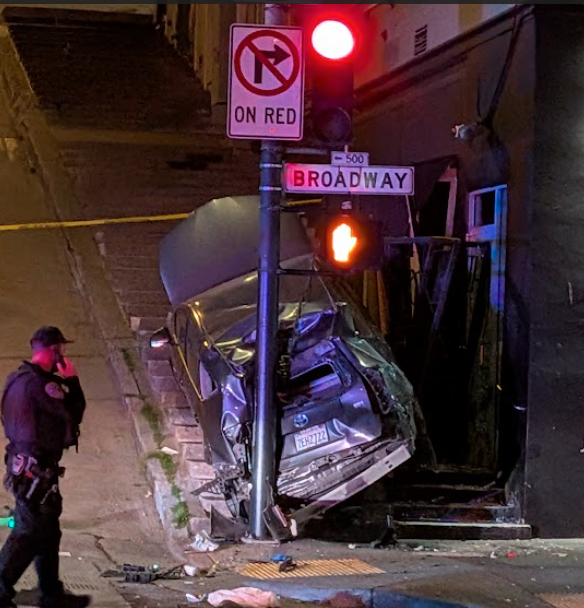
Motorist Careens onto North Beach Sidewalk, Killing Pedestrian
Driver kills pedestrian at another location where a safety project festered
The post Motorist Careens onto North Beach Sidewalk, Killing Pedestrian appeared first on Streetsblog San Francisco.