America Builds Too Many Schools By Highways
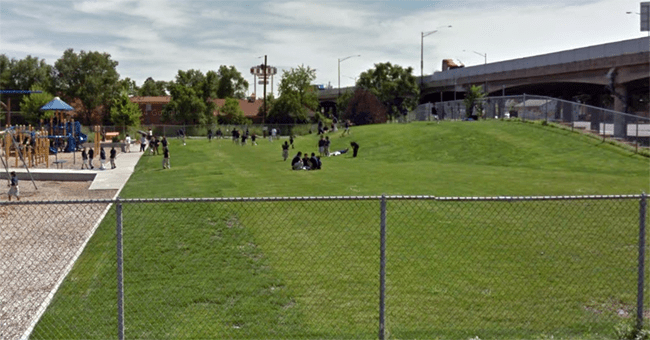
One in 11 U.S. public schools are within 500 feet of a highway, exposing 4.4 million children to elevated levels of pollution, according to a new investigation by the Center for Public Integrity and the Center for Investigative Reporting.
Attending school by a highway puts kids at elevated risk of developing asthma. In addition, there’s evidence that pollutants from traffic interfere with cognitive development and may play a role in autism.
America’s system of school siting is not getting better, either. In the last school year, one in five newly constructed schools were near highways, the investigation found. (The exception is California, which banned the placement of schools within 500 feet of a highway in 2003.)
The Center for Public Integrity’s Jamie Smith Hopkins cited two factors that explain the pattern: School districts are attracted to cheap land by highways, and the dangers road pollution poses to children are not widely understood by parents.
Siting schools on cheap land near highways also makes them unwalkable, which compels parents to drive children to school, compounding traffic and air quality problems.
The Safe Routes to School National Partnership notes that 27 states impose “acreage standards” that require minimum lot sizes for new schools, fueling the search for cheap land. (Since 2003, South Carolina, Rhode Island, and Maine have all jettisoned these acreage requirements.)
The U.S. EPA recommends school districts favor sites away from major roads [PDF], as long as it does not lead to a major increase in the distance children have to travel to reach school.

Read More:
Streetsblog has migrated to a new comment system. New commenters can register directly in the comments section of any article. Returning commenters: your previous comments and display name have been preserved, but you'll need to reclaim your account by clicking "Forgot your password?" on the sign-in form, entering your email, and following the verification link to set a new password — this is required because passwords could not be carried over during the migration. For questions, contact tips@streetsblog.org.
More from Streetsblog USA
Motorist Careens onto North Beach Sidewalk, Killing Pedestrian
Driver kills pedestrian at another location where a safety project festered
The post Motorist Careens onto North Beach Sidewalk, Killing Pedestrian appeared first on Streetsblog San Francisco.