El Paso’s Bid to Create a Regional Active Transportation Network
A lot of regional transportation agencies talk a good game when it comes to improving biking and walking, but El Paso’s Metropolitan Planning Organization is actually doing something about it.

The organization passed a new rule that designates seven key corridors as the “active transportation system.” Next, the MPO will identify gaps in the walking and biking network and issue calls for projects that complete the missing links.
The rule is part of the MPO’s efforts to increase walking and bicycling rates and improve air quality. “We are now planning for people versus added capacity projects that just satisfy vehicles,” said Alexandra Riccillo, a transportation analyst with El Paso MPO.
Cities that respond to the MPO’s request will have to provide 20 percent of the project cost, with the remaining 80 percent coming from federal funds. “Now that we have in essence a specific [call for projects], the money’s already there,” said Riccillo
The rule also requires Texas DOT to implement walking and biking upgrades whenever the agency conducts road work on the active transportation network.
That’s what most excites Scott White, policy director at Velo Paso, the local bike advocacy organization.
“TxDOT is notorious for saying, ‘We’ll make it bike and pedestrian friendly,’ but if the budget gets stretched, what’s the first thing to go? All the bike and ped stuff,” he said.
White thinks the influence of the new MPO rule will extend beyond the seven corridors in the active transportation network and affect intersecting streets as well.
“By creating these corridors, it’s almost like when you do a historical overlay on a district,” he said. “There are certain rules that apply. You can’t simply say we need to have capacity and have capacity be for cars only. You have to look at active transportation.”

Read More:
Streetsblog has migrated to a new comment system. New commenters can register directly in the comments section of any article. Returning commenters: your previous comments and display name have been preserved, but you'll need to reclaim your account by clicking "Forgot your password?" on the sign-in form, entering your email, and following the verification link to set a new password — this is required because passwords could not be carried over during the migration. For questions, contact tips@streetsblog.org.
More from Streetsblog USA
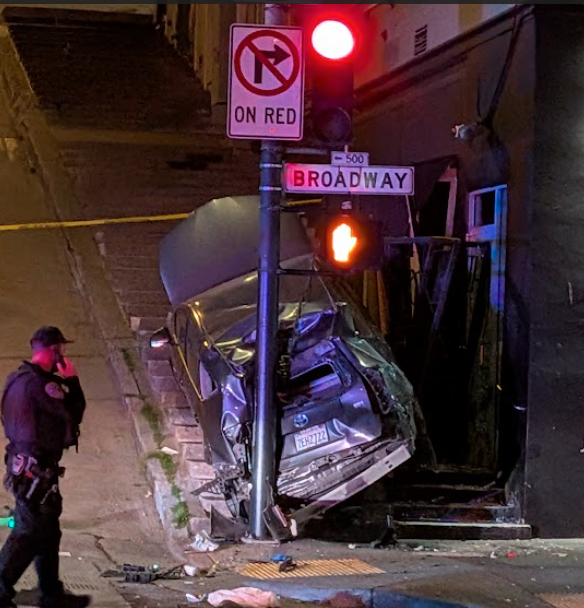
Motorist Careens onto North Beach Sidewalk, Killing Pedestrian
Driver kills pedestrian at another location where a safety project festered
The post Motorist Careens onto North Beach Sidewalk, Killing Pedestrian appeared first on Streetsblog San Francisco.