Cheap Gas, More Driving Make 2016 an Especially Deadly Year on U.S. Streets

The number of traffic deaths in America each year is so staggering, it almost defies comprehension — about 35,000 lives lost is the norm. But 2016 is shaping up to be even worse.
Emma Kilkelly at Mobilizing the Region reports on newly-released data from the first half of 2016 showing a disturbing increase in traffic deaths:
The National Safety Council (NSC) recently estimated that motor vehicle fatalities rose 9 percent in the first six months of 2016 compared to 2015, and 18 percent compared to 2014. At this rate, 2016 is shaping up to be the deadliest year for driving since 2007. This Labor Day weekend is on track to be the nation’s deadliest since 2008, with 438 fatalities projected over the three-day period.
The jump in traffic fatalities coincides with sinking gas prices and an uptick in driving. During the first half of 2016, U.S. motorists collectively drove 3.3 percent more compared to last year, reaching 1.58 trillion miles traveled. The recent upswing in miles driven has been linked to the availability of cheap gas and a sharp increase in traffic deaths.
Pedestrians and bicyclists already account for more than one in four traffic deaths in New York and New Jersey, and fifteen percent in Connecticut. In New Jersey alone, traffic deaths surged 12 percent during the first half of 2016. The number of bicyclists killed in New York City so far in 2016 has already exceeded the total number of fatalities in 2015.
The need for safer streets is clear, but not every community is answering the call.
The American traffic fatality rate was already far worse than peer nations, and now the gap is probably even wider. As Deborah Hersman of the National Safety Council said, “Our complacency is killing us.”
Elsewhere on the Network today: Amateur Planner explains how a maddeningly indirect bus route in the Boston area got to be so “wiggly.” Cyclelicious relays a news item that erroneously blamed a 12-year-old bicycle rider for making a school bus driver veer into a ditch. And Transport Providence considers how much safer and more pleasant the city could be if it were willing to sacrifice a few parking spaces.

Read More:
Streetsblog has migrated to a new comment system. New commenters can register directly in the comments section of any article. Returning commenters: your previous comments and display name have been preserved, but you'll need to reclaim your account by clicking "Forgot your password?" on the sign-in form, entering your email, and following the verification link to set a new password — this is required because passwords could not be carried over during the migration. For questions, contact tips@streetsblog.org.
More from Streetsblog USA
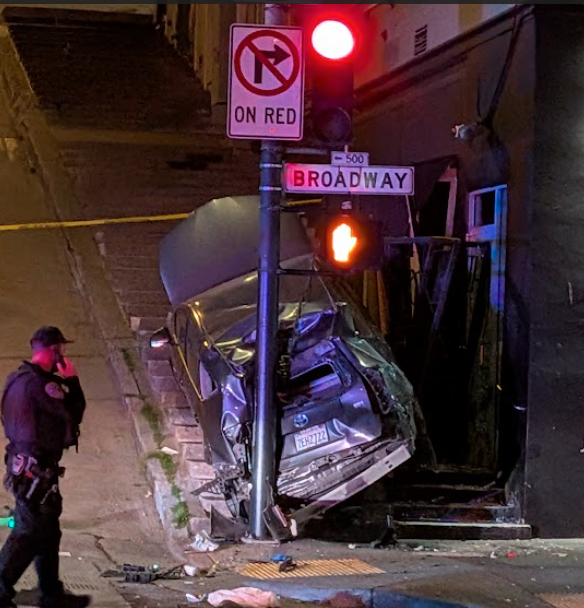
Motorist Careens onto North Beach Sidewalk, Killing Pedestrian
Driver kills pedestrian at another location where a safety project festered
The post Motorist Careens onto North Beach Sidewalk, Killing Pedestrian appeared first on Streetsblog San Francisco.