Atlanta Looks for Options Where Bidirectional Protected Bike Lanes Intersect


Michael Andersen blogs for The Green Lane Project, a PeopleForBikes program that helps U.S. cities connect high-comfort biking networks.
Bidirectional protected bike lanes, which put both directions of bike traffic on the same side of a street, aren’t ideal. But they can be useful in a pinch.
Like all protected bike lanes, well-designed bidirectionals are more comfortable to more riders than having no bike lanes on busy streets.
This month in downtown Atlanta, something interesting is happening for the first time in the United States: two bidirectional protected bike lanes are crossing each other at a four-way intersection.
Fortunately, both of them are on the “left” side of signalized one-way streets. This is generally the best way to use a bidirectional protected bike lane, in part because it prevents total chaos in situations like this one.

In a two-page memo this week, Atlanta Chief Bicycle Officer Becky Katz explained the five challenges before the city:
1. Create a safe way for bicyclists riding north or south on Peachtree Center Avenue to turn east onto John Portman Boulevard (toward Piedmont).
2. Create a safe way for bicyclists riding east or west on John Portman Boulevard to turn south onto Peachtree Center Avenue (toward the State Capitol).
3. Ensure that motorists turning left from John Portman to Peachtree Center do not turn into the protected bike lane.
4. Designing an intersection that slows down users so that people have time to react safely to one another.
5. Provide space for bicyclists to stop safely without disrupting the flow of other bicyclists.
It’s definitely a challenging situation.
With advice from bikeway specialists at Toole Design Group, Katz’s team settled on the modified protected intersection illustrated above.
One defining factor of a protected intersection is a bean-shaped corner safety island, which prompts people in cars to turn the corner at an angle that makes it easy to see people approaching on bikes. When it went in, some early chalking suggested that it’d interfere directly with the bikeway; Katz said online that it wasn’t the final striping.
Instead, once the striping is finished, people of every mode will be prompted to move a little bit out of direction in an effort to help everyone see each other.
Advances in bike lane design are leading to rapid changes in intersection design that respond to new needs. No wonder the next AASHTO bike guide, which is currently being written by Toole, is expected to devote a whole chapter to it.
The next phase of the Green Lane Project is the Big Jump Project, which will select 10 very different neighborhoods and districts and help them quickly connect biking networks. Find out how your city can apply here.

Read More:
Streetsblog has migrated to a new comment system. New commenters can register directly in the comments section of any article. Returning commenters: your previous comments and display name have been preserved, but you'll need to reclaim your account by clicking "Forgot your password?" on the sign-in form, entering your email, and following the verification link to set a new password — this is required because passwords could not be carried over during the migration. For questions, contact tips@streetsblog.org.
More from Streetsblog USA
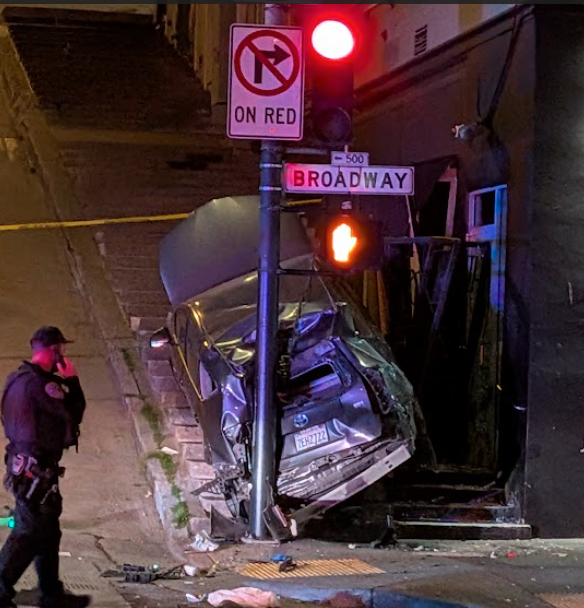
Motorist Careens onto North Beach Sidewalk, Killing Pedestrian
Driver kills pedestrian at another location where a safety project festered
The post Motorist Careens onto North Beach Sidewalk, Killing Pedestrian appeared first on Streetsblog San Francisco.