Who Needs a “Straddling Bus” When Bus Lanes Have Already Been Invented?
It’s not even a new idea at this point, having made the rounds in the media about six years ago, but the “straddling bus” concept that some Chinese cities are purportedly considering continues to fascinate people. Straddling bus stories went viral again last week, with claims that the conveyance, which only exists as a scale model at this point, can carry up to 1,400 passengers while traveling above two lanes of car traffic as fast as 40 mph, according to CityLab.

Is this idea worth taking beyond the tiny model phase? Nope, says Canaan Merchant at Greater Greater Washington:
We don’t need the straddle bus to get rid of congestion. The solution already exists: Rather than building an eight-lane highway and running a futuristic moving tunnel with seats on top over it, let’s just give two of those lanes to regular buses and watch congestion go down.
It can sometimes be far too easy to forget about the tools we already have at our disposal, instead pushing for new inventions and technology to revolutionize how we travel. The hyperloop will supposedly get us across California in 30 minutes, and Personal Rapid Transit will apparently be devoid of all the pitfalls that doomed the Columbia Pike Streetcar.
But we already have what we need. We can build bus lanes and bike lanes, and do more to encourage people to drive less rather than give them options for driving more. We don’t have to become the Jetsons to solve the problem.
Jarrett Walker at Human Transit concurs:
If your starting point for urban design is that single-occupant cars, despite their extreme inefficiency in using scarce urban space, should be allowed to go anywhere at all, and that the surface plane should be designed solely for their convenience to the exclusion of all other citizens and needs, then this technology makes sense.
Elsewhere on the Network today: The Urbanist considers how to make the most out of the 35 percent of Seattle’s land area that is devoted to streets and sidewalks. And Plan Philly reports that the City of Brotherly Love is going to allow developers to build taller buildings — if they include space for a fresh food vendor.

Read More:
Streetsblog has migrated to a new comment system. New commenters can register directly in the comments section of any article. Returning commenters: your previous comments and display name have been preserved, but you'll need to reclaim your account by clicking "Forgot your password?" on the sign-in form, entering your email, and following the verification link to set a new password — this is required because passwords could not be carried over during the migration. For questions, contact tips@streetsblog.org.
More from Streetsblog USA
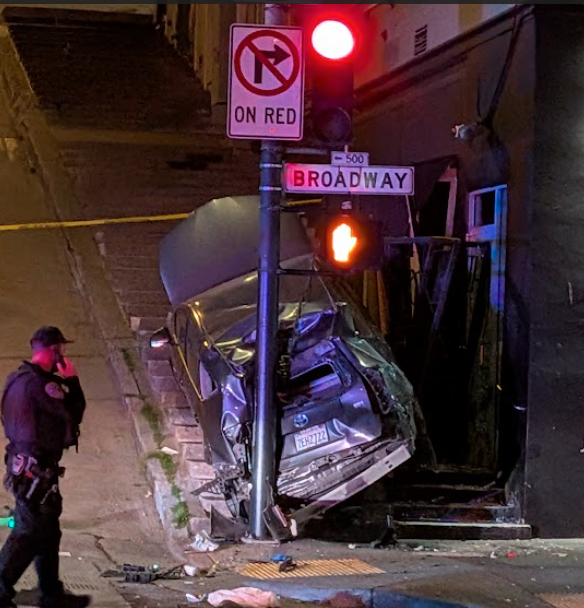
Motorist Careens onto North Beach Sidewalk, Killing Pedestrian
Driver kills pedestrian at another location where a safety project festered
The post Motorist Careens onto North Beach Sidewalk, Killing Pedestrian appeared first on Streetsblog San Francisco.