Seattle’s “Viadoom 2016” — Another Carmageddon That Wasn’t

Heard this one before?
The temporary closure of Seattle’s Alaskan Way Viaduct to accommodate construction — code name: “Viadoom” — was going to paralyze the city. The elevated highway carries about 110,000 vehicles a day. Without it, travel times would soar 50 percent, predicted the traffic analytics firm Inrix.
The highway was closed from April 29 to May 8, and we now have a solid read on the effect. Wouldn’t you know it — Viadoom, like so many Carmageddons before it, didn’t live up to the hype.
“Commute times have not dramatically increased and several of the major routes into the city have been only moderately affected,” the company’s Lytang Kelley told Crosscut. Commuters on these routes only spent a few more minutes in traffic, Crosscut reports.
The fact that Viadoom turned out to be much milder than expected carries special significance because right now Seattle is spending $4.2 billion (expected cost overruns notwithstanding) to replace the viaduct with an underground highway.
Five years ago, highway opponents argued that a surface street with better transit could handle the travel demand just as effectively as the $4.2 billion megatunnel. But they were marginalized by highway boosters in city and state government who backed the project and said the underground highway was absolutely essential to keeping the city running.
As of late last year, the project was 27 months behind schedule and the state was suing the contractor for cost overruns incurred while “Bertha,” the world’s largest tunnel boring machine, was broken and immobile deep underground for more than a year.

But as the recent “Viadud” demonstrates, Seattle can function without this road. Some drivers shifted trip times to avoid peak rush hour, Inrix told Crosscut. And more people biked or took the bus, even though few extra resources were devoted to those modes.
Washington DOT ran more bus service to compensate for the closure. But the 22 additional buses it pressed into service each day were not enough, said Cary Moon, a leader of the movement to replace the viaduct with a surface street instead of another highway.
More commuters turned to biking, reported Seattle Bike Blog. The first Monday the Viaduct was closed, bike trips increased 80 percent on the Spokane Street Bridge.

Read More:
Streetsblog has migrated to a new comment system. New commenters can register directly in the comments section of any article. Returning commenters: your previous comments and display name have been preserved, but you'll need to reclaim your account by clicking "Forgot your password?" on the sign-in form, entering your email, and following the verification link to set a new password — this is required because passwords could not be carried over during the migration. For questions, contact tips@streetsblog.org.
More from Streetsblog USA
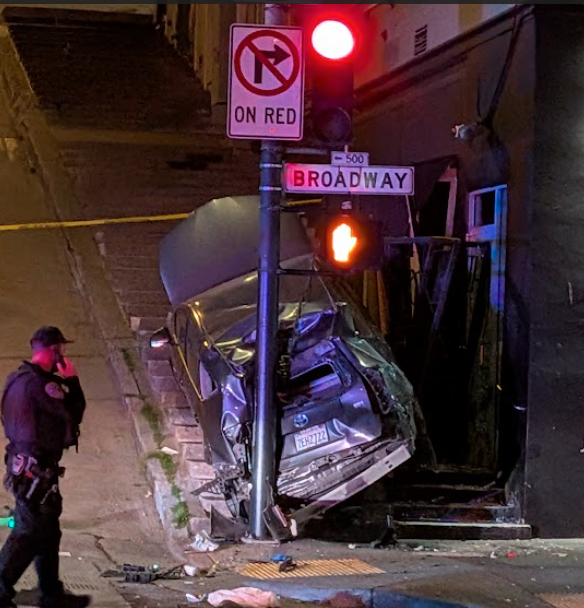
Motorist Careens onto North Beach Sidewalk, Killing Pedestrian
Driver kills pedestrian at another location where a safety project festered
The post Motorist Careens onto North Beach Sidewalk, Killing Pedestrian appeared first on Streetsblog San Francisco.