Rescuing New Ideas From the Purgatory of Old Bureaucracy


Your city may have a complete streets policy. Your mayor may say all the right things about making streets work for walking, biking, and transit. But if the inner workings of government — city budgets, agency protocols — aren’t set up to enable big street design breakthroughs, all you’ll get are scattershot improvements.
Writing for Network blog Broken Sidewalk, Chris Glasser of Bicycling for Louisville says his city is ready for safer, multi-modal streets — it just needs to figure out the mechanics of making change happen:
In the city budgets of the last three years, there has been funding for sidewalk improvements, for bike lanes, and for road repaving — all the ingredients needed for a complete street. But all that money is in separate pots, all going to separate projects. We’ve got the ingredients we need, but no recipe to follow to make a better street. We don’t provide any funding for the holistic approaches that make the street safer for everyone. This needs to change.
In Louisville, we have an 8-year-old, 160-page document that’s gathering dust and the promise of a multi-modal plan that’s more than a year overdue. What we don’t have is a strategy or funding source for implementing complete streets. Instead, we come by our most people-friendly streets somewhat haphazardly…
Why is this important? Here’s just one example: Metro Louisville Public Works is currently considering a redesign for Jefferson Street through Downtown. Their design features bus islands, a protected bike lane, and curb extensions for pedestrians. Four driving lanes would be taken down to three. These are all great things — design concepts that benefit all users.
But there’s one big problem. There’s no money for a project like this. To be sure, there is money in a city budget of hundreds of millions of dollars. For instance, “bike money” could pay for this project — but at the cost of 75 percent of its annual allotment on a bike lane that goes 0.9 miles and for which the vast majority of the project cost is not related to a bike lane. There is money available, just not money for this complete street project.
Glasser’s first goal is to implement “a funding mechanism for holistic roadway redesign.”
Elsewhere on the Streetsblog Network: Baltimore InnerSpace assesses what went wrong for the Red Line project and offers some advice for local transit advocates. And Bill Lindeke at Twin City Sidewalks asks, “How would Gandhi drive?”

Read More:
Streetsblog has migrated to a new comment system. New commenters can register directly in the comments section of any article. Returning commenters: your previous comments and display name have been preserved, but you'll need to reclaim your account by clicking "Forgot your password?" on the sign-in form, entering your email, and following the verification link to set a new password — this is required because passwords could not be carried over during the migration. For questions, contact tips@streetsblog.org.
More from Streetsblog USA
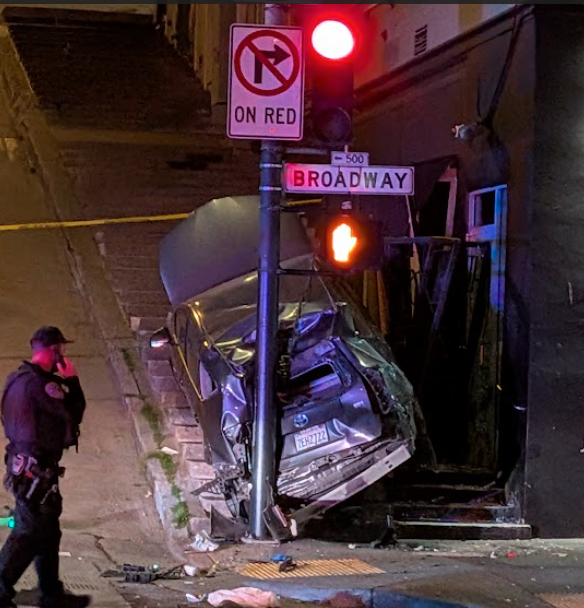
Motorist Careens onto North Beach Sidewalk, Killing Pedestrian
Driver kills pedestrian at another location where a safety project festered
The post Motorist Careens onto North Beach Sidewalk, Killing Pedestrian appeared first on Streetsblog San Francisco.