Sober Non-Partisan Analysis: America Wastes a Ton of Money on Highways
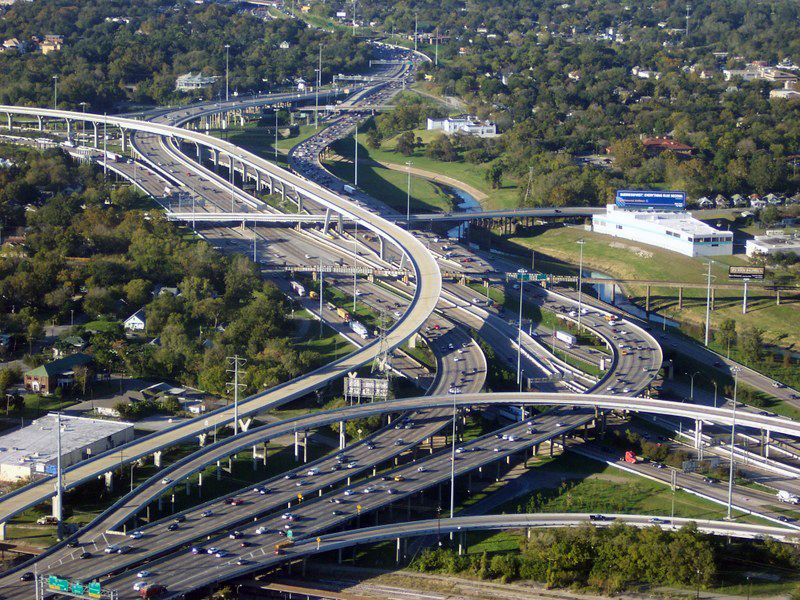
A good deal of the $46 billion the federal government pours into highway spending each year is going to waste, according to a new Congressional Budget Office report [PDF].
The conclusion won’t surprise regular Streetsblog readers, but it’s the source that’s interesting. The CBO is not an advocacy group or an ideologically-minded think tank. It’s a non-partisan budget watchdog charged with evaluating federal spending decisions, and it says federal highway funding is not well-spent.
For one, the CBO thinks too much is spent on road expansion and too little on maintenance. The construction of the Interstate Highway System made freight shipping and traveling between cities much more efficient, the report says, but since the system was completed in the 1970s spending on highways has been subject to diminishing returns. Current spending “has not shifted” to account for “the importance of maintaining existing capacity,” the CBO writes.
Compounding the problem is induced demand. The CBO points to a recent study finding that “the addition of new lanes is likely to have little effect on congestion within 10 years” as highway lanes fill with new drivers.
In addition, what the U.S. does spend on maintenance flows disproportionally to lesser-used rural highways and not the urban interstates that carry the overwhelming majority of traffic, the CBO says. Urban interstates are in fact the only category of roads receiving federal highway funds where pavement quality is actually degrading.
Not all of the CBO’s ideas about road spending are good for cities (the report recommends spending more on expanding urban interstates), but it emphasizes some policy changes that would result in big savings and smarter decisions, including more widespread use of road pricing.
Putting a price on roads could be an alternative to expensive highway widening projects, the CBO writes. For example, congestion pricing could encourage drivers on less time-sensitive trips to avoid using highways during rush hours, lessening the pressure to expand roads.
Current federal law sharply restricts what transportation agencies can charge on existing interstate highways, and “only about 7 percent of the Interstate System is composed of highways with tolls,” the CBO reports. Loosening these restrictions could help America avoid wasting billions of dollars a year on highway expansions.

Read More:
Streetsblog has migrated to a new comment system. New commenters can register directly in the comments section of any article. Returning commenters: your previous comments and display name have been preserved, but you'll need to reclaim your account by clicking "Forgot your password?" on the sign-in form, entering your email, and following the verification link to set a new password — this is required because passwords could not be carried over during the migration. For questions, contact tips@streetsblog.org.
More from Streetsblog USA
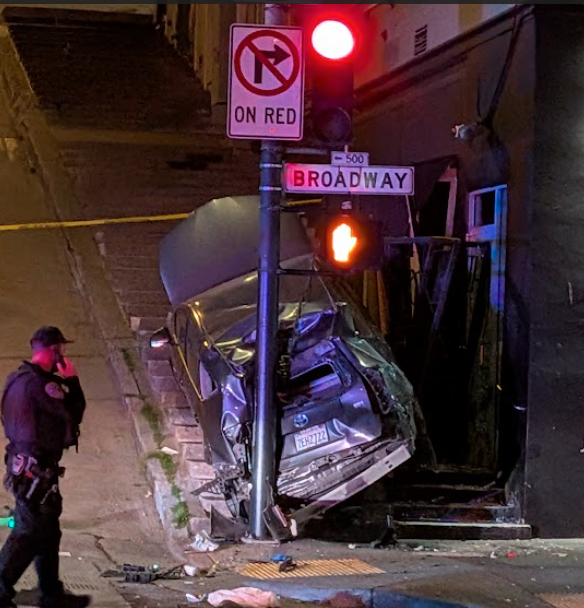
Motorist Careens onto North Beach Sidewalk, Killing Pedestrian
Driver kills pedestrian at another location where a safety project festered
The post Motorist Careens onto North Beach Sidewalk, Killing Pedestrian appeared first on Streetsblog San Francisco.