Real Estate Giant: Suburban Office Parks Increasingly Obsolete
What tenants want in an office building is changing, and the old model of the isolated suburban office park is going the way of the fax machine. That’s according to a new report from Newmark, Grubb, Knight and Frank [PDF], one of the largest commercial real estate firms in the world.

The old-school office park does “not offer the experience most of today’s tenants are seeking,” according to NGKF. As a result, the suburban office market is confronting “obsolescence” on a “massive scale.” More than 1,150 U.S. office properties — or 95 million square feet — may no longer pencil out, the authors estimate, though a number of those can be salvaged with some changes.
“Walkability and activated environments are at the top of many tenants’ list of must haves,” the report states. Office parks in isolated pockets without a mix of uses around them must have “in-building amenities” — including a conference center, a fitness center, and food service — to remain competitive, according to NGKF: “If tenants are not going to be able to walk to nearby retail or a nearby office property to get lunch, they had better be able to get it at their own building.”
The study took a close look at suburban office submarkets in and around Denver, Washington, San Francisco, Chicago, and New York. In the “southeast suburban” Denver office district, for example, office buildings within a quarter-mile of the new light rail line had a 1.7 percent vacancy rate. For those outside a quarter-mile, vacancy rates were nine percentage points higher.
NGKF’s findings don’t mean that office tenant preferences are in perfect alignment with walkability, however.
Parking was also important to the marketability of buildings in suburban Denver. The report notes that a lot of older management personnel prefer to drive, while younger workers want transit access. So buildings that offered both were in the highest demand.

Read More:
Streetsblog has migrated to a new comment system. New commenters can register directly in the comments section of any article. Returning commenters: your previous comments and display name have been preserved, but you'll need to reclaim your account by clicking "Forgot your password?" on the sign-in form, entering your email, and following the verification link to set a new password — this is required because passwords could not be carried over during the migration. For questions, contact tips@streetsblog.org.
More from Streetsblog USA
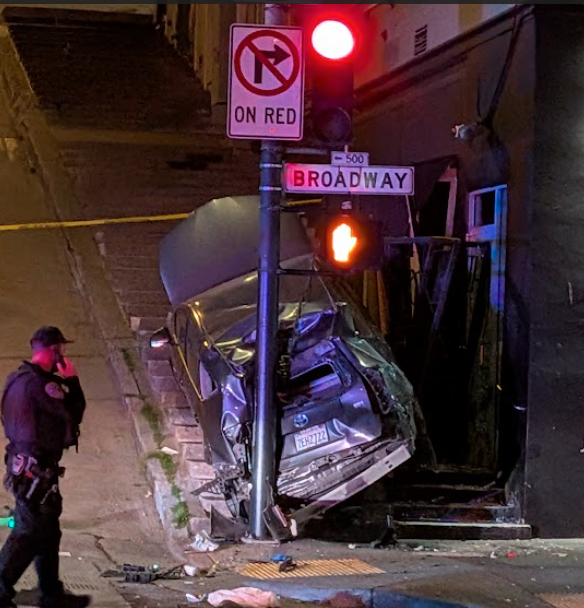
Motorist Careens onto North Beach Sidewalk, Killing Pedestrian
Driver kills pedestrian at another location where a safety project festered
The post Motorist Careens onto North Beach Sidewalk, Killing Pedestrian appeared first on Streetsblog San Francisco.