Check Out Pittsburgh’s New Bicycle “Merge Lane”
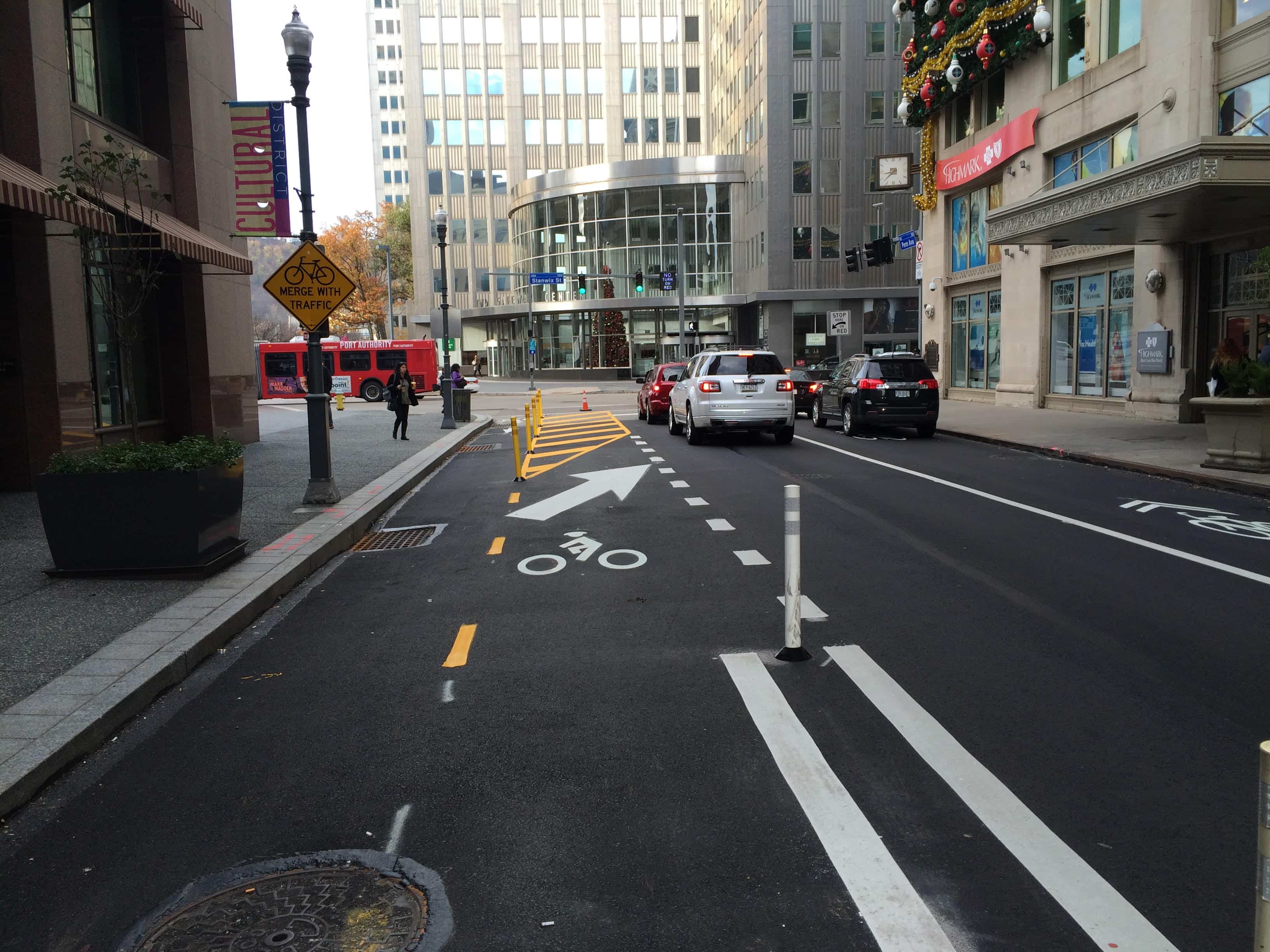
Transitions where streets suddenly change are a tricky part of bike lane design. Here’s how street designers in Pittsburgh handled the transition where a two-way bike lane ends at a T-intersection — with a “merge lane” for cyclists turning right across motor vehicle traffic.
Bike PGH is enthusiastic about the new design:
Have you had a chance to ride the two block extension of the Penn Avenue bike lane in Downtown? It ends in a great new “merge lane” that smoothly shepherds people riding their bike in the direction of Point State Park into the traffic lane marked with sharrows proceeding in that direction.
Big thanks to the City — especially the Planning and Public Works departments — for designing and putting in this great lane. We’re fans of this configuration because it’s straightforward and really well marked.
So, what do you think of the new design? The City has tried something relatively new with this one, so leave a comment with your thoughts once you’ve had a chance to ride it.
Here’s another view courtesy of Bike PGH. What do you think?

Elsewhere on the Network today: Bike Portland looks at the irrationality of downtown parking prices that are cheaper than a bus fare. Streets.mn reports that sensible infill development in Minneapolis was sunk by — what else? — single-family zoning. And Seattle Bike Blog posts about the city’s use of red light camera revenues to improve school safety.

Read More:
Streetsblog has migrated to a new comment system. New commenters can register directly in the comments section of any article. Returning commenters: your previous comments and display name have been preserved, but you'll need to reclaim your account by clicking "Forgot your password?" on the sign-in form, entering your email, and following the verification link to set a new password — this is required because passwords could not be carried over during the migration. For questions, contact tips@streetsblog.org.
More from Streetsblog USA
Motorist Careens onto North Beach Sidewalk, Killing Pedestrian
Driver kills pedestrian at another location where a safety project festered
The post Motorist Careens onto North Beach Sidewalk, Killing Pedestrian appeared first on Streetsblog San Francisco.