“Places I Don’t Want to Sit” — A Gallery of Sad Public Spaces

Gracen Johnson at Strong Towns has tapped into something universal with her post “Places I Don’t Want to Sit.” The above photo sums it up nicely: lousy, leftover spaces with public amenities grafted on as an afterthought. Since the whole surrounding parking lot is so hostile to people, why would anyone want to sit there?
There’s an epidemic of sad spaces like this in America, she says. How are we getting it so wrong and what would it take to get it right?
We live in cities starved for good public space. There are so few spots in North America where you can sit comfortably (ie. safe, shaded, with a good perch/chair) and enjoy the city around you with zero expectation of spending money. It’s a fact made more tragic when you realize how simple and cheap it can be to create wonderfully sittable space. Instead, many of our highest-potential urban environments are built to explicitly un-sittable standards using defensive architecture.
Other times, we do try to create linger-worthy public space and fail spectacularly. We often demand developers throw some cash toward green space or public amenities in order to get approval for construction. You see it all the time in subdivisions with exquisite landscaping, roundabouts, and benches that are only appreciated from behind a car window.
The idea of asking developers to contribute to public space is excellent (perhaps essential). By the looks of it, this has resulted in millions upon millions of dollars invested in pavilions, seating, greenery, and water features. Too bad that investment keeps ending up in places where no one would actually want to linger…
Strong Towns is urging readers to share their own examples — bad and good — with #PlacesIDontWantToSit and #PublicSpaceDoneWell.
Elsewhere on the Network today: Broken Sidewalk explains how Louisville is trying to tackle its pedestrian safety problem. Greater Greater Washington says Tyson’s Corner just got a series of road diets that promise to make it more walkable. And Bike Portland reports the city’s “neighborhood greenways” program is on the verge of being improved and enshrined permanently in city policy.

Read More:
Streetsblog has migrated to a new comment system. New commenters can register directly in the comments section of any article. Returning commenters: your previous comments and display name have been preserved, but you'll need to reclaim your account by clicking "Forgot your password?" on the sign-in form, entering your email, and following the verification link to set a new password — this is required because passwords could not be carried over during the migration. For questions, contact tips@streetsblog.org.
More from Streetsblog USA
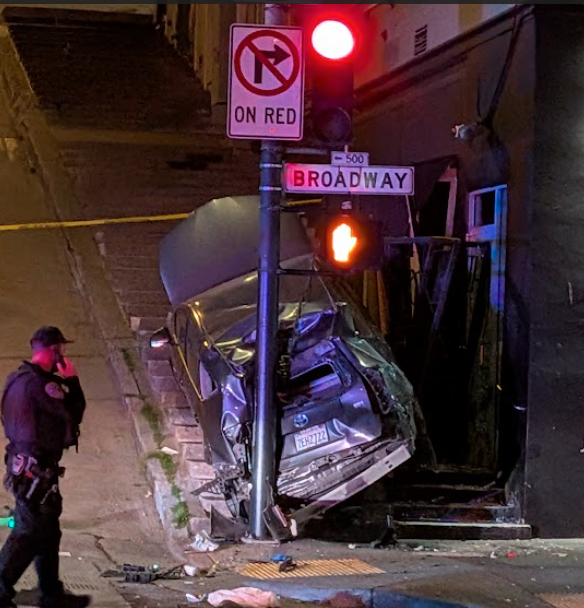
Motorist Careens onto North Beach Sidewalk, Killing Pedestrian
Driver kills pedestrian at another location where a safety project festered
The post Motorist Careens onto North Beach Sidewalk, Killing Pedestrian appeared first on Streetsblog San Francisco.