People Won’t Ride the Tysons Corner Metro If They Can’t Walk to Stations

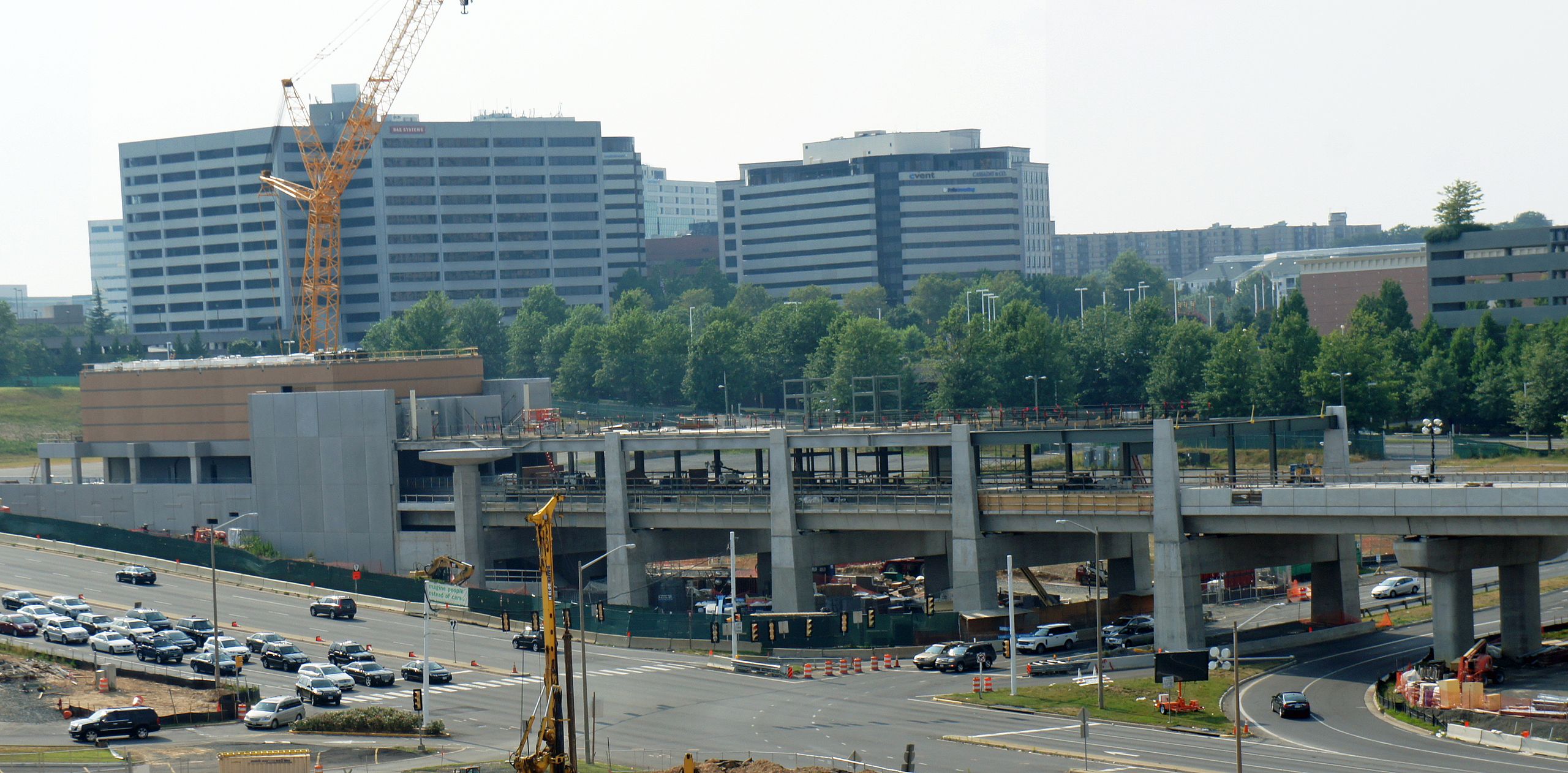
A year after the Washington Metro opened the Silver Line in Northern Virginia, apartment rentals are booming and development is roaring ahead. But Martin Di Caro of WAMU reported Monday that the Metro itself isn’t meeting expectations:
Only 17,000 riders board the Silver Line on a typical weekday, a figure that includes more than 9,100 commuters at the Wiehle-Reston East station, the western terminus with a 2,300-space parking garage. The total is even less impressive when you consider roughly two-thirds of Silver Line ridership is former Orange Line commuters.
The Silver Line as a whole is operating at about two-thirds of predicted ridership.
The retrofitting of Tysons Corner’s suburban office park model into a walkable, mixed-use place has been called “the most ambitious re-urbanization project on Earth.” But according to Metro’s own analysis, progress on walking and biking infrastructure is lagging far behind the transit.
People simply can’t get to and from the Metro safely. While the Tysons stations were built for pedestrian access, without park-n-rides, the blocks are still too long, the street grid hasn’t been built out yet, and sidewalks and bike lanes are still lacking in many places.
“Remember, the people who have been working in Tysons have been coming here by car always,” Michael Caplin of the Tysons Partnership told Di Caro. “So to get them out of their car and onto public transit, we have to teach them it is far easier than they may imagine.”
To change transportation habits, people need to see not just that another mode is easy, but that it’s easier than what they were doing. Tysons still has tons of parking, though zoning has been changed to allow for a lot less in the future. Car congestion is a deterrent to driving to some extent, but the trip from DC to Tysons is still considered a “reverse” commute.
With more than 100,000 jobs in Tysons already, models suggest that ridership should be higher. Tysons is planning to add another 100,000 jobs and add significant amounts of housing, growing from a daytime-only work center with just 17,000 residents to a 24-hour city with a population of 100,000. Metro, biking, and walking have always figured prominently in that plan, but it looks like Tysons’ streets have a lot of catching up to do.

Read More:
Streetsblog has migrated to a new comment system. New commenters can register directly in the comments section of any article. Returning commenters: your previous comments and display name have been preserved, but you'll need to reclaim your account by clicking "Forgot your password?" on the sign-in form, entering your email, and following the verification link to set a new password — this is required because passwords could not be carried over during the migration. For questions, contact tips@streetsblog.org.
More from Streetsblog USA
Motorist Careens onto North Beach Sidewalk, Killing Pedestrian
Driver kills pedestrian at another location where a safety project festered
The post Motorist Careens onto North Beach Sidewalk, Killing Pedestrian appeared first on Streetsblog San Francisco.